In response to an anonymous commenter, I am posting this drasha from Rav Moshe Weinberger from Cong. Aish Kodesh in Woodmere, NY. I think that I sensed from the words of the commenter that he was assuming that I had some sort of special access to these materials. I obtained the Slichos video from the Aish Kodesh website, not through any person connections. And actually, I had the same problems finding this video through the link on the Aish Kodesh website. However, I was able to find it through a Google search. So here it is!
Rav Moshe Weinberger- "The End of the Year: Approaching Our Father Yet Again"
-Dixie Yid
Tuesday, September 11, 2007


Amazing Aish Kodesh video from Slichos Motzoi Shabbos
Please watch this beautiful but short video of some of the amazing nigunim and rikudim (dancing) from slichos at Congregation Aish Kodesh in Woodmere this past Motzoi Shabbos! Awesome!
-Dixie Yid
Courtesy of Aish Kodesh's website)
-Dixie Yid
Courtesy of Aish Kodesh's website)
Monday, September 10, 2007
Tzeitzechem L'shalom to Our Friends Heading Off to Uman!!!

I want to wish a Tzeitzechem l'Shalom to all of our friends who left for Uman last night and who are leaving tonight!
I wish I were with you!
-Dixie Yid
(Picture of davening in Uman courtesy of Ilovetorah.com)
Applying Bilvavi Mishkan Evneh - Q & A with A Simple Jew

Please click here to read my Q & A session with A Simple Jew with some thoughts on practically applying the derech avoda in the seforim Bilvavi Mishkan Evneh. I'll copy/paste ASJ's question to me below:
Simple Jew asks:
You have written in the past about the advice prescribed in Bilvavi Mishkan Evneh. As you continue to learn this sefer, how have you successfully implemented its teachings in your daily routine? What difficulties have you encountered doing so? And finally, did your opportunity to listen to the recordings of the mechaber's shiurim that you posted give you any new insights on how to learn this sefer and put it into practice?
-Dixie Yid
(Picture courtesy of Flightstore.co.uk)
Summaries in English of U.S. Bilvavi Shiurim Now Online

An Anonymous friend has written summaries of all of the shiurim that I had made available for download a little over a week ago. I'm posting those summaries here now and also in my original post offering the shiurim for download. There had been continuing problems for some people in downloading those shiurim and now that they are almost all being hosted at Bilvavi.net's site, most of those downloading problems should have been solved. If you do have a problem when downloading those mp3 shiurim, try again and it should work. It has for others.
This may be good for people who cannot understand the Hebrew shiurim, and may benefit from the English summary of Rav Shwartz's message in that shiur. Or you might use these summaries as a basis for knowing which shiurim you would like to download or listen to in streaming audio. Important Note: The first two links to shiurim #1 and #2 are still hosted at fileden and are subject to downloading maximums per month and therefore they might not be downloadable till October 2nd, 2007. The rest are hosted at Bilvavi.net and should work. If they don't the first time, try again.
1- Lakewood-Ohr Zarua- When Rav Shlomo Wolbe zt”l asked Rav Chatzkel (Rav Yechezkel Levenstein) zt”l what important information he should tell the students in his yeshiva, Rav Chatzkel said, “Tell them there is a Master of the World!” Much later, Rav Wolbe understood the significance of this comment. Rav Chatzkel lived with a tremendous feeling of closeness to Hashem at all times, and insisted that all who learn Torah strive to attain the same feeling. It is possible for one to learn Torah, and yet, fulfill the pasuk (Yirmeyahu 12:2), “You (Hashem) are close to their mouths but far from their interior” and (ibid. 2:8), “Those who have grasped the Torah do not know me.” This can happen if one learns Torah and feels that although the Torah is here, Hashem is far away somewhere. The reason we are informed that Hashem’s presence is here is that we are supposed to intend to connect to Him when learning Torah. As the Chazon Ish wrote, “The main thing is to remember before Whom you toil in Torah.” If one approaches learning with no thought, there is a halachic problem: Torah-ordained mitzvos require prior intent. Before learning, one must spend a minute thinking about why he is learning. If one does this, he will become much closer to Hashem through his learning. This is the reason we must learn Torah every free moment — through it, one can cleave to Hashem at all times.
2- Lakewood- Freehold Kollel- Hashem has planted in us a need to speak so that we will use every opportunity to speak to Him. We cannot suffice with the three tefillos said daily; rather, we must also use every opportunity we have in the day to speak to Hashem. In the Bais HaMikdash, as well, although there were two main karbanos daily (and the fats thereof were burned at night) corresponding to our fixed tefillos, there was also a requirement for a constant fire on the mizbeach. The Chazon Ish would daven to Hashem every time he had a difficulty with a matter of Torah, and the Brisker Rov would say a short tefillah whenever he heard of a trouble someone had, since there is an obligation to say a tefillah in any time of trouble. In fact, Hashem sends the various kinds to troubles to us so that we will use them as means to turn to Him. Our entire lives are for the sake of becoming close to Hashem, and if one suffers in any way at all, it is so that he will use it as an impetus to remember Hashem. Rav Yerucham zt”l said that great people eat in order to make a beracha. This doesn’t mean that they didn’t get hungry, but that they understood that all needs, such as hunger, exist so that we can remember Hashem. If one will remember Hashem on a regular basis, he will not need major problems, which are sent to remind us of Him. Hashem is compassionate, and does not want us to suffer if we are already remembering Him. On Rosh Hashanah, there is a strong feeling of closeness to Hashem. Why is this? The reason is that Hashem wants us to experience the level that is expected of us all year. We should not just do teshuvah for little details. We must realize that we are lacking the whole point of life — closeness to Hashem. To start improving in this area, we should minimally follow the ruling of the Rambam, who states (Hilchos Mezuzah 6:13) that one when sees a mezuzah, he should remember about Hashem. If we can start doing this at least once a day, we will make large strides toward living life properly.
4- Baltimore- Ner Yisroel- The gemara (Berachos 20a) says that the greatness of the earlier generations derived from the fact that they devoted their souls to Hashem. This doesn’t only mean to give up one’s life, but also to serve Him with the soul, not just to perform the mitzvos and learn Torah with the body and brain. A way to tell if you are serving Hashem with your soul is by seeing if you love Torah so much that you learn intensively even when on vacation from yeshiva. You should love Torah so much that you would learn it even if there were no reward for it. You must also grow in your attachment to tefillah and other mitzvos. Although there is a rule that “the heart is drawn (meshicha) after the actions,” and so, the mitzvos should on their own improve us, we must look at this as any meshicha, an act of pulling something into one’s domain, which is a form of acquisition. If one does an act of acquisition with no intent, he does not become the owner. Action and intent are required. Here, too, when learning and performing mitzvos, we must yearn for Hashem, from Whom we have become distanced, and intend that our Torah and mitzvos will improve our hearts and awaken our souls.
5- Baltimore – Shaarei Zion- In a healthy marriage, the husband and wife speak to each other on a regular basis. They do not only have set times for communicating, and then ignore each other the rest of the time. Although they might also fix set times for talking with each other, these are not meant to exclude ongoing spontaneous conversation. The marriage relationship (as well as other friendships) is meant to be an example for us of a healthy relationship with Hashem. (One aspect of this example is that a person often needs to seek for years to find a spouse. The same is often the case with one’s search for closeness with Hashem.) Although we are required to daven three times a day so that we don’t ignore Hashem, we must spontaneously turn to Hashem in brief conversation throughout the day. Hashem made the world in a way that we must be regularly on the ground and breathe air; these are constants. We must recall that a relationship with Hashem must also be such a constant. Regrettably, we are raised to think that our material comfort is the main thing in life. Parents make a mistake when they focus exclusively on their children’s material well-being and wait until much later to introduce the spiritual. Even before the child can understand spiritual values, the parents must daven for the child’s spiritual health, and in this way, plant the seeds for the child’s spiritual life.
6- Baltimore Community Kollel- Elul is a period when Hashem is considered our Beloved (dodi). Starting Rosh HaShanah, He is considered our Father/King. These are actually better relationships, because they are constant, as opposed to a close friend or an uncle (dod). But we must first let in the Beloved. As it says in Shir HaShirim (5:2), “My Beloved is knocking.” Hashem is knocking on our hearts, asking to be let in. To let Him in, we must make a “room” in our heart that will be hospitable to Him, as Lavan said to Yaakov (Bereishis 24:31), “I have cleaned out the house (from idols)” so that Yaakov would be able to reside there. We, too, must clean out something negative from in our hearts so as to let Him in. We must sacrifice something for Hashem, giving Him a gift which we will never take back. These days are an amazing opportunity for us to bring Hashem into our hearts. If we prepare properly, He will not leave us, but remain in our hearts forever.
7- Baltimore- chaburah in Ner Yisroel- We know from the Rambam that there are thirteen essentials of Torah, the thirteen principles of emunah. Everything in the Torah is important, but these are the most important issues to focus on, especially the first: the awareness of Hashem. Emunah must fill our day, from the moment we say upon arising, “I thank in Your Presence (not merely “I thank You”) Hashem, for restoring my soul…” This truth should cause us to totally change our outlook on what is important in life. We may need to make changes as drastic as those adopted by a Ba’al Teshuvah, to reorient our lives in a way that a constant relationship with Hashem will be our primary focus.
8- Monsey- Belz Kollel- When the Ba’al Shem Tov came into this world, he brought a tremendous light that effectively revived Klal Yisroel from its state of spiritual death. The Satan was worried about all the inspiration and the love and fear of Hashem that the Ba’al Shem Tov and his followers would bring to the world, and sought a way to counteract that and conceal this great light. The Satan succeeded by making many chasidim who merely accept the chitzonius (outer customs) of the chasidim, such as the style of clothing, without having any of the pnimius (inner essence). The chitzonius is important, because it protects people from falling, but one needs more than protection. One would not suffice with just protecting his money by burying it in the ground; he would want to invest some of it. Now that the light of the Ba’al Shem Tov has entered the world, although it is becoming progressively more and more concealed, we are required to reclaim it, just as the light of Pesach is concealed at first, but then reclaimed during the Sefirah period.
How do we know what to do practically? It is fine to read sefarim on Shabbos, but that is not enough to build one’s life. Certainly, the main effort must remain to observe the times for learning gemara and halacha, and to be careful with all the halachos. But in addition, one must add chiyus (holy energy) to it all. There must be time for studying the works of chasidus on a regular basis. One work that is relatively understandable is the Ma’or Vashemesh. However, there is still a problem in that it goes by the parsha (weekly portion), and does not show us a specific path.
Nowadays, as in all times, there are not enough tzaddikim to be able to adequately guide all the seekers who need guidance. Our only option is to yearn for the levels we see in the sefarim and daven and cry to Hashem that He will show us the way to reach them. Many people despair of reaching the high levels portrayed in the sefarim. They feel the levels are way beyond them. They must know that these levels were originally beyond the abilities of those authors themselves, but Hashem granted the levels as a gift. We must serve Hashem to the best of our abilities, recognizing that we cannot jump levels on our own, and cry out to Hashem for guidance in finding a way and reaching levels really beyond our current abilities. In these special days of tefillah, we must take advantage of our opportunity to approach the King, and ask for these great achievements. We must not be satisfied with petty things.
9- Monsey -Yeshivat Tov- On Rosh Hashanah, there are two emotions that should be present within us. There should be a sense of fear, due to the judgment taking place on that day. In addition, we should feel great joy. That is the one day each of us comes before the King, and although He judges us, it is a tremendous opportunity for acquiring closeness to Him. The Arizal states that one should be crying at some point on Rosh Hashanah, which will be the time one is being judged. The crying is not due to fear. To the contrary, the fear should freeze us, as one would feel when confronted by a lion! The crying, rather, should be tears of joy, as the neshamah rejoices in its closeness to Hashem. But this can only be appreciated by one who has been seeking such closeness all year. Such a person can appreciate this gift of closeness that he receives. Another person would have no use for it. We cannot really start preparing for this Rosh Hashanah now, if we have not been on the path to Hashem all year. We should rather try to prepare for Rosh Hashanah of 5769! However, if we do take the steps to be truly ready for 5769, our proper commitment, although only a commitment, can be a merit even for 5768.
10- Kew Gardens Hills- Beit Midrash Tov- The word “shofar” relates to the word “shapru,” which means “to improve.” We must not suffice with hearing the shofar; we must take a lesson from the shofar as to how we should improve. The shofar is narrow at one end and wide on the other, indicating a transition from a narrow, constricted outlook to a broader one. This means that we must stop only thinking about ourselves and living for ourselves. This is essential is we are to be judged favorably and for Mashiach to come. There are many ways we can start to care for others. Even if one goes to learn Torah by himself, he can have in mind to give a small percentage of the merit of his learning to the rest of the Jewish people, particularly to those who do not have the opportunity to learn Torah. This intent alone can help inspire others to do teshuvah, and will even give them the ability to rise at techiyat hameitim (the resurrection), because one cannot be resurrected without the merit of Torah. Many people donate money, but for selfish reasons, such as for honor, or to be rewarded with wealth. We must train ourselves to give because we care about other people. If we start caring about others, our avodat Hashem will improve, as well. We will become used to not doing whatever feels good, but what is right. You must learn to think on your own about how you can help others, not just to be told by someone else how to do so. When we approach Rosh Hashanah, we must commit to be somewhat better in the coming year. You must not take on too many commitments, because they will not last; even one point is fine, if you will really work with it throughout the year. Here is a suggestion: commit to spending one minute a day thinking about how you can help others, either spiritually or physically. If you focus on giving selflessly, Hashem will also give to you, measure for measure.
11- Far Rockaway- Shor Yoshuv- The gemara says (Makkos 24a) that Chavakuk stated that all the mitzvos have one foundation: “The righteous man lives with his emunah” (Chavakuk 2:4). Why is emunah the foundation of everything? Shouldn’t the foundation be Torah? After all, we know that the mitzvos are only garments of the soul, while Torah study is the food for the soul. The answer is that without proper emunah, the Torah study does not serve its purpose. The Torah was given as an outgrowth of the revelation of Hashem, and it must be learned in such a way. Before learning, we must think about Hashem and do teshuvah, so that the learning can connect us to Him. Just as with learning Torah, one is not really connected to the learning unless he automatically thinks about Torah even when not in the Beis Midrash, so should one automatically have thoughts about Hashem. If he doesn’t, there is no real connection. The learning is all in the mind, but not the heart, and he has not learned properly. When making our self-accounting for Rosh Hashanah, we must evaluate not only how much Torah we have learned, but how much of a real connection to Hashem and His Torah we have achieved.
12- Yeshiva University- Although practically speaking, many people cannot learn Torah and engage in spiritual endeavors all the time, all of us must maintain the highest ideals. We must know that the ideal is a purely spiritual life with no involvement at all in the material world. Practically speaking, each person must be pragmatic, and not try to give up too much of the material world at one time, lest he be unable to handle it. One must make small improvements, constantly moving in small steps toward a more spiritual life. Likewise, we should all strive to live in Eretz Yisrael, but practically speaking, it is not possible or appropriate for everyone. We must, however, at least remember that we are in golus. The point is that we must have the loftiest ideals, with practical small steps towards those ideals. This is why we must yearn daily for Mashiach: we must yearn for that kind of world. When we approach Rosh HaShanah, we must evaluate not how much good we have done, but how much we have aligned ourselves with spiritual values.
13- Woodmere- Bilvavi Chaburah- Rav Yechezkel Levenstein, zt”l, the Mashgiach of Ponovezh, said in one of his lectures that each person should strive to become a great person. Anyone can become great, regardless of age, lineage, and intelligence. A great person is one who is attached to Hashem, and ultimately, nullifies himself before Him. There are three means through which we must cleave to Hashem: our character traits, our thoughts, and our will.
One does not need to actually acquire character traits; the good traits are already deep inside us, but they are covered by the “foreskin of the heart.” One might intellectually accept the value of humility, but the heart might still be arrogant of its own accord. The simple way to fix the negative attributes is to gradually work with them, step by step, over a very long time. But the Ba’al Shem Tov taught that when entering a palace with many gates, there are two ways to enter: you can have a lot of different keys, and hopefully open each door in its own way, or you can take an ax and break through all the doors in the same manner. In other words, one can improve himself with tremendous dedication and energy and quickly break through the negative barriers. The gemara (Avodah Zarah 17a) tells that R’ Elazar ben Durdaya did powerful teshuvah in a short period of time and merited eternal life through it. He cried from the depth of his heart and died with repentance. We don’t need to die from repentance, but if we want that kind of quick growth, we need to feel tremendous pain over our faults, cry out to Hashem, and totally commit ourselves to Him. To extent that we give ourselves over to Hashem, we can achieve inner purity.
To cleave to Hashem through our thoughts, we need the proper kind of Torah knowledge. For our Torah to resemble Hashem’s wisdom in some way, it must have yashrus (clear and straight thinking). But we cannot achieve this on our own. We must attain wisdom from Hashem, and then it will automatically have yashrus. To attain wisdom from Hashem, we must sense that He is with us when we are learning Torah.
To cleave to Hashem through our will, we need not create a new will. Deep down, we already have the desire to do His will. We need only to nullify our superficial opposing will, and access our inner will, which is identical to His will.
One who achieves these three means of cleaving to Hashem will be nullified before Hashem, as Moshe Rabbeinu was. Such a person will have no sense of self, as the Divine Presence will speak from his throat. This is the state referred to as “ruach hakodesh.”
14- Woodmere- Aish Kodesh- When the gemara says (Kesuvos 110b) that one who lives in the Diaspora is domeh (like) one without a God, it doesn’t mean that Hashem’s Presence is not there. He is everywhere, and tzaddikim throughout the generations, including the authors of the gemara itself, lived in the Diaspora. What it means is that one will have a dimayon (illusion) that Hashem is not present there. In other words, it is more difficult to find the presence of Hashem outside of the Land of Israel. We are influenced by the nations around us, who pursue material values and correspondingly ignore spiritual values. Even if we don’t see them, our hearts feel their influence. But one who puts forth the necessary extra effort will find Hashem. The Torah says (Devarim 4:29), “And you will seek from there (the Diaspora) Hashem, your God, and you will find Him, if you search will all your heart and with all your soul.” I was told by three separate people not to bother visiting the United States. “The people there will have no interest in what you have to say,” they insisted. I did not listen to them, and thank God, I was not disappointed. I have met so many people here who truly yearn for Hashem, and just need guidance in how to become close to Him. There are many people in this country with an even stronger yearning for holiness than is generally found among the people in Israel. Here, you can see the emptiness of materialism more clearly and use this recognition to spark a true yearning for spiritual attainments.
In earlier generations, people lived very simply. Just look at pictures and descriptions of the Chofetz Chaim’s simple two-room home. Those people understood that this world is a temporary home, and that our lives should be focused on our permanent home in Gan Eden. People who consider this world their real abode are akin to a man in prison who focuses on decorating and renovating his cell, and does not even want to leave it when he is freed! It is permissible to buy a house; many tzaddikim did so. But you must remember that you will only be there for a number of decades at most, and that hopefully Mashiach will come soon, so that you can leave this place.
-Dixie Yid
(Picture by Dave Bender on Israel At Level Ground)
Thursday, September 6, 2007
James Madison on How the Yetzer Hara Perverts Reason

"As long as the connection subsists between his reason and his self-love, his opinions and his passions will have a reciprocal influence on each other; and the former will be objects to which the latter will attach themselves."
Federalist Papers #10
-Dixie Yid
(Picture courtesy of VisitingDC.com)
To What Extent Does a Ger Feel Alone?

A Simple Jew has posted a very nice Q & A session with a Ger by the name of Levi Yitzchak. It's recommended reading, as far as I'm concerned. Here's ASJ's question for Levi Yitzchak:
A Simple Jew asks:
Vayikra 25:23 states, "...for you are Geirim and residents with Me." To this, the Degel Machaneh Ephraim commented that it is the nature of a Ger to feel alone since he has no one in whom to confide. The Ger may only feel that he can open up and share his true feelings and experiences on the occasion when he meets another Ger. However, the Degel suggests that Hashem is all is also Ger in this world since He too is all alone.As someone who has undergone an Orthodox Geirus, to what degree can you relate and identify with these words from the Degel Machaneh Ephraim?
Levi Yitzchock responds:
-Dixie Yid
(Picture courtesy of Bibleplaces.com)
Even Our Mistakes Will Not Be Wasted
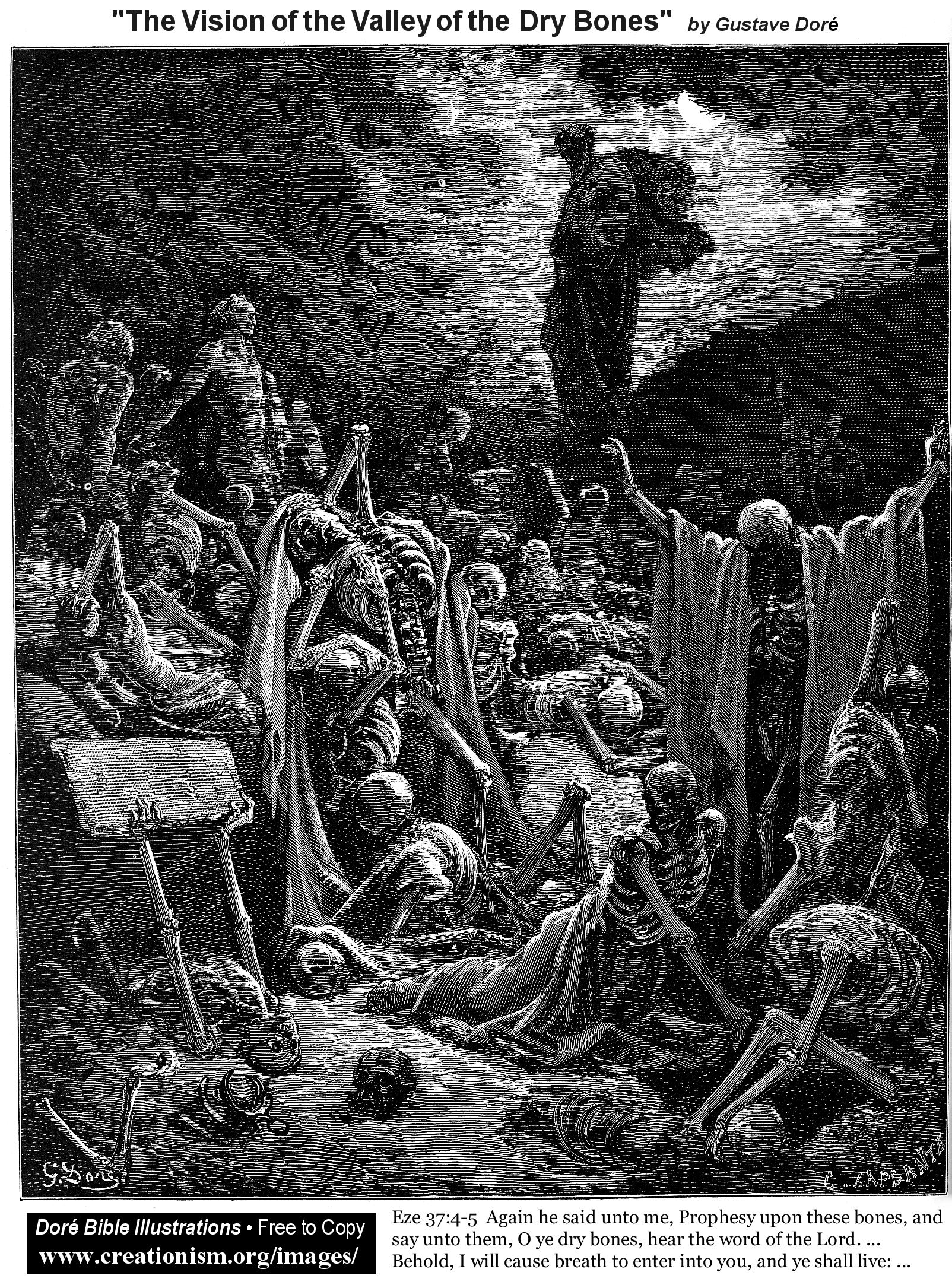
R’ Mordechai Yosef from Izbitz gives us an amazing teaching in Parshas Ki Seitzei, which really gives a person hope that nothing into which they invested love, interest, and sacrifice throughout their lives is lost. Even those things that weren’t right will still be redeemed and shown to have had a place.
He teaches us this by going through the whole seder haparsha, starting with the Eishes Yifas Toar. He starts out by pointing saying that the lashon “v’chashakta bah,” is a very strong word to use for “desire”. He also points that the Torah isn’t geared towards the lowest common denominator of people. Therefore, we’re talking about a person who is holy, a Tzadik which’s fighting in this milchemes reshus, and who is someone who has separated himself from ta’ava and worldy desire. Therefore, when he finds himself with a cheishek, a very strong desire for this woman, he truly sees in this some hashgacha pratis, that such a desire is not a product of his own cultivation of ta’avos, but rather it must be that he really sees something good in her and that is why he’s drawn to her. So he takes her according to the laws of the Eishes Yifas Toar.
It turns out though that she isn’t the hidden Tzadekes that he thought she was. And he’s now not only very disappointed in this fact, but he is also quite upset at himself that he was attracted to her to begin with. He worries that perhaps there was nothing good that he really saw in her and maybe he was just having a stam ta’ava for her, and that that desire he had for what he thought was the good within her was just an illusiory trick of the yetzer hara. However, he comforts himself by saying that it must be that they were have a good son together and that this would turn out well
But unfortunately, this man is beset by tragedy again and his son turns out to be a ben Sorer U’moreh. He has to take his son to the Beis Din and watch them kill him for stealing a little meat and wine. Now, he truly feels broken. Now, he can’t even look to their son as the nekuda tova that came out of his wife whom he originally desired. He really feels now that it was all for nothing.
But Hashem comforts him in three ways.
#1: He sees that after his son is executed, his body is hung. However, the Torah says it must be removed before nightfall, "ki Kilelas Elokim Talui." This means that even this person who deserved to be executed is still called a tzelem Elokim to the extent that it would be a Chilul Hashem to let his body just hang there. So he sees that in fact the son did posess a tzelem Elokim and that there was, therefore, a nekuda tova in him that only now, in the fulfillment of this halacha of removing his body after execution, is that fact of his tzelem Elokim revealed.
#2: The halacha for why he is executed after merely stealing some wine and meat is, "Tamus Zakai v'al tamus chayav." That means that the Torah is testifying that at this point in his son's life, he is called, "Zakai." Innocent. And this fact of his "zakai" status is only revealed in the ben sorer u'morer process. So the birur, clarification of the good in him is thus revealed in the halacha of ben sorer or morer its self.
#3: Later in the parsha, we have the halacha of Hashavas Ha'aveida. This means that lost objects must be returned. That cheishek that he had originally for the Eishes Yifas Toar feels to him like a "lost object," something which went for nothing. The halacha of hashavas aveida comforts this man by teaching him that Hashem will return every lost desire, decision, or mistake. Hashem will show him that in the end, based on #1 and #2 above, his original cheishek will be vindicated as having a purpose.
The Ish Hayisraeli is a chashuv thing and originates from the highest places in Shamayim. He would not have a cheishek unless it was directed at something truly good. It does not look this way on the outside, but the good points that one might be attracted to are often hidden in the lowest things. Many might be attracted to the "fallen" form of that nekuda tova. But deep inside, the only reason a Jew can be attacted to that thing in the first place is because of the true, good root of that nekuda tova.
May Hashem lift up and cleanse all of the ta'avos nefulos that we have had redeem those "lost" desires and energies that we have spent!
-Dixie Yid
(Painting is of the "Valley of the Dry Bones" - same message!)
Tuesday, September 4, 2007
A Bracha For a Thief & Elul Thoughts by SRV

Check out Yitz's post at Heichal Hanegina!
A Bracha... For a Thief at Heichal Hanegina by Yitz
Beautiful lyrics that are so apropos to Elul from a SRV song posted at A Simple Jew...
-Dixie Yid
Great Story from Bilvavi Mishkan Evneh Author's American trip

Due to all that I have been writing recently about the Rav Itamar Shwartz's visit to the United States and the Bilvavi Mishkan Evneh seforim, I have been zoche to be contacted by several people who have been at various shiurim that Rav Shwartz has given. I want to share one story that personifies the unification that Rav Shwartz is revealing in the different darchei avodah.
Rav Shwartz spoke at the Belzer Kollel in Monsey, NY. (That shiur can be downloaded and listened to here.) His drasha was filled with the guidance and words of the Baal Shem Tov and the Talmidei Baal Shem Tov. From what I heard, the chevrah there were really lit on fire from his words and were inspired to deepen and internalize the message of Kirvas Hashem. I was told that two of the Chassidim were talking after the shiur and one of them asked the other one, "So what kind of Chossid is he?" And the other one answered, "An emesdikeh Chossid!"
The second story took place in a mostly Litvish yeshiva, Shor Yoshuv, in Far Rockaway, NY (which is also available for download/streaming audio here). There, Rav Shwartz gave over his message with teachings from the GR"A, the Talmidei haGR"A, the Mashgiach from Ponovicz, and the like. I heard that one of the top talmidim there was heard to have said, "Now that's a true Litvak!"
When these two stories were told over to Rav Shwartz and his translator/gabai, Ofer, he (Ofer) responded, "Now you understand who the Rav is."
May we be zocheh to see and understand the oneness and unification that underlies all flavors of Darchei Avodah!
-Dixie Yid
(Picture courtesy of IloveTorah.com)
Monday, September 3, 2007
My Parents Beautiful New House in the Smokey Mountains

My parents are nearing the completion of a beautiful house in the Smokey Mountains by a small lake and overlooking a bluff, in which to enjoy my father's near retirement and retirement. "Oh I wish I was in Dixie."
-Dixie Yid
Dixie Yid's Take On the Bilvavi Author Starting Out Anonymously
 Here's my take on why the author of the seforim Bilvavi Mishkan Evneh, started off anonymously, from a Hashgacha Pratis perspective. If everyone knew who the author was at the very beginning when the seforim first began to come out about 3 years ago, then I believe that it would have been an impediment to the wide ranging acceptance the seforim have had. As it is, during his visit to the Eastern United States, Rav Shwartz spoke to Litvish Yeshivos, Kollelim and Baalabatim, Sephardi Yeshivos and Kollelim and Baalabatim, a Chassidishe kollel, a modern orthodox yeshiva, and to numerous FFB and BT Baalabatim from all backgrounds.
I believe that some would not have given the seforim a chance, if they knew who the author was at the beginning. Many might have said that the author is too young. Others would have said that since he's not coming from a Chassidisheh background, or their particular Chassidishe background, it's not for them. And Sephardim might dismiss it because it's from an Ashkenazi Rav.
As it was, no one knew who the author was or what his background or "denominational affiliation" was. Therefore, the seforim were judged based on their content, not the group affiliation of the author. Since the seforim draw light from many different paths in avodas Hashem and Torah, everyone saw the teachings of their own group in his writings. Everyone figured, "Look at what he says here, he's a Breslover!" "He's Sephardi!" "He's a Litvak!" "He's a Lubavitcher!" Since everyone saw the amazing clarity and direction that the seforim provided in focusing an individual's avodah in this world, they accepted it for its content, notwithstanding the mysterious identity of its author. Before you know it, the seforim were being studied in Litvish yeshivos, Chassidishe communities, Sephardi Shuls, and modern orthodox enclaves.
In the past 3 months, as the author's identity has become known, people are finding out that the author has a certain background, but that he draws his teachings from a unification of many different sources. This is why everyone was able to see their own mesorah in his teachings. Once they were learning the seforim and it had become accepted in their communities, people weren't going to stop learning them, simply because of some difference between the author's background and their own. It is for this exceedingly great advantage that I believe much good has come from the author starting out anonymously.
I told Rav Weinberger this theory of mine in the conversation that I wrote about before. He very much liked the idea, and in a subsequent conversation, told me that he told over my thought to Rav Shwartz himself!
We should all be zocheh to internalize the message of consciousness of Hashem at all times, that Rav Shwartz teaches about in his seforim!
-Dixie Yid
(Picture courtesy of Yoram Raanan)
Thoughts on Punishment/Kapara by Executed Man
 As Yomim Nora'im approach, I was affected by the thoughts of the murderer, Gary Gilmore which he wrote to a friend, while he was waiting to be executed on Utah's Death Row, reflecting on the meaning of his impending execution:
"Recently it has begun to make
a little sense. I owe a debt, from
a long time ago.
Once you asked me if I was the devil,
remember? I'm not. The devil would
be far more clever than I, would
operate on a much larger scale and
of course would feel no remorse.
So I'm not Beezelbub. And I know
the devil can't feel love. But I might
be further from God than I am from the
devil. Which is not a good thing. It seems
that I know evil more intimately than I
know goodness and that's not a good thing
either. I want to get even, to be made
whole, my debts paid (whatever it may take!)
to have no blemish, no reason to feel guilt or
fear.... I'd like to stand in the sight of God.
To know that I'm just and right and clean."
-Dixie Yid
(Picture courtesy of The Biography Channel)
Sunday, September 2, 2007
R' Lazer Brody with Yosef Karduner at Yad Binyamin
They sing together here. It's very nice!
-Dixie Yid
-Dixie Yid
New Yerushalayim Center for Torah and Chassidus needs support!

Rabbi Tal Zwecker is requesting our support for a new center for Torah and Chassidus in the center of Yerushalayim. Please click here for more information!
-Dixie Yid
Subscribe to:
Posts (Atom)