Friday, September 21, 2007

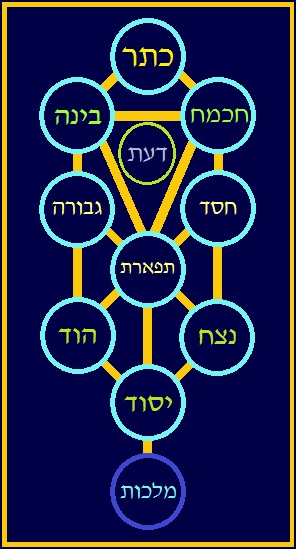
Inspirational Picture for Yom Kippur


Picture by Zalman Kleinman

-Dixie Yid

Bilvavi Video Shiur for Yom Kippur


Click here to view a shiur given by Rav Itamar Shwartz, Shlita, author of the seforim Bilvavi Mishkan Evneh at the Shorashim Center in Tel Aviv. In this shiur, he teaches the difference between the the spiritual work of the Jewish people relative to the spiritual work of Eino-Yehudim.

Thanks to the folks at Bilvavi.net for letting me know about this shiur.

Gmar chasiama tova!

-Dixie Yid

Thursday, September 20, 2007

Get Dixie Yid in your E-Mail Inbox!


You can subscribe to this blog by e-mail if you wish. You will get an e-mail in your inbox from FeedBlitz once per day with snippets and links to all of the posts that I have made that day. You can subscribe by clicking here. You can also subscribe by filling your e-mail address into the space under the words "Subscribe to Dixie Yid by e-mail." Then just click on the button that says "Subscribe Me." Regardless of the method you choose, you will get an e-mail that asks you to confirm your subscription by clicking on a link in the confirmation message from FeedBlitz.

Ksiva v'chasima tova!

-Dixie Yid

Yitz's Take on "The Biggest Chiddush" & the Marriage Relationship


Yitz, from A Waxing Wellspring has added to our conversation on the Bilvavi's bombshell relelation to use about the reality of attaining deveikus with Hashem in this world with a great piece today. I'll copy/paste his introductory paragraph but I hope that you will read his whole piece youself!

Althoguh his piece focuses on a different nekuda than my anonymous friend, I think his thoughts are well worth the read.

"Dixie Yid brought down from the Bilvavi Mishkan Evneh yesterday that our level of enjoyment (עונג) in the next world is directly related to our enjoyment of mitzwoth and Torah (and HaShem) in this world.

A Simple Jew also mentioned the crisis of men whose wives are in nidah.

I wanted to learn zchut on klal Yisrael, so this morning in my tefillah I had an insight into both of these matters, and they are directly related."

-Dixie Yid

Stains on My Daughter's Dress


On the second day of Rosh Hashana, my four year old daughter asked my wife, "Mommy, if my dress gets dirty, will I still be beautiful?"
My wife answered her that yes, even if her dress were dirty, she would still be beautiful.

After we recovered from the utter cuteness of her question, I started to think about it more in light of the season in which we find ourselves.

Just as one's body has garments, the soul also has its garments. The garments, or outward physical expressions of the soul in our world, are our thoughts, words, and actions. Just as one's clothes can get dirty, one can also dirty his soul's garments by sinning in thought, word or deed.

Therefore, one can interpret my daughters question to mean the following: When I have dirtied my soul by sinning in thought (through hirhurei ta'ava or kefira, etc.), word (lashon hara or ona'as devarim, etc.) or deed (moving muktza or preparing for the weekday on Shabbos, etc.) I have "gotten my dress dirty." After I have done this, does Hashem still think that I'm beautiful?

On the first day of Rosh Hashana, the day before my daughter's question, our rabbi said in Shul that even when we look at ourselves as ugly and disgusting because of our aveiros, our Avinu Shebashamayim, our Father in Heaven, still sees us as beautiful, as His children.

With those ideas in mind, I would like to suggest the following tefilla for use as a personal tefilla on Yom Kippur:

Master of the World, I have dirtied my thoughts, my words, and my actions with aveiros. Despite that, I want nothing more than to be closer to You! Even though I have dirtied myself with aveira, I am still your child. And a Father always thinks that His children are beautiful no matter what. Please Hashem, I know that you still want me to return to you. Please help me clean my thoughts, words and deeds from any stain so that I can stand before you without shame. I don't want to disappoint you anymore. Please bring me close to your service so that I can dwell in Your house all the days of my life!

-Dixie Yid

The Biggest Chiddush - Clarification


I wanted to share a very thoughtful e-mail that I received from a very thoughtful reader. He wanted to remain anonymous so I'm not sharing his name. But I think that the different and perhaps more accurate way that he explains "The biggest chiddush" in the Bilvavi Mishkan Evneh seforim on a certain nekuda, relative to the way I explained it in this post, is a must-read:

Kirvas Elokim Le Tov.

I took yet another look back at the language, and my understanding of perakim 39 and 53 is different- it's not so much the "ta'anug" element at all, but rather more the "devaykus" component, i.e. the consciousness of Hashem with the framework of Torah, mitzvos and every element of our lives (even the "mundane"). Thus for example, in your 2nd paragraph, I would have thought it should instead read:

In volume 1, in the 39th and 53rd Perakim, the author points out that most people think that even if they do not have very much Deveikus with Hashem that comes from learning Torah and doing mitzvos, we will get the reward of Deveikus in the higher levels of the world to come. This is exactly what I thought before learning Bilvavi.

Similarly, in the 4th paragraph: He taught that the ta’anug from Kirvas Hashem that results from Torah and mitzvos that we have learned about is meant to exist DURING OUR LIFETIMES! And that if you’re neshama is so desensitized that it cannot feel the ta’anug of Kirvas Hashem in this life, you will not attain the Kirvas Hashem and hano'oh meziv Hashechina in the higher levels of Gan Eiden either.

I didn't want to contradict the host. However, I hope you might take another look at those perakim and you might agree that the emphasis is not "ta'anug" but rather devaykus. It seems that those who have responded to your post are honing in the "ta'anug" component which I don't believe is the emphasis there. Plus, "ta'anug" can mean, and manifest itself, in a lot of different ways. Sure, devaykus is a form of ta'anug and ta'anug can be a form of devaykus, but I understood the 39/53 chiddush stresses closeness to Hashem in this world and how that closeness to Hashem correlates and carries over, be'ezras Hashem, to the next world.

I'll certainly understand if you disagree and apologize if I am mistaken, but I think the true chiddush is: Elevated heights in olam habah, i.e. devaykus in olam habah, is rewarded in accordance with one's devaykus to Hashem Yisbarach in olam hazeh (as opposed to just fulfillment of mitzvos and how many mitzvos one can amass over and above aveiros per Hashem's hidden cheshbin, as most of us grew up understanding it).

(Picture is from the cover of Zev Reichman's book, collecting teachings of Rav Moshe Wolfson, Shlita, Flames of Faith)

Wednesday, September 19, 2007

What's the Yetzer Hara behind Historical Tanach Reading?


I heard a sadening interview with Robert Alter, a professor who's come out with his new translation of the book of Psalms on wnyc.org's website, which you can listern to here. From the interview, it is apparant that the author's main purpose in the translation was to de-spiritualify (I made up that word!) the book of Psalms. One example is how he strictly avoids the word "soul" when translating the word "Nefesh," holding that the author(s) of the Psalms do not believe in the eternality of the soul.

Another interesting thing to consider is looking behind the obvious relish he displays when reading his translation of the following psukim from Tehilim perek 82, in a way depicting the Psalm as describing polytheistic belief.


מִזְמוֹר, לְאָסָף:אֱלֹהִים, נִצָּב בַּעֲדַת-אֵל;
בְּקֶרֶב אֱלֹהִים יִשְׁפֹּט.
ו אֲנִי-אָמַרְתִּי, אֱלֹהִים אַתֶּם; וּבְנֵי עֶלְיוֹן כֻּלְּכֶם. ז אָכֵן, כְּאָדָם תְּמוּתוּן; וּכְאַחַד הַשָּׂרִים תִּפֹּלוּ.


My question is this: Why would someone invest so much time and effort in the de-spiritualification of Sefer Tehillim? What emotion underlies such a sacrifice of time and resources in trying to hard to remove, by hook or by crook, any reference to any transcendant spirituality or relationship to G-d? Although he rationalizes this approach with the assertion that spiritual references are a recent interjection into the Psalms, that explanation is merely the means he must use to get to his goal. It's especially interesting that someone who is knowledgable enough in Hebrew to accomplish such a task would be motivated to do this.

My feeling is that such a person must such spiritual potential which creates a vacuum in his soul which must be filled with a relationship with Hashem. I think that the ability to invest personal resources, to the extent that he has, is the result of the natural desire of a Jew to connect to Hashem. However, since he has invested himself in a life which is not in connsonance with that spiritual search, he must find some way of quieting that spiritual hunger for something greater than himself and something greater than our world.

The method he chose is work tirelessly to limit and consign "religion" to the small limited space of our world. By taking out any reference to the transcendant from Psalms and glibly asserting Dovid Hamelech's belief in a pantheon of gods, he is attempting to soothe his inner turmoil and emptiness by telling himself that there really isn't anything higher than this world to which his inner longing could be directed.

In the process, the writing of these books also serve as consecutive temporary attemps at achieving some repreive from his soul's need to fill the void and thirst that it feels.

His efforts at concealing and covering up the existance of a higher spiritual connection with G-d, that man requires, are not so different from what the rest of of do on a less visible scale. We do the same type of thing in various ways. Perhaps I may tell myself that a certain madreiga in Avodas Hashem is not really for people "like me." Rather, that is for special individuals, yechidei segulah. Or I may tell myself that the purpose of certain mitzvos is merely for a worldly purpose, without any specific intention of connecting me to Hashem.

In all of these cases, this is the work of the yetzer hara. Rather than soothing the cognitive dissonance that I feel when I know that my life does not measure up to its great potential by seeking to become personally greater and connect to the Infinite Light, I soothe it by denying the existance of that transcendant reality.

That is why it is especially ironic that he choose to humanize G-d in his translation of Psalm 82. He interpreted those verses talking about "Bnei Elohim" as refering to gods. When really, it is an answer to his essential problem. The psukim are actually saying (paraphrasing), You [the Jewish people] are Bnei Elyon, people with huge, lofty potential! But when you lower yourselves to rip out your transcendant relationship with G-d from your lives, then you will die like some "Joe" in the street.

May we all merit to never negate our infinite potential to connect to G-d through every detail in life and never shortchange our potential in exchange for temporary emotional comfort!

-Dixie Yid

Tuesday, September 18, 2007

Learning Chassidus From Multiple Sources - At ASJ


A Simple Jew has a great guest posting by Akiva from Mystical Paths on a topic that has been grappled with here at Dixie Yid, the idea of drawing light from multiple Torah sources. It's an important addition to the conversation.

-Dixie Yid

(Picture by Zalman Kleinman)

The Biggest Chiddush That No One Knows

I have been thinking about a conversation I had with an e-friend a few weeks ago. We were discussing how we both learned a very basic fact of life, that was previously unknown to us, in the sefer Bilvavi Mishkan Evneh.

In volume 1, in the 39th and 53rd Perakim, the author points out that most people think that even if they do not get very much enjoyment and ta’anug from the Deveikus with Hashem that comes from learning Torah and doing mitzvos in life, we will get pleasure from our Deveikus in the higher levels of the world to come. This is exactly what I thought before learning Bilvavi.

I learned in Derech Hashem that the purpose of life is to attain Deveikus with Hashem and that this is the ultimate pleasure. I learned from there in the Ramchal that this is attained by doing mitzvos and learning Torah. When he said that this was the ultimate pleasure, I figured that since learning Torah and doing mitzvos do not currently give me ultimate pleasure, that the pshat was as follows: One’s neshama gets closer to Hashem whether he feels it or not. Due to the clouded perspective of this world, I may not feel that pleasure of closeness with Hashem, but it is indeed there. And when I leave this world and my neshama is no longer encumbered by the confusion of my physical body, then I will feel this pleasure from the Deveikus with Hashem that is created by Torah and Mitzvos.

Boy was I in for a shocker when the Bilvavi author taught that this was an ultimate mistake! He taught that the ta’anug from Kirvas Hashem that results from Torah and mitzvos that we have learned about is meant to exist DURING OUR LIFETIMES! And that if you’re neshama is so desensitized that it cannot feel the ta’anug of Kirvas Hashem in this life, you will not attain the Kirvas Hashem and hano'oh meziv Hashechina in the higher levels of Gan Eiden either.

At first I thought that this bomb that the Bilvavi author dropped on me was the product of his own thinking and logic. However, my friend shared with me that he asked Rav Avraham Schorr and Rav Moshe Weinberger whether the yesod that whether or not one feels that ta’anug from Kirvas Hashem in THIS WORLD is the test to see whether or not that closeness is, in fact, even extant, in terms of enjoying the higher levels of Olam Haba. They both answered him that not only was it true, it was so pashut that they thought it virtually did not require proof!

I am sharing this information so that people understand that it is important for each person to take steps to bring themselves closer to the place where he can say that his greatest pleasure in his life in Olam Hazeh his Kirvas Hashem from Torah and Mitzvos. Hatzlacha raba in that journey. This is why I am working on the path outlined in the seforim Bilvavi Mishkan Evneh. Although other paths may work for different people, we’ve all got to work on it somehow!

-Dixie Yid

(Picture of Melitzer Rebbe courtesy of R' Lazer Brody)

Food for the Neshama - Bilvavi Aseres Yemei Teshuva Drasha


Rav Itamar Shwartz, author of the seforim Bilvavi Mishkan Evneh, delivered a drasha at the Beis Yaakov Seminar in Chaifa yesterday entited, "Mazon l'neshama". You can listen to the mp3 shiur at this link. Gmar Chasima Tova!

HT to Bilvavi.net for pointing this out to me!

-Dixie Yid

Monday, September 17, 2007

Frum Yid Appointed by President Bush to be Next Attorney General


Check out this article on Michael Mukasey's frumkeit.

-Dixie Yid

Rav Avigdor Miller on Appreciating the Wonders of Creation - Cute Vidoe!

A previous commenter requested this video, which was also made by David Jasse, on the wonders of creation, by Rav Avigdor Miller.


-Dixie Yid

The Meor Einayim On Teshuva and It's Relation to Din/Chesed


The Meor Einayim has an amazing explanation for why Chazel derive the nature of the aseres yemei teshuva from the pasuk, "דִּרְשׁוּ יְהוָה, בְּהִמָּצְאוֹ; קְרָאֻהוּ, בִּהְיוֹתוֹ קָרוֹב." "Seek out Hashem when He is found; call out to him when He is close." (Yeshayahu 55:6)

He quotes the Gemara's (Rosh Hashana 18a) kasha that asks, "Are there times when He is not found!?" Rather, this refers to the Aseres Yemei Teshuva. He then asks what the gemara saw in this particular pasuk to read in this remez to aseres yemei teshuva davka in this verse. Then then gave a couple of yesodos for background so that he could answer his quesiton.

One is the fact that the gemara in Menachos 29b sayt that the pasuk in Bereishis 2:4, "אֵלֶּה תוֹלְדוֹת הַשָּׁמַיִם וְהָאָרֶץ, בְּהִבָּרְאָם," says that the word, "בְּהִבָּרְאָם," teaches that, "אל תקרי בהבראם אלא בה"י בראם." This means that the gemara is saying that Hashem created the world with the letter Hei. How and why is this so?

Hashem created the whole world for the sake of mankind, that they should serve him. He first created the world with the mida of din. And then it was created with the mida of chesed. Why was it done this way (with the switch from first din to later chesed in the creation of the world)? He explains how din is the instigator or the cause for mercy. The din preceeds and gives birth to the mida of chesed. This can be seen from the letter hei, with which the gemara said Hashem created the world. The letter Hei is made up of two other letters. There is a Daled, which make up the top and right sides of the yud. And there is the vav, which is small and makes up the left side of the hei, and which is surrounded by the daled.

He says that the daled is the feminine side, the side of din. This can be seen from the fact that the word "daled" is from the word "Dal," which means "poor." Leis l'megarmei klum. This represents the feminine side which is also called leis l'megarmei klum because the female side is that of the mekabeil. That is why is is refered to as poor, or "dal." The vav within and surrounded by the daled in the letter hei is the male side, the side which is mashpia. That is because the vav is known as the "vav Ha'hamshacah." The vav which draws down hashpa'os from shamayim and is mashpia them to the female side, the daled.

This whole setup of the daled and the vav within the letter hei refer to an amazing paradigm whereby the feminine side of midas hadin surrounds and ultimately gives birth to the male side like the pasuk in Yirmiyahu 31:21 says, "נְקֵבָה תְּסוֹבֵב גָּבֶר."

How does this apply to Aseres Yemei Teshuva? Everyone's consciousness of the Yom Hadin, the day of judgement, creates in them a feeling of fear and awe. This feeling of fear and awe creates in them the motivation to do teshuva. And when people do teshuva, this fulfills the whole purpose of the world, and this "awakens" within Hashem the mida of chesed and "creates" the desire in Him to have the world continue to exist. So we are recreating and validating the creation of the world on Rosh Hashana, and the aseres Yemei teshuva when we do teshuva based on that realization of the reality of Din.

That is what it means that Hashem created the world with the letter hei. Hashem recreates the world every year on Rosh Hashana with the reawakening of chesed that comes as a result of the Din, the judgment of Rosh Hashana. And now this is how he answers up his original question of why Chazal inserted their understanding of Aseres Yemei Teshuva into the specific pasuk of, "דִּרְשׁוּ יְהוָה, בְּהִמָּצְאוֹ." Seek Hashem when "hei" "matza'oh," when the letter hei makes [the world] created. (Matza, as a shoresh, means to create or brought into existence, as in the word metzius, which means "reality" or "existance.") Seek out Hashem when the letter hei (daled/din creating/brining out chesed/vav) brings the world into existance. And looking at the pasuk from that perspective, one can understand why the ultimate time where this happens is Rosh Hashana and the aseres yemei teshuva. So it is no wonder, then, that Chazal used that pasuk, which refers to this reality of din preceeding chesed, as a reference to the aseres yemei teshuva, which mean the same thing in terms of the annual recreation of the world.

May Hashem bless us that we be conscious this time of year of the Din that is going on so that we can be zoche to do teshuva and create merit for the continued existance of the world!

-Dixie Yid

(Picture courtesy of Sinai Central)

Sunday, September 16, 2007

Making Every Minute Count - How to Get Written In the Book of Life

Thanks to my friendly neighborhood Aish Kodesh friend, I'm presenting to you Rav Moshe Weinberger's Shabbos Shuva Drasha audio. Rav Moshe Weinberger, from Kehillas Aish Kodesh in Woodmere, NY has been advised by Tzaddikim, as I understand it, that he should give drashas, that are normally given on Shabbos, on weekdays to allow more people to attend. So here is the audio of the Shabbos Shuva Drasha. You can click here to listen to the audio on the embeded player:

Get this widget | Share | Track details


And you can click on THIS LINK to download the shiur from Aish Kodesh's download page!

Update: Anti-Ma'aris Ayin Announcement: I have received permission from Aish Kodesh to post the embeded player for Rav Weinberger's shiurim, as long as I link Aish Kodesh's website for the actual downloads. And as you can see above, that it what I have done. May the Rav's words enter our hearts and assist us in doing teshuva!

-Dixie Yid

Wednesday, September 12, 2007

History of Congregation Aish Kodesh video

While searching for the videos I just posted of Slichos at Congregation Aish Kodesh in Woodmere, NY and also for the video of Rav Moshe Weinberger's Yamim Noraim drasha, I also came accross this interview with Rav Weinberger about the history and background behind the founding of Aish Kodesh. Very interesting and short (about 2 minute) video by a fellow named David Jasse!


-Dixie Yid