Showing posts with label Sipurei Ma'asios. Show all posts

Saturday, October 5, 2013

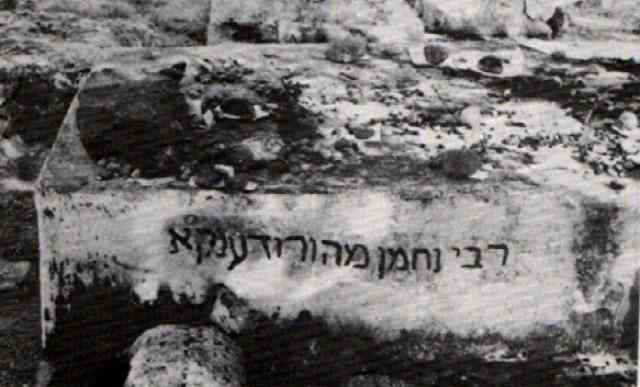
Two Stories: Shpoler Zeide/Rebbe Nachman and Bais Yisroel of Ger from Yom Kippur War

I saw a great story over Shabbos in the sefer Sippurei Chassidim by Rav Shlomo Yosef Zevin, zt"l and heard another story from Rav Weinberger at Shalosh Sheudos which share a lot in common so I wanted to share both.
 
Some chassidim heard about all of the negative things the Shpoler Zeide said about Rebbe Nachman and decided to go to Rebbe Nachman's town to do a little "self help" to prevent Rebbe Nachman from continuing his work.
 
The Shpoler Zeide heard about this and summoned the "activist" chassidim. When they came, he first told them not to touch Rebbe Nachman or harm him in any way. He then told them the following vort:

Rashi brings down that when the Torah says about Noach that he was a "tzadik in his generation" that some of chazal explain this positively that even in such a horrible generation, he was still a tzadik! And others explain it negatively, that by comparison to his low generation, he was considered a tzadik, but that if he had lived in Avraham's generation, he would have been considered like nothing.

The Shpoler Zeide asked the well-known question: If it's possible to explain the fact that the Torah calls Noach a tzadik positively, why on earth would any of the sages have explained it negatively?! Doesn't the mishna say in Pirkei Avos that one should judge every person favorably!

The Shpoler Zeide therefore explained that because Noach is the first person in the Torah who is called a tzadik, chazal were concerned. Although they wanted to explain Noach only positively, they were worried that if they did so, everyone would say that someone can only be considered a tzadik if he has no opposition among the other rabbonim and tzadikim. Chazal therefore made a point to find some basis for "opposition" to Noach so that from then on, everyone would know that opposition by tzadikim to someone does not mean that the person isn't a tzadik.

We see from this that even though the Shpoler Zeide was stridently opposed to much of what Rebbe Nachman was doing, that as a person, he considered him a tzadik.

I heard the second story from Rav Moshe Weinberger at Shalosh Sheudos. He said that during the Yom Kippur War, many parents were coming to the Bais Yisroel of Ger for help because of their children who were fighting in the war. He was completely immersed in talking with, crying with, and davening with these families.

The Bais Yisroel davened every day at the Kosel, begging Hashem for mercy on these young men. At one point he told a number of people the following thought: He started off by asking the same question asked by the Shpoler Zeide above; why chazal would explain the way the Torah refers to Noach as a tzadik pejoratively if there other, more positive, ways of explaining it. After all, it was in Noach's zechus that the whole world was saved!

He answered that it must be chazal were concerned that if everyone saw Noach was such a big tzadik and he succeeded in saving the world, that they would think that only a big tzadik can save the world. Chazal minimized Noach's tzidkus in order to teach us that even a "little tzadik" can save the world. The Rebbe continued with a tefila that maybe even a "little tzadik" like him could accomplish something in saving some of the boys fighting in the war.

Rav Weinberger concluded that we each have to believe that we too can save the world and do not have to be the biggest tzadikim to do so.

May we all be zoche!

Thursday, February 16, 2012

A Minyan of Thieves

There's a famous story of the Baal Shem Tov I heard from Reb Shlomo and I just saw a different version quoted by R. Simon Jacobson (see below). Sometimes when we can't get into heaven al pi shuras hadin, we have to break in...

They tell the story of a young widow who once came crying to the Baal Shem Tov. “I recently lost my husband. Now my young child, my only child, is lying gravely ill. The doctors have given up hope. Please, Baal Shem Tov, please do something to save my child.”

The Baal Shem Tov, whose heart was always open especially to the needy and oppressed, soothed and reassured her saying that she should go home and her child will be fine. He then proceeded to gather together ten (a minyan) of his holy hidden Tzaddikim, to pray for the child’s welfare and immediate healing.

But to no avail. As much as they tried opening their souls and in turn opening the gates of heaven, they sadly were unsuccessful. The Baal Shem Tov sensed that the decree in heaven was sealed and could not be reversed by the Tzaddikim’s prayers.

The Baal Shem Tov, however, was not one to take no for an answer and give up. He fell upon an idea. He asked his wagon driver to prepare the wagon and the horses. They were going for a trip to the forest. He directed the driver to go to a particular spot, which surprised the driver, being that this was known to a be a dangerous area where thieves lurked, and everyone would avoid.

They arrived at the designated spot. The Baal Shem Tov climbed off the wagon, and within a few moment he was, to the chagrin of the driver, surrounded by several thieves. When the head of the band of thieves saw that it was the Baal Shem Tov, he put down his weapon and with wonder and astonishment asked: “Baal Shem Tov, what are you doing here in the wild?”

The Baal Shem Tov replied: “Listen, I need to speak with you. I need your help.” All of them wondered what possible help could the Baal Shem Tov need from lowly thieves. The Baal Shem Tov continued speaking to the band leader: “I need you to gather ten of your thieves and come with me to pray for a sick child.” The head thief didn’t understand, but since the Baal Shem Tov was requesting he complied. He gathered a minyan of his partners in crime, and they prayed with the Baal Shem Tov.

The child miraculously recovered.

Later, when the Baal Shem Tov was asked by his surprised students, “how were you able to accomplish with ten thieves more than you could have accomplished with ten Tzaddikim?!” the Baal Shem Tov replied: “Simple. I saw that all the gates in heaven were locked. And I needed someone to break in…”

Click here to get Dixie Yid in your e-mail Inbox or here to subscribe in Google Reader.

Tuesday, March 22, 2011

Tales From the Zohar Part 5 - Guest Post by Rabbi Yaakov Feldman

I am proud to present the newest installment in the series of artices by Rabbi Yaakov Feldman on stories and insights from the Zohar. You can find the prior articles here. Enjoy!
The Book of Radiance: Tales from the Zohar
By Rabbi Yaakov Feldman
5. THE FIRST LIGHT

Few things stun as much as the catch of quick light out of the blue. Given that, just imagine the sight of a gloomy crowd of wicked blind people -- foolish souls who can’t see, yet who manage to strike out at others in the dark, to steal their jewels in the night, or to panic children in the shadows. And imagine turning a light on them suddenly that’s so strong that not only are their victims saved but the wicked blind themselves are able to see their own wickedness. How stunning would that light be!
Imagine then the moments before light itself was created by G-d with the simple command, “Let there be light!” (Genesis 1:3). For, all there was then was utterly dark, frigid cold, and unreadable nothingness suddenly lit up from out of nowhere.

In fact we’re told that before "stretching out the heavens like a curtain," G-d "wrapped Himself in light like a garment" (Psalms 104:2) and the radiance of His glory then illuminated the world from one end to the other (Breishit Rabbah 3). We’re likewise taught that it’s as a consequence of the act of wrapping Himself in that light that G-d became invisible to us (see Megilah 19b).

There’s much to say about G-d’s invisibleness, which is the single greatest deterrent to our belief in Him, to be sure, though it’s rarely mentioned. But the fact that His invisibleness is caused by His being over-covered by Light is captivating! It implies for one thing that were He not over-covered with it, we’d be able to see Him indeed.

One thing we can derive from that fact, of course, is that we’d do well to sit in the dark from time to time ourselves, with our eyes closed shut and our hearts stilled, in order to “catch sight” of Him!

Shut out that light, in other words, listen closely to the dark stillness, and allow G-d in. For not only does He dwell in the heart and minds of those fortunate souls who know Him by catching sight of the great light that surrounds Him and by surmising His own presence within it, He likewise dwells in the poor and wretched souls who sit in the dark but who “see” Him there, too. For in truth “the whole world is full of His Glory” (Isaiah 6:13) as He suffuses and surrounds all worlds ( Zohar III, 225a).

In any event, the Zohar refers to that light as the “Primal Light” (Zohar 1, 31b). And we’re taught that “one could see with it from one end of the world to the other” (Chagigah 12a), though this unearthly light only “shone in full splendor until Adam sinned” at which point G-d withdrew it from the world (Breishit Rabbah 12).

So, let’s see what else the Zohar offers there about this Primal Light. We learn (Zohar 1, 31b) that G-d had shined it upon Moshe when he was a baby, when “his mother hid him for the first three months of his life”; but that many years later “G-d took it away from him when he appeared before Pharaoh” so that the latter wouldn’t benefit from being exposed to it; and that “He gave it back to Moshe when he stood at Mount Sinai to receive the Torah” so the Primal Light and the Light of Torah could finally be rejoined.

And we’re told that Moshe enjoyed that Primal Light from then on to the end of his life, thanks to which he was able to see “the (whole) Land of Israel from Gilead to Dan” which he couldn’t do otherwise. That suggests of course that the land of Israel is available on some subtle discreet levels to anyone wherever he or she stands, when that person derives his inspiration from G-d’s own Light.

Elsewhere, though, the Zohar speaks about light in “another light”, so to speak (Zohar Chadash, Breishit 15 b-d). It offers there that the light of the sun is actually derived from the Primordial Light we referred to above, which it terms Aspaklariah D’Liayla -- the great “Speculum Above”.
“Don’t be surprised by this fact,” it offers, because a lot of things down below derive from sources up above, for which it gives examples.
After all, “when a master teaches Torah, he first divulges it to his translator” (see below), who then passes the teaching on “to those close to him”, who then likewise pass it along to others down the line until the entire auditorium gets to hear the master’s words. Thus we find that when all is said and done, “everything depends on the master” who revealed the Torah’s teaching in the first place, even though the rest heard it from others’ lips.

First of all, the “translator” referred to could also be termed a “reciter”, as our rabbis taught Torah in auditoriums that were too large to carry their voices all the way through, so their messages were passed along from one “reciter” to another, so on down the line, so everyone could benefit from his wisdom. The point of the matter is that like the sun which draws its light from up above, you and I derive the Torah we live by from a loftier source -- one great master or another. But it goes deeper yet.

It’s likewise true that while “Moshe was shone upon by G-d’s Glory” itself because he was so close to G-d, “Joshua was ‘shone upon’ by Moshe”, the “elders were ‘shone upon’ by Joshua”, the “prophets were ‘shone upon’ by the elders”, and the tribal “chiefs and leaders were ‘shone upon’ by the prophets” offers the Zohar (see Pirkei Avot 1:1). That’s to say that the Torah that the master whom we depend upon for our sustenance draws its light from the earlier masters all the way back to Moshe, who drew upon G-d’s own Glory for his revelations.

Returning to the idea that the sun derives its light from the great “Speculum Above”, Rabbi Elazar says in our Zohar that the sun only receives “a single thread of splendor”, despite its apparent radiance; and he volunteers that the sun’s light is a mere 1/60,075 th’s of the Speculum’s own light -- which is a far, far dimmer light than the 1/100 th’s depicted in Midrash Tachuma (Beha'alotecha) to be sure!

The point of the matter is as follows. Whatever light you and I may exhibit in this life and whatever wisdom we may have is wholly derivative without exception. Nothing we do, think, or say that seems to radiate or to be splendid is our own. All of our assumed originality comes down to our pinching something off the edges of something or another we’d already learned, and adding a dollop or two of something we’d learned elsewhere to it, or the like.

Or better yet, it comes to our turning full-face toward our source and acknowledging it, and simply expressing its own brilliance to some “lesser lights” than ourselves in our own terms without actually adding a thing.
For such is the human condition: while we know precious little on our own, we can and often do derive the insights of others who know more than we, but who themselves in fact derive their insights from sources who knew far more than they. As such at bottom let it be said that everything ever known, said, or proposed is a reflection of G-d’s own “Speculum Above” which is its ultimate source.

The sooner we take that to heart, the wiser we’ll be, in fact. For, as a sage once put it, “The greatest knowledge is the realization that we know nothing in fact”.

© 2011 Rabbi Yaakov Feldman
Click here to get Dixie Yid in your e-mail Inbox or here to subscribe in Google Reader.

Sunday, January 23, 2011

Stories From the Zohar - Part 4! - Rabbi Yaakov Feldman

Here is the next part in a series of articles on stories from the Zohar by Rabbi Yaakov Feldman. You can find the first article HERE.

The Book of Radiance: Tales from the Zohar
By Rabbi Yaakov Feldman

4. LAYER UPON LAYER

How rich and effulgent with spices it must have been, the garden that King Solomon used to meander about and gather roses from (see Song of Songs 6:2). And one can only imagine how copious in texture and color his nut-garden must have been, too (see Ibid. 6:11). In any event, the Zohar tells us that one day Solomon “set out to penetrate the depths of the nut … so he took hold of one by its shell and began to contemplate its different layers” right there in the garden. He came to realize that “just as the nut itself is surrounded by many shells, so too is the world, with shells both above and below. For, from the beginning of the mystery of the Heavenly Point (all the way up, all the way) down to the lowest of degrees, each thing is subsumed in every other thing, and each serves as a shell to the other” (Zohar 1, 19b).

That’s to say that Solomon came to understand that each and every thing is encased in something else, which is encased in yet some other thing; and that the whole functions as a sort of puzzle within a puzzle which we often can’t solve. For, most of us stumble about and soldier-on doing what we must, never quite sure what’s overhead and what’s within.

We’re told for example that though he was a prophet and privy to all sorts of revelations, Ezekiel saw “a tempest coming from the north, (along with) a huge cloud and a flaming fire with a brightness over-covering it; and from its midst was like the color of the Chashmal (an untranslatable term) from the midst of the fire” (Ezekiel 1:4), one within the other. The Kabbalists tell us that that’s an esoteric depiction of the layers of our being, but at the time Ezekiel was so thunderstruck by the complexity of it all that he didn’t quite grasp what he’d seen for the moment.

Well, touching on this same theme (and we’ll see exactly how so later on), the Zohar presents us with a tale in which it’s recorded that Rabbi Yehudah was walking with Rabbi Abba when Rabbi Yehudah asked the following: “If G-d knew that Adam was destined to sin in His presence (by eating from the Tree of Knowledge) and that G-d would sentence him to death, then why did G-d (bother to) create Him?” (Zohar 3, 159 a-b). Good point!

Thinking Rabbi Yehudah had tread upon ground he shouldn’t have (understand that Rabbi Yehudah was a younger disciple at that point), Rabbi Abba rebuked him and said, “What need do you have to know the ways and decrees of your Master?” After all, he went on, “You can question what you’re permitted to question…”, but “you can’t question G-d’s ways and the supernal secrets that He has hidden away!”

But apparently that didn’t sit quite right with Rabbi Yehudah. In point of fact, he wasn’t the only sage to have wished to have the Great Curtains of Heaven opened for him but couldn’t. After all, none other than Moshe once asked G-d to grant him insight into His governance of the world but he received only an arcane answer (Menachot 29b).

It only stands to reason that Rabbi Abba would have been reticent to disclose a secret to him, though; for weren’t we warned that “the secret things belong to G-d our L-rd” (Deuteronomy 29:29) and not us? And isn’t it said in Sefer Yetzirah that when it comes to certain things that we’re to “stop (our) mouth from speaking and (our) heart from thinking” about them, and that if our heart “runs” there because we want to delve into it, that we’re to “return to the place” -- the subject at hand -- only intermittently and warily (1:8)?

And haven’t we also been cautioned not to “seek things that are too hard for you (to decipher), and not (to) search for things that are hidden (from you), and (only) to think about things you have been permitted to; (for) you have no business with secret things” (Chaggiga 13a)? Nonetheless, sometimes the soul yearns to know and the heart can’t live without insight, and that was apparently true of Rabbi Yehudah.

But Rabbi Abba continued to discourage him. “Who can know and grasp G-d’s hidden thoughts?” he remonstrated him. “Common people (like us) haven’t permission to speak of concealed things”; only people like “the Holy Luminary”, Rabbi Shimon Bar Yochei do, not us, he went on to say.

Nevertheless it seems that something had him change his mind. We don’t know what did it -- whether Rabbi Abba suddenly came to see that the younger Rabbi could be trusted with the secret; whether the mention of Rabbi Shimon Bar Yochei evoked his presence, and Rabbi Shimon himself allowed Rabbi Abba to go on, or something else -- but Rabbi Abba suddenly went on to reveal the following to Rabbi Yehudah and to us as well, his onlookers. It’s based on the famous verse, “And G-d created man in His image, in the image of G-d did He create him” (Genesis 1:27) and it too speaks about our inner and outer layers, and of how interlaced they are.

“The Holy One, blessed be He, is hidden in the midst of three worlds”, he said quite curiously. “The first one is very lofty, it’s the most secret of them all… and it’s only known to Him, as He’s concealed in it. The second, which is connected to the first, is the one in which G-d can be known …. And the third, which is the lowest, is the world in which… the angels dwell, and where G-d Himself is (both) there and not there.” That means to say that “while He’s there now” to be sure, “He nonetheless leaves it once you start to reflect upon and grasp Him” and He escapes your grip.

Thus, if you want to find G-d you’d need to pass through three separate layers, one deeper than the next: first, past how He presents Himself in this world, where He’s knowable to us on some levels but not on others; second, past how He is when He dwells up high where He’s knowable to sages and prophets; and third, deep within the highest level, where He’s only known to Himself. The point is that all three levels are intertwined, to be sure, but finding G-d anywhere along the line is still and all a challenge.

Now, man, who is created in G-d’s image as we’d learned, is like that too; and this is Rabbi Abba’s point as well. For, man also occupies three “worlds”, if you will. The first is the one in which he is at once both “there and not there” -- that’s his physical existence, where he’s most manifest but where he doesn’t really belong at bottom. His “second world” which is “connected to the supernal worlds, is man’s (experience of the) … Garden of Eden” after he passes through this world. And his “third world” which is “supernal, mysterious, concealed, and hidden” is also “incomprehensible”, because it’s even beyond The Garden of Eden.

His point here is to illustrate that “all (below) is as it is above”, in that we too have our inner and outer realms, which are also intertwined. Thus, if you want to understand man you’d also need to pass through three separate layers, one deeper than the next: first, past how he presents himself in this world; second, past how he is when he dwells in the Garden of Eden after his passing; and third, deep within his being, where man’s essence is “supernal, mysterious, concealed, hidden” and “incomprehensible”. For uncovering one’s own makeup is also a challenge, since we too are comprised of layer upon layer of being over-covering our essence.

Having touched upon the Afterlife, and bringing the conversation back to where it had started (when Rabbi Yehudah asked why man must die), Rabbi Abba then makes the point that just as we were created in G-d’s image and thus are comprised of various layers of being, we’re likewise worthy of “a supernal inheritance” from our Father, immortality. For man “will never be annihilated but will enjoy (residence in) goodly, supernal, and precious worlds” after death, he assures us. In other words, Rabbi Abba is telling Rabbi Yehudah that though death is inevitable and daunting, it’s nevertheless purposeful and beneficial.

So we’re to “rejoice when the righteous depart from this world” rather than mourn. For the truth be known, “had man not sinned, he would never have tasted death”; but since he did, we must all “taste death before (we) enter the other worlds” we’d cited above. And on some level life and death are intertwined, too; as everything lies within everything else like shells upon shells.

© 2011 Rabbi Yaakov Feldman

Picture courtesy of techlines.ky.gov. Click here to get Dixie Yid in your e-mail Inbox or here to subscribe in Google Reader.

Tuesday, November 2, 2010

A Ba'al Mussar's Experience in Uman

Here is a section from a very nice article I read this morning which was sent to me by Neil Harris . HT to him for pointing me to this article:

I walked over to the Tzion to find only several dozen people praying at the grave. I entered this small crowd, Psalms in hand looking forward to saying something really significant to God. Over the next hour I took small steps forward into the increasingly dense crowd. I finally got to within one row of the large four-foot high, ten-foot long, five-foot deep marble grave.

A row of men in front of me leaned, heads on arms on the grave crying and whispering intimate prayers. A sociable Israeli man next to me played traffic cop and called out every few minutes, “Ok, brother, your time is up, let someone else get in,” grabbing the shoulder of one of the petitioners and helping him make way for the next person.

At last it was my turn. I squeezed forward and there I was – at the grave...

CLICK HERE to read the full article. It's a very nice article by a Mussar oriented person who is really working on himself.

Picture courtesy flikr. Click here to get Dixie Yid in your e-mail Inbox or here to subscribe in Google Reader.

Please donate to my son's cheder by going to minivanraffle.org to buy a raffle ticket. The drawing for a new minivan, car, or $20,000 cash will be IY"H Chanukah time. $100 for 1 ticket. $360 for 5. Where the form says "Referred by," please write "Dixie Yid." Tizku l'mitzvos!

Wednesday, October 27, 2010

Story Told by a Young Shlomo Carlebach

CLICK HERE to listen to or download this mp3 of a very young Shlomo Carlebach telling a story about Yair Dori. Great quality audio. He's speaking in Hebrew.

Thanks to a reader for pointing me to this audio and to Eliayhu Amsalom, who has a blog associated with Yedidya Meir's Israeli radio show! Click here to get Dixie Yid in your e-mail Inbox or here to subscribe in Google Reader.

Please donate to my son's cheder by going to minivanraffle.org to buy a raffle ticket. The drawing for a new minivan, car, or $20,000 cash will be IY"H Chanukah time. $100 for 1 ticket. $360 for 5. Where the form says "Referred by," please write "Dixie Yid." Tizku l'mitzvos!

Sunday, July 25, 2010

Story of the Steipler, Tzadikim Knowing Things, and Potential Gerus

I saw this interesting quote from Y.Y. Rubinstein's new book That's Life, quoting a story from the Steipler Gaon that related to him "knowing things" that he couldn't naturally have known. The story also related to gerus in an interesting way. People who read my post on Tzadikim knowing our thoughts and actions (especially Snag!) will find this story particularly interesting. And those who remember our discussion on the difference between a Ger's soul before and after Gerus may be interested as well since the story discusses the difference between a Jewish and non-Jewish soul.

Very interesting story I once heard from Rav Baruch Rappaport, shlita, an example of the sort of thing that the Steipler “saw.”

Once, a bachur who had been learning in Bnei Brak came to the Steipler for a berachah. The young man had just become a chasan and he wanted his engagement blessed.

The Steipler looked at the young man and, instead of giving a berachah, told him to go and bring his rosh yeshivah. The boy was obviously distressed and shortly returned as requested. He was instructed to wait outside while the Steipler Gaon spoke to the rosh yeshivah.

The rosh yeshivah was astonished when the Steipler asked him, “Vi macht ir a shidduch mit a Yiddishe meidel and a goy? How do you come to sanction a match between a Jewish girl and a non-Jewish boy?”

The rosh yeshivah was dumbfounded. He protested that the boy was a Jew. He had personally known the boy’s parents in America for many years. They, like him, were very fine people. The boy was a talmid chacham possessed of good middos.

The Steipler was unimpressed and insisted that the young man was not Jewish. Inquiries were made, and indeed the Steipler was proved right. There had been a conversion that was in reality no conversion at all. The conversion occurred three generations before, through the maternal line. The parents were unaware of it, as was the bachur.

I never heard the conclusion of the story, but if he was as exceptional as his rosh yeshivah described, it would be easy to assume that an authentic conversion followed.
I did, however, hear of the question that the much surprised rosh yeshivah put to the Steipler Gaon after the truth had come out.

“How did you know?”

That was a very reasonable question indeed. The boy’s “genetic” makeup was overwhelmingly Jewish. He looked Jewish. He spoke Hebrew, Aramaic, and probably Yiddish, too. He learned well.

The Steipler was perplexed by the question and replied, “Er hot nicht gehat a neshamah! He had no neshamah.”

The word neshamah is usually translated as “soul.” That is not accurate. Every human being has a soul. A neshamah might be best translated as “super-soul.”

When I am teaching my students, I always draw an analogy with a truck. When the truck is empty, you will see one of the double sets of wheels at the back, raised off the road. When it is fully loaded, these extra wheels are lowered to help carry the heavy weights the truck has to transport.

Since Jews have an extra spiritual burden to carry - more mitzvos than non-Jews - they are given an extra spiritual component to bear it. That is a neshamah. The Steipler “saw” that the bachur who had come to seek a blessing did not have one.

Picture courtesy of Wikipedia. Click here to get Dixie Yid in your e-mail Inbox or here to subscribe in Google Reader.

Wednesday, July 14, 2010

Stories From the Zohar - First in a Series of Articles by Rabbi Yaakov Feldman

The Book of Radiance: Stories from the Zohar
By Rabbi Yaakov Feldman

1. The Stories in the Torah

Rabbi Shimon Bar Yochai, the sage behind most of the teachings of the Zohar, once offered a remarkable statement there about the Torah … and about the holy Zohar itself (3:152a).

“Woe to those who say that the Torah only came to relate simple stories and foolish tales!” he warned. For, “if that were so, why, then even we ourselves could create a ‘Torah’ with foolish tales -- and even better ones!”

What an astounding thing to say! But how could he ever say that about the Torah, which “existed 974 generations before the world was created” (Zevachim 116a), which “G-d took council (with) before He created the world” (Pirkei d’Rebbe Eliezer 3), which is “one of the three things thanks to which the world is sustained” (Pirkei Avot 1:2), and without which “heaven and earth couldn’t continue to exist” (Petachim 68b)?

Rabbi Shimon didn’t stop there, though. He went on to say that “if (the Torah only came) to address material matters” as it sometimes seems to, “then our leaders would have better stories to tell, so we should follow their example and produce (such) a ‘Torah’”.

He ended his point there, though, and offered the following insight.
“The truth of the matter is that all the words of the Torah are exalted and (contain) arcane mysteries.” They aren’t at all what they seem to be. And his point is that it’s the job of the Zohar to reveal those secrets.

All kinds of mysteries and secrets are discussed in the Zohar: the secret details about creation, about the ways of the angels and the tzaddikim, about the meaning of life, about the purpose of this mitzvah and that one, about the Jewish Holydays, as well as about birth and death, happiness and sadness, and much more.

“Come and see,” Rabbi Shimon goes on …. “It’s said of the angels (that G-d) ‘formed His angels (as pure) spirits’ (Psalms 104:4), yet when they descend down here the angels don earthly clothing”. Why -- “because if they wouldn’t, they couldn’t function in this world, and the world couldn’t endure them”. That is, seeing them in their native clothes of bright, celestial light would be too intense to bear, so they have to “dress down”, as the expression goes.

“Now, if that’s true of angels,” he says, “then how much more so is it true of the Torah … which all the worlds exist thanks to!” Shouldn’t it “don earthly clothing”, too? After all, who could stare straight ahead at the Torah in all its celestial light?

So in fact “the Torah did do that when it was conveyed to this world, (because) if it didn’t don worldly garments, the world couldn’t bear it.” The point is that “the Torah’s stories are its ‘garments’” and the Torah has to don them so that we can handle it.

And so, for example, when the Torah speaks about the various goings-on of our ancestors or about the sights and sounds it depicts in one story or another, it isn’t just passing information on to us and trying to catch our interest -- it’s stowing away a clue here and there about the secrets of the universe.

Rabbi Shimon goes on to offer this parable about our naiveté when it comes to this.

“Come and see!” he says, “when simple folks see someone dressed beautifully they (look at his garment alright, but they) don’t look any further. In fact, they look at his outfit as if it was his body, and they look at his body as if it were his soul”.

That’s to say, when some people see someone’s clothes they look at it as if they were actually catching sight of the person behind it, when they’re really not. After all, they think they’re looking right at a person’s soul when they look at him face to face.

“It’s the same thing when it comes to the Torah” Rabbi Shimon says. “For it (too) has a ‘body’ … (which) wears (different) garments, and they’re the Torah’s stories” that cover-over the Torah’s “body”.

“Simple folk only look at that garment, which is the stories in the Torah, and are oblivious to everything else. They don’t consider what’s beneath it”.

“Those who know a thing or two” on the other hand, “don’t (just) look at the garment -- they look at the body beneath”, which is far more splendid.

“But the wise -- those who are servants of the great King and who stood at Mount Sinai (when the Torah was given, and thus know what they’re looking at) look at the (Torah’s) soul …” to be sure, which is stupendous. But it’s not the ultimate.

For “in times to come, (these same people) will actually be able to look at the soul of the Torah’s soul”, which is to say, at its inner essence.

And so we learn that the Torah is alive, that it wears splendid clothes that are rich in texture, and that somewhere deep within the seams and pockets, along the edges, and along its contours the Torah itself calls out to us!

“Woe to the wrongful who say that the Torah is just (a collection of) stories!” says Rabbi Shimon in the end. ”For they only look at the garment and no further”.

“Praised are the righteous,” on the other hand, “who see the Torah as it should be seen”.

May we ourselves be counted among the righteous!

© 2010 Rabbi Yaakov Feldman

Picture courtesy of Zchus Avos. Click here to get Dixie Yid in your e-mail Inbox or here to subscribe in Google Reader.

Monday, June 7, 2010

Even Your Private Successful Battles Make a Difference - Great Story

Shmuel, over at the Tikun! blog, has a great story told to him by the Giores wife in a young couple who ate by him Friday night. She grew up in a Catholic home in the Philipines. In her story, she told of seeing someone's private successful battle against the yetzer hara. The story's a big chizuk to us.

Key quote:
She couldn't believe it! To be sure, she turned around to see if he would maybe turn back after they had passed each other and sneak a peek, but as far as she could tell, he kept going on his way without stopping.

In a place where everyone is looking to satisfy their urges, could such a thing be possible? Who was that boy? Upon returning to her apartment, her roommate informed her that the boy she had seen on the street was a Jew. Until that point, she had never seen a Jew, didn't know what a Jew was or looked like, knew nothing about Jews at all.
Give it a read to read the whole story.

Click here to get Dixie Yid in your e-mail Inbox or here to subscribe in Google Reader.

Friday, April 30, 2010

Amazing Quote From Satmar Rav: Where's Your Yid???


The Satmar Rav was once talking to a gvir from the more modern sectors of Yiddishkeit, meaning he was clean shaven, beardless. Some of the chassidim were chuckling to themselves, wondering why is the Rebbe speaking with such a person? The Rebbe recognized their confusion and said to them: when he dies the heavenly court is going to ask him "Reb Yid, where is your beard?" but when you die they are going to ask you: "Reb beard, where is your Yid?"
via: Raisin' Soul

Update: I asked my rebbe, Rav Moshe Weinberger and he told me a more detailed version of what is probably the same story.

There was a clean-shaven Litvishe Rosh Yeshiva, Reb Leib Mehlman who was very close with the Satmar Rov. He always got into Reb Yoilish whenever he wanted to and the Satmar Rov even did something very rare with him. When he walked Reb Leib out, he walked him all the way to the street, an unusual honor. Some of the Chassidim were a bit jealous of him and weren't happy that he got in to see their rebbe immediately when it took some of them weeks to get an appointment.

Finally, one of the choshuveh older Chassidim came up to the Rebbe and asked him why he was honoring Reb Leib Mehlman so much. He wasn't even one of his chassidim and didn't even have a bord, a beard!

So the Satmar Rov answered him, "It's a gut kashe. So when he goes up to shomayim, they're going to ask him, "Ah Yid un a bord!?" "A Yid without a beard?!"

But when you go up to shomayim, they're going to ask you, "Ah bord un a Yid?!" "A beard without a Yid?!"
Ouch!

Picture courtesy of matzav.com.

Monday, March 15, 2010

Empty Spaces & Rav Mendele Vorker's Letter

Always when he (the Tzadik, Reb Areye Leib Levin) was asked for an opinion or a comment on something or someone controversial, where the topic involved friction or rancor, his answer was silence. Not a word would he utter. If he was pressed - "Nu, Reb Areye, what do you say?" - he would shrug his shoulders: "I have nothing to say."

Once a son of his asked him, "Father, what do you mean by these silences, when you refuse to speak?"

"I will tell you," the good rabbi replied. "You have studied the... Rif... What did that great scholar do? He merely copied out whole passages from the Talmud; but he omitted the parts are not to be followed in actual religious practice. That is the meaning of his silences..."

A Tzadik in Our Time by Simcha Raz, p. 97.

They say that ancient painters,
of Japanese silk screens,
considered empty spaces
as meaningful as lines

Character's shaped
as much (or more)
by what's missing from our makeup,
by what we don't say, hear,
think, do, believe...

"Spaces" from Memo to Self by Ruth Lewis, p. 103.

The better part of valor is discression.

Shakespeare, Henry, IV.

The following story is one of my favorite sipurei ma'asios from my rebbe. (CLICK HERE to listen to the shiur this story comes from for yourself.) I searched for it and I can't believe I hadn't already transcribed this amazing ma'aseh yet. If you know the ma'aseh and can correct any of the details, please let me know. (Note 3/19/10: Big yasher koach to David Solomon in the comments for correcting the names.) I'm writing this from memory after not having heard the story for close to 10 years...:

Reb Mendele Vorker, the son of the Chernobyler Magid, and Rav Avrem'l, the Trisker Magid, were the best of friends. Even after they became the rebbeim of different towns they still kept in touch because they had made a pact as children to write to each other every week. So every week, there was one special Jew, a chosid of Rav Mendel Vorker, whose job it was to deliver letters between the Trisker and Reb Mendele every Friday. He would start out at his rebbe's home Friday morning to pick up his letter for the Trisker Magid. Then he would walk for several hours through the forest to the Trisker. There, he would deliver the letter to Reb Avrem'l in Trisk who would go into his room, read the letter and then write a reply letter. The man would wait for him to finish and then bring the letter back to his rebbe, Rav Mendel Vorker.

This man felt privileged to do his job and carried it out faithfully every week for many years. During that whole time, he never dared to open one of the letters and violate the intimate bond between the two Tzadikim.

However, one Friday morning, after the man had left Vorkov with his rebbe's letter, his was struck with a bizzare yetzer hara. He felt compelled to open the letter and read what the Tzadik wrote to his lifelong friend...

He carefully opened the letter, so that he would be able to close it again without the Trisker being able to tell that it had been opened. When he did, he was shocked to see what was on the paper... Nothing! It was a completely blank piece of paper... At first he felt confused, and then he felt hurt and angry. Was this some sort of trick that his rebbe had been playing on him all of these years? Has he been sacrificing for his rebbe to walk dozens of miles every Friday in hot summers and cold winters all as part of some practical joke at his expense?

With a heavy heart, he closed the letter and continued his delivery to Trisk, wondering what would happen next. When he got there, he delivered the "letter" to the Magid as he always did and the Rebbe took the letter and went into his room. A little while later, the Trisker emerged from his room with a flushed face. He handed the man a letter and he headed out of town back to Vorkov to deliver the Trisker's letter to his rebbe and spend Shabbos in Vorkov.

He had barely left the border of Trisk when he quickly opened the Reb Avrem'l's letter to see what was inside. And sure enough, this letter was also blank! He was bewildered, hurt, and upset. He was now convinced that the two Tzadikim were playing some sort of terrible joke on him. With a broken heart, he walked back to Vorka and straight to his rebbe's house. He couldn't even bare to look his rebbe in the face as he delivered the Trisker's "letter."

He returned home and resolved that the Vorker would no longer be his rebbe. He was just too hurt. Delivering these letters was "his" mitzva. It had been what he took pride in and what he felt privileged to do for two great Tzadikim. If it was all for nothing, the pain was just too great. He didn't go to the Reb Mendele Vorker's Tish that night, and he didn't go to the rebbe's Shalosh Sheudos either. But by the time Shabbos was over, he just couldn't bear the pain any more and he knew that he could not go on living without his rebbe any more. He had to speak to him about what had happened.

He came to the rebbe's house Motzoi Shabbos and waited for the rebbe to see him. When he finally came in, he stood silently for a minute and then burst out crying. The rebbe saw that he was clearly very upset about something and asked the man to tell him what was bothering him. He told the rebbe that he was ashamed to admit what he had done, but that he had to confess. He had opened the rebbe's letter on the way to Trisk the previous morning. "And what," the rebbe asked him, "did you see?"

The man answered that of course, he had found a blank letter. "And what did you do then?" the Vorker asked him.

"I delievered the 'letter' to the Trisker Magid and waited for his return letter. "And what happened when the Trisker gave his letter to you?" his rebbe asked.

"I opened that letter too as soon as I left Trisk."

"And what did it say?"

He told the rebbe what he already knew. That the Trisker's letter was blank also. "And what did you think when you saw the two blank letters?"

"I didn't know what to think! I felt like I was delivering the rebbe's letter for nothing. Like it was all a waste."

"Let me explain something." the Vorker said. "Every one of the black letters written in a sefer Torah is an expression of Hashem's love for the Jewish people. But these letters only express Hashem's love which can be put into words. But the blank spaces between the letters... this is how Hashem expresses his love for us which is so great and which bursts forth to such an extent that it cannot possibly be expressed in words."

"Most of the time, I am able to express the feeling of love I have for my friend, the holy Trisker, with words. At those times, I am able to express that love with the words I write to him in the letters. But there are other times. Sometimes, the love I feel for the preciuos Reb Avrem'l is so great, so powerful, that it cannot be expressed in words. At those times, the only way I can tell him how much I love him is with blank spaces..."

My rebbe usually concluded this story with a follow-up personal epilogue. He said that he kept in touch with many of his former students from teaching at Ezra Academy, and that he exchanged letters with them very often when they went to Israel for the year. Unfortunately, he had so many letters that he could not keep them all though. However, he received one letter from a former student. When he opened it, he found that it was blank. At first he was perplexed, but then he remembered that he had told this story to that boy at school, and then realized why he had written him a blank letter. He said that this letter was so precious to him, and it was one of the only letters that he kept...
Click here to hear Rav Weinberger tell the story.

Picture courtesy of Life. Click here to get Dixie Yid in your e-mail Inbox or here to subscribe in Google Reader.

Monday, April 20, 2009

Don't Cause Yourself An Early Death By Wasting Your Life

Over Shabbos, Rebbe spoke (based on a piece in Tiferes Shimshon [Pincus]) about the idea that one's potential self is actually "created" before he is. Not only that, every mitzvah, every bit of Torah, Tehillim and Chesed that one does is created before he or she is, in Shamayim. Then Hashem creates each of us with our own unique kishronos, talents and kochos, abilities, in order to bring those mitzvos that Hashem put in shamayim down to the earth. And he said that when we fail to do that mitzvah, learn that Torah, do that chesed, or when we fail to become the pre-created self that exists in Heaven, that mitzvah or Torah in shamayim is destroyed by our failure to reach our potential. When we don't become or do what we should, we should not only mourn for our failure to do something that we could have done. We should also mourn for the destruction of that image in shamayim of what we should have brought into the world.

I saw a similar idea in the 2nd piece in Tzav V'zeiruz, by the Piaczetzna Rebbe, Rav Kalonymos Kalmish Shapira. He says that every year one should write out a picture of what he plans to be the next year. One should write out what his attainments will be, what kind of avodas Hashem he will have, what aveiros he won't be doing, what he will have learned, how his davening will be, etc. Let's say a person's name is Chaim. He should use that picture of the year 2010 Chaim as a measure against which he should gauge how he's doing throughout the year. He can ask himself whether he actions, as they are going now, are such that they will allow him to become the 2010 version of Chaim that he set out at the beginning of the year.

He says that if, after the year, he sees that he has not even reached the heels of that 2010 Chaim that he imagined a year ago, then it comes that that this 2010 Chaim's life was shortened by a year. If one hasn't grown or worked at achieving an elevation of himself over the past year, then perhaps when one is 30 years old, the only "Chaim" that he will have brought to the light of this world will be the Chaim of 13 years old, when he was Bar Mitzvah.

What will happen when a person dies at the "ripe old age of 85?" If that person only worked on himself for about two years of his life, then the real him that he brought into the world only made it to the age of 15. And when someone dies at the age of 15, it is a big tragedy. That person should mourn the loss of the death of his potential at the age of 15.

In contrast, it says about Avraham, "And Avraham was old, he came with his days." What does this mean? He came to his death with all of his days up to that age. There was a potential Avraham in Shamayim that Avraham should have brought down into the world by the time he died and he succeeding in bringing all of those days with him as he approached the grave.

Rav Weinberger told over a story he heard from Rav Shalom Swadron in 1980. He said that Rav Shalom told a "ma'aseh she'haya," a true story, that all of the souls in heaven were given 30 minutes to come back to this world. During this time, they all rushed around to apologize to people they'd wronged during their lifetimes, to learn Torah, to say Tehillim, to give Tzedaka, to return a stolen object, etc. They had no time to talk to anyone because in the world of truth, they understood the value of these things and didn't want to lose a second. A bas kol came down announcing how much time they had left and they rushed more and more vigorously as the clock would down trying to squeeze in every good deed they could before they ran out of time. And as Rav Shalom reached the point when the bas kol was about to announce that the 30 minutes were up, he paused for a long time and then said...

"And nu, what would be so bad if we have more than half an hour in this world to take advantage of...?"

Picture of Rav Shalom Schwadron courtesy of ohrdaniel. Click here to get Dixie Yid in your e-mail Inbox or here to subscribe in Google Reader.

Monday, March 16, 2009

The Story of How the Kedushas Levi Became Rav of Berditchev- Pre Pesach


(By Rabbi Tal Zwecker, as heard today from my Rebbe, the Clevelander Rebbe Shlit"a of Ra'anana, Israel)

When the Rav Levi Yitzchak of Berditchev became the Rav of Berditchev he was
approached by Chaim and Baruch for a Din Torah. Baruch claims that Chaim
owes him a thousand coins and Chaim denies the loan. The Rav heard both
sides of the argument and ruled that Chaim must in fact pay Baruch, which he
promptly did and the litigants left.

The next day Chaim approached the Rav Levi Yitzchak with a question. "Rebbe I
accept your judgment and your decision. However although I understand that
the judgement is based on the Torah, how could a true judgement
based on Torah be untrue? Because Rebbe, I know that I truly am innocent! I do
not owe Baruch any money at all!" "That is a good question" answered Rav Levi
Yitzchak. "Give me please three days to give you an answer."

The Holy Berditchiver fasted and prayed that they should answer him from
heaven. Whereupon it was then revealed to him that in fact Chaim's grandfather
had once borrowed the exact sum from baruch's grandfather and failed to pay
back the loan!

When three days had passed and Chaim re-entered the Rebbe's study, the
Berditchever explained to him how the debt had occured. In the heavenly
court it was ruled that you must pay off your grandfather's debt and return
the money owed to the grandson of your grandfather's lender. The sign that
what I am telling you is in fact true is that if you go home and look at
your volume of Shulchan Aruch which you inherited from your grandfather, in
such and such a place you will find the missing note that proves the loan.
Chaim went home, opened the Shulchan Aruch and as the Rebbe predicted there
was the document.

Afterwards the Rebbe called in the leaders of the community and announced to
them that he wished to relinquish his newly acquired post as Rabbi of
Berditchev. The Rebbe explained that a town in which the cases brought
before him, required him to fast for three days in order to get heavenly aid
in order to decide matters of law was too much for him to handle. The
leaders of Berditchev answered that while they understood, it was unfair to
leave them just like that on the spot without a replacement. Perhaps the Rav
would kindly wait until they found a suitable replacement? The rebbe agreed.

Meanwhile Pesach came, and the custom was that after the prayers in shul the
poor guests who had lodgings or meals were divided up among the men of
means in the community. One such householder who had a guest assigned to
him, hurried home and forget about his guest. When he arrived, his wife
begain to ask him where their guest for the seder was? The householder
quickly realized his mistake and hurried back only to find the shul cold,
dark and empty. Upset but without any other choice he returned home and
explained to his sad wife that they were to conduct the seder that year
without any guests.

The next morning after services he spotted his would be guest and the
householder approached the poor man. "Where were you last night, I came to
the shul looking for you?" he asked. "Why when I saw myself alone and
without knowing anyone I didn't know what to do." "So why didn't you stay,"
the householder asked. "Well," continued the poor man "as I said I didn't know
anyone but its Pesach and I needed a place to stay and eat, I didn't want to
stay here by myself in shul so I left and found a place with another
householder," he answered pointing at a different person.

The first householder approached his fellow and began berating him for
stealing his Pesach seder guest. "You left him and didnt take him, so I took
him fair and square," was the second man's retort. Soon their discussion had
blown into a full fledged argument. After YomTov they took their argument to
the Rav. The Berditchever heard both sides and ruled that the "thief" who
stole the guest from his fellow householder had to repay him a sum of money
for his loss.

Afterwards the the Rebbe called in the leaders of the community and
announced to them that he wished to stay on as the Rav of the community.
"Any community whose householder fight like that over the precious mitzvah
of Hachnasa Orchim and Guests is a place where I wish to serve as the Rabbi."

Picture courtesy of Life Magazine. Click here to get Dixie Yid in your e-mail Inbox or here to subscribe in Google Reader.

Monday, February 16, 2009

Going to War With Your Food - Not Eating From Those Bad Eyed Folks


The Meor Einayim on Parshas Beshalach, in a piece pointed out to me by A Simple Jew, talks about the war that takes place when one engages in achila, eating. He quotes the pasuk in Mishlei 23:6 which says "אַל-תִּלְחַם--אֶת-לֶחֶם, רַע עָיִן." "Do not eat the bread of someone with an evil eye."

He points out that the root source of all food comes from a very high place, from the Divine Presence itself. But it constricts its holiness to allow itself to be enclothed in our physical food. He also points out that Chazal say in the Zohar (272a) that "שעת אכילה שעת מלחמה," eating is a time of war with with the yetzer hara, the evil inclination. It is a time to fight against the yetzer hara in order to eat out of necessity or to try to collect the sparks of holiness from within the food one is eating, rather than because of a pure desire for the physical pleasure of eating.

The pasuk is Mishlei is teaching that one shouldn't eat food prepared by a "רַע עָיִן," one with an evil eye, because, he says, this will make the war one is engaged in while eating almost impossible to win because food prepared by such a person is already in the camp of the yetzer hara, and thus any war fought with the yetzer hara prepared by a "רַע עָיִן" will be on the yetzer hara's turf. I saw this teaching erev Shabbos parshas Beshalach. In Shul I saw Rav Ozer Bergman who was in town visiting his mother zol zein gezunt. I took the opportunity after davening Friday night to ask him what exactly it means for someone to be "רַע עָיִן."

He answered me, first of all, that it means someone who gives begrudgingly, and not with a full heart. But he also told me a story told over by Rebbe Nachman about his grandfather, R' Nachum Horidenker from Sichos Haran. He said that R' Nachum Horadenker traveled by ship back and forth with Eretz Yisroel. On one occasion, he hadn't had any food to eat for days when he got off the boat. The only one willing to help him out on that occasion was an Arab who brought him home and offered him some bread. Right before he was about to eat it, he remembered this teaching from Mishlei that one shouldn't eat the bread of a "רַע עָיִן." So he thought that perhaps he shouldn't eat it at all.

Then he remembered the pasuk by Eliyahu Hanavi in I Melachim 17:4. "וְאֶת-הָעֹרְבִים צִוִּיתִי, לְכַלְכֶּלְךָ." When Eliyahu went into exile in the desert, Hashem told him that he would command the ravens to feed him by bringing him bread and meat [cooked by the wicked Jewish king]. As footnote 33 in Sichos Haran points out here, the word for ravens, "הָעֹרְבִים" is the same letters as the word "aravim," Arabs. This indicated to Reb Nachum that just as Hashem sent the ravens to sustain Eliyahu Hanavi so that he wouldn't starve in the desert, so too Hashem was planting this thought in his mind to indicate to him that he too should allow himself to be supported through this Arab, notwithstanding the "לֶחֶם רַע עָיִן" issue.

Click here to get Dixie Yid in your e-mail Inbox or here to subscribe in Google Reader.

Wednesday, January 7, 2009

Modern Re-Creation of This Ice-Skating Rink Baal Shem Tov Story

I just read this story about hateful symbols being carved in an ice-skating rink in upstate New York. It's an amazing re-creation of this story from the Baal Shem Tov, that my rebbe often tells over.

The Baal Shem Tov would periodically bring his students along with him in his wagon on various spiritual missions. They would all climb into the wagon and the "driver" Alexi would face backward, toward the Chassidim, and hashgocha protis would take the horses wherever they were supposed to go.

On one occasion, the horses took them near a frozen lake, that was a known recreation place for the non-Jewish children in the area. The Chassidim knew that whenever the children played there they always carved "tzlamim," crosses in the ice. Not wanting their rebbe, the Baal Shem Tov, to be subjected to such a sight, they asked Alexi to lead the horses further around the lake. But the Baal Shem Tov insisted that he wanted to go to see the lake. Reluctantly, the Chassidim relented.

As they got closer, the Baal Shem Tov saw the impure symbols that the children were carving in the ice and he expressed great exhilaration and happiness at the sight. As usual in such stories, the Chassidim couldn't understand the Besht's reaction. After they left, he explained:

There is a tremendous lesson in what we just saw. The Torah is compared to water. We learn from what happened at this lake that when one's Torah becomes
frozen and cold that it does not merely remain in a plain, frozen state.
Rather, it is immediately replaced by Tuma, impurity.


Just as nature abhors a vacuum, ruchnius, spirituality also abhors a vacuum. As soon as there is a vacuum of kedusha, holiness, the emptiness will be filled with Tuma, impurity. Reb Klonymous Kalman Shapiro, the holy Aish Kodesh, wrote in Chovas Hatalmidim that the soul of a Jew craves excitement. If we raise our children and ourselves to find that excitement in Torah, davening, niggunim, Chassidus, Hisbodedus, chesed, kiriv, or other aspects of avodas Hashem, then the soul's need for excitement will be fulfilled through holiness.

However, if we are bored by mitzvos, davening, learning, etc., then our neshoma is empty and without excitement. Such a situation cannot last. The soul will achieve its excitement somehow. If it is not through kedusha, Torah and mitzvos, then it will be through the pleasures, desires and distractions of olam hazeh, this world.

May Hashem grant us the wisdom to fill our need for excitement with Torah, tefillah, and kedusha, and not with the illicit distractions of this world.

-Dixie Yid

(Picture courtesy of Chabad of Southern Ohio)

Click here to get Dixie Yid in your e-mail Inbox or here to subscribe in Google Reader.

Monday, January 5, 2009

Kedushas Levi and Intro to Chassidus - Audio Shiurim


Here are this past week's shiurim by Rabbi Tal Zwecker from his Ramat Beit Shemesh Shul. Enjoy!

Kedushas Levi VaYigash: Download/Listen

Hakdama to Chassidus - SifseiChen: Download/Listen

Kedushas Levi Stories Part 6: Download/Listen

-Dixie Yid

(Picture courtesy of chassidicart.com)

Click here to get Dixie Yid in your e-mail Inbox or here to subscribe in Google Reader.

Friday, December 26, 2008

Spine Tingeling Story For the Fifth Day of Chanukah


I received the following story from my friend Yoni Henner:

This story is unbelievable. I sent it out last year I think and I get the chills reading it again this year. The 5th night of Chanukah is very special and here is a crazy story about a special tzadik who lived not so long ago and the 5th night of chanukah specifically. A Happy Chanukah to all!!!!Adapted from the Hebrew weekly, Shav'uon Kfar Chabad, a wondrous account sent in by Rabbi Moses Hayyim Greenvald from 14 years ago...

Since the passing of the Lubavitcher Rebbe, zt"l, may his merit guard over us, Jews all around me -- of every stripe and persuasion -- can't seem to stop talking about the Rebbe. At the synagogue I pray at, at work. It amazes me to see how every Jew seems to have a story about a personal encounter or experience with the Rebbe.
I say it's a mitzvah to tell these stories so that our children and children's children will hear about the Sanctification of G-d's name by means of a tzaddik who walked amongst us and was a faithful shepherd for all the children of the generation. It's widely known that Hasidim place great importance on tales of the righteous, as it is written, "Praise the Lord, Praise the Lord O ye Servants of the Lord" (Psalms). In order to comply with this precept myself, I offer a wondrous account about the Rebbe and my father. Until now this was known only in our family circles. I now find it incumbent upon me, after the Rebbe's passing, to tell the story publicly.

My father, Rabbi Abraham Zvi Greenvald, was born in Lodz, Poland, and was orphaned from his father at the age of 8. His mother was left with seven little orphans, and she worried much about the education of her eldest boy, whom she sent to live with a cousin, the exalted scholar Rabbi Menachem Zemba, may G-d avenge his blood. It was he who raised my father with great self-sacrifice. Understandably, he was concerned about my father's studies and even tutored him personally.

My father was almost 17 years old when there took place in Warsaw "The Great Wedding" -- the nuptials of the daughter of the sixth Lubavitcher Rebbe, Rabbi Joseph Isaac (Schneersohn) with Rabbi Menachem Mendel Schneerson, who would later become the seventh Rebbe. My father used to tell about this wedding almost as a spiritual exercise -- both regarding the wedding itself, in which participated the cream of Polish Hasidic leaders, and also that my father was able to meet personally with the young bridegroom. This meeting, my father would later realize, would portend much in the future.

A youth of about 17, my father arrived at the wedding together with his relative and teacher, Rabbi Menachem Zemba. On the morning after, Rabbi Zemba told him he was going to visit the bridegroom in the hotel, and if my father wished, he could accompany him. Understandably, my father agreed.

My father could not remember and repeat all that the two spoke about, but he did remember well the end of the conversation, before these two personalities parted ways. The Rebbe turned to my father and said, "In another few days, it will be Hanukkah. Do you know why many small synagogues hold festivals on the fifth day of Chanukah?" My father did not know what to answer, and he recalled that Rabbi Zemba just looked at the Rebbe waiting for an answer. Then the Rebbe, turned to my father and said, "The fifth Hanukkah candle signifies great darkness because this day cannot fall on the Holy Sabbath. And through the Hanukkah candles, the greatest (spiritual) darkness of the world is illuminated. And for this reason, the potential of Hanukkah comes to fruition specifically through the fifth candle, which signifies the darkness. And this is the function of every Jew, in every place -- in Warsaw or London -- to illuminate the darkest place."

As mentioned earlier, my father did not remember what the Rebbe and Rabbi Zemba spoke about during their long conversation. But he said he would never forget that all the tractates of the Babylonian Talmud flew around the room. When they left the hotel, my father recalls, Rabbi Zemba was extremely excited and didn't stop speaking about the meeting to everyone with whom he conversed for several days.
After that meeting, nearly 10 years passed.

My father survived the Holocaust, first in the Ghetto, and afterwards in the Extermination Camps. His first wife and their five little children were slaughtered in front of his eyes. When the war ended, and he was left alive by the grace of G-d, he experienced a mental and physical breakdown. For two years, he moved from displaced persons camp to displaced persons camp, trying to learn if there were relatives -- close or distant -- who survived. In the end, it became clear that all his brothers and sisters -- each one of them -- was liquidated by the oppressor, may its name be blotted out.

In the year 5708 (ca. 1948), he traveled to the United States, to Philadelphia. There lived his uncle, Rabbi Moshe Hayyim Greenvald of the Amshinov Hasidim, who he had never met because the uncle immigrated to America before he was born. But the uncle arranged my fathers travel to the U. S. and received him with great love, and did everything to make it easier for him and to comfort him after the portion of awesome suffering he underwent . . . Under pressure from his uncle, with the intervention of the Amshinov Rebbe, my father decided to put his life back together, married a second wife (my mother, of blessed memory).

She was a child of Karkov, daughter of Rabbi Zushya Sinkowitz, may G-d avenge his blood, of the elders of the Alexander Hasidim. Together with his sister, he succeeded in fleeing immediately at the beginning of the war, running from country to country until they set sail for Canada. There, they raised in the house another cousin, the great leader, Mr. Kuppel Shwartz, one of Toronto's leading Jews. Before my parents were wed, Mr. Shwartz took my father to New York for an audience with the Lubavitcher Rebbe, Rabbi Joseph Isaac (Schneersohn) to obtain his blessing.
My father told me that he trembled to see the change that had overtaken the Previous Rebbe, how age had crept up on him since the Warsaw wedding. (It was very difficult to understand the Rebbe's speech; one of the Hasidic elders who stood in the room explained what the Rebbe was saying). Mr. Shwartz told the Previous Rebbe that my father had been saved, but lost his family in the Holocaust. Then, from the holy eyes of the Previous Rebbe there began to fall streams of pure tears. The Rebbe blessed my father and wished him a long and good life. Before he left, my father told the Rebbe that he had been fortunate to be at the wedding of his son-in-law, the Rebbe, in Warsaw. Then, my father tells, the Previous Rebbe's eyes brightened and he said that since his son-in-law lived here, and he was at the wedding, he should certainly visit him to pay his respects.

Mr. Shwartz and my father left the Rebbe's chambers, and after they were shown where to find the chambers of the Ramash, as he was known then, they knocked and entered, saying they came at the instructions of the Previous Rebbe. My father was elated that the Ramash remembered him immediately. His first question was that my father should tell about last days of Rabbi Zemba because he heard he was killed in the Warsaw Ghetto but did not know any details.

After my father told all he knew, the Ramash said, "since the Rebbe told you to visit me, I am obligated to say to you words of Torah. And since the month of Kislev is close to Hanukkah, it is known the custom of many Hasidim," followers of the Baal Shem Tov, to celebrate the fifth day of Hanukkah. What is the reason? Since the fifth day can never fall on the Sabbath, if so, then it implies strong (spiritual) darkness. This is the potential of the Hanukkah candle -- to illuminate the greatest darkness. This is the mission of every Jew in every place he may be -- New York or London -- to illuminate the darkest place.

Needless to say, my father was startled as he had all but forgotten the very same thing that the Ramash had told him nearly 20 years earlier. And now, his memory was jarred, and he realized that the Ramash had repeated, almost word-for-word, what he told him then, in the hotel in Warsaw.

After his wedding, my father served as a rabbi and teacher for Congregation Adath Israel in Washington Heights. There we were born, my sister and I. My father remained there some five years, and, with the help of Mr. Shwartz in Canada, moved to Toronto and worked there as a rabbi and teacher in the Haredi congregations there.
Over the course of years, in Toronto, my father became close to the Satmar Hasidim in the city, since he ministered in his rabbinical work to these Hasidim. Though he never sent us to the Satmar schools, he sent us to educational institutions that were spiritually similar. Me and my brother were sent to the well known Nytra Yeshivah. Though my father's outlook was philosophically close to Satmar, he never spoke against the Lubavitcher Rebbe. On the contrary, he always spoke of him in with praise and in especially respectful terms, as did his children.

In the winter of 5729 (ca. 1969), I was married. My father told me that even though I wasn't a Lubavitcher Hasid, he feels the need to go with me to visit the Lubavitcher Rebbe to receive his blessing for my wedding -- just as he had done, even though he had not seen the Rebbe for some 20 years. I agreed with a whole heart.
But then, I learned it's not so simple to visit the Rebbe.

Only after negotiations with the Rebbe's secretary -- and only after my father explained to him that we could not wait several months to reserve a place in the queue for audiences -- did he agreed to place us in line, but only after we promised we would only ask for a benediction and would not detain the Rebbe. My father promised and we left Toronto on the appointed day. I don't remember the exact hour we entered the Rebbe's chambers, but it was closer to morning than night, if not dawn itself.

I saw the Rebbe's face for the first time in person. His face, especially his eyes, made a great impression on me. My father gave the Rebbe the customary epistle on which were inscribed the names of myself, my bride-to-be and my father's request for a benediction. The Rebbe took the epistle from my father's hands. Before he opened it, he looked at my father with a broad smile and said, "Not more than 20 years ago the time had arrived, especially as the Previous Rebbe sent you to me." My father stood, scared and trembling, and couldn't find the energy to open his mouth.
Meanwhile, the sexton banged on the door, but the Rebbe waved his hand as to negate the knocking, like someone who was saying, don't pay attention.

In the midst of all this, the Rebbe opened the epistle, glanced at it, and immediately began to give us his blessing, blessed my father with a long life and good years, and said, roughly, "Just as you rejoiced at my nuptials, may the Lord give you nachas and strength to dance at your grandchild's wedding." Tears poured from my father's eyes, and I was also elated. My father had been physically broken from all he had endured in the camps, and this benediction of the Rebbe's was especially dear.

Before we left, my father got together the strength to ask the Rebbe that since he had promised the secretary we would enter solely to request a blessing, and he has a pressing question, would the Rebbe permit him to ask it. The Rebbe smiled and laughed, and said (roughly): "Since the Rebbe the father-in-law sent you to me, I am obligated to answer all questions. And as before, we heard loud banging on the door, and the Rebbe signaled we should ignore it.

My father turned to the Rebbe and said that for different reasons, we had lived among the Satmar Hasidim and their fellow travellers for many years. There, we frequently hear complaints about the views of Lubavitch. "Even though I do not accept all the gossip that I hear, they have nonetheless succeeded in raising within me a great doubt about the Lubavitch view in connection with working together with the "wicked people." The verses are well known, such as "And those that thou hatest the Lord shall hate." "How is it that Lubavitch can openly work together with those who battle against G-d and his Torah?"

My father told the Rebbe that he requests forgiveness for the question, and did not mean to offend. Quite to the contrary, he really wants to understand the Rebbe's view so he can answer others as well as himself. The Rebbe then turned to my father with a question. "What would your neighbors do if a neighbor's daughter began to keep bad company? Would they attempt to return her to the way of Torah and the Commandments, or would they say, 'And those that thou hatest the Lord shall hate and it is forbidden to involve oneself with the wicked; therefore, we should distance ourselves from her and not bring her closer?'"

The Rebbe did not even wait for an answer, and promptly added: "This zealous one would answer that with a daughter, the injunction of 'From thy flesh do not conceal thyself would apply.'" And then the Rebbe's eyes became serious, and he knocked on the table, and said: "By the Al-mighty, every Jew is as precious as an only child. With the Rebbe, the father-in-law, every Jew was 'From thy flesh, do not conceal thyself.'"

Then the Rebbe looked at me, and at my father with a constant gaze, and said: "One concludes with a blessing. As it is known, it is customary among Hasidim to celebrate the fifth day of Hanukkah with festivities. What is the reason? Since the fifth day cannot ever fall on the Sabbath, this signifies that it is the height of darkness. With the light of the Hanukkah candle, it is possible to illuminate the darkest thing. This is the mission of each Jew, to illuminate even the darkest places. It does not matter where he lives -- Toronto or London. Every Jew is veritably a part of G-d above, the only child of the Holy One, Blessed be He. And when one lights his soul with the candle of holiness, even the distant Jew is stirred in the darkest place."

My father was startled in the most shocking way. He didn't even hear the last words of the Rebbe's blessing, nor how we left the Rebbes chambers. All the way back to Toronto he was silent. Only two words: "wonder of wonders. Wonder of wonders."
Since then, about 10 years passed.

In the year 5739 (ca. 1979), my youngest brother was married in the city of London. The whole family, my father, my mother, my sister, my brother-in-law, and I flew to the wedding in an airplane. On the way to London, I saw my father was preoccupied. Something was bothering him. I asked him what was wrong and he didn't want to say. Only after I asked several times, he told me. "A few minutes after I left the house in Toronto, the neighbor -- one of the dignitaries of our congregation -- came to see me, rivers of tears pouring from his eyes. He said he would tell me a story that he would not otherwise tell to anybody willingly, but that maybe I could help.
It turned out that the daughter of this community leader wavered very much in her ritual observance. In the beginning, the parents didn't really know about it, because she hid it from them. But two weeks earlier, the great catastrophe became known to them: she eloped with a Gentile to London. Since then, the atmosphere at home was one of crying and mourning, the 9th of Av.

All the efforts of relatives in London came to naught. Therefore, he asked my father, since he was travelling to London, maybe he would look into the matter, and G-d would be merciful. Maybe he could find the daughter and prevent her from descending into the depths of iniquity? My father was a close friend of this neighbor, and was affected greatly by the story. I also took it to heart and thought about what I could do in London.

The nuptials were held at a good and auspicious hour. On the first night of the Seven Benedictions, my father turned to the bride's father and told him the story about the neighbor's daughter. Perhaps he had some advice, who, where? Maybe he could look into the matter and do something? The bride's father, as soon as he heard the story, said to my father that he had no understanding of such matters, but did have a friend who was a Lubavitcher Hasid, who the Lubavitcher Rebbe had always charged with all types of errands. The man's name was Rabbi Abraham Isaac Glick, and if there's somebody who can help, it is this man, who had already managed to save from the streets of Europe many confused souls.

That night, the bride's father telephoned Rabbi Glick, told him the story and explained how pressing the matter was. Rabbi Glick asked for the telephone number of the girl's parents in Toronto -- perhaps they knew some details that would help, like addresses, telephone numbers. Perhaps they would give him some clue where to start searching. Rabbi Glick promised to do what he could.
I don't know where Rabbi Glick searched, where he went, nor with whom he consulted. But one night, about 10 days later -- my father and my mother decided to stay in London until after Hanukkah -- Rabbi Glick called the bride's father and told him to come immediately. "I have a very good surprise," he said.

The bride's father and my father hurried to Rabbi Glick's house. As they entered, they saw a girl sitting, crying. At the entrance of the salon, a Hanukkah candelabrum was lit. Suddenly, as my father looked at the menorah, he saw five candles lit, and he almost fainted and fell to the ground. He remembered the strange sentence the Rebbe had told him some 50 years earlier, then 30 years earlier and then 10.

"The fifth Hanukkah candle signifies the power of the Hanukkah menorah, and the mission of every Jew is to illuminate even" the darkest place -- Warsaw or London, New York or London, or Toronto or London . . ."

"What will that zealous one do when his daughter wavers ...with the Holy One, Blessed be He, every Jew is an only child ... With the Previous Rebbe, every Jew is 'From thy flesh, do not conceal thyself.'" There's no need to mention that the girl completely repented and became on observant Jew. There's also no need to mention that the zealous one shut his mouth and ceased speaking against Lubavitch.
When my father returned to Canada, he made every effort to obtain an audience with the Rebbe. He felt a need, a spiritual duty after what had happened, to see the Rebbe. But in those years, it had become very difficult to obtain a private audience. But the following month of Tishrei, the year 5740 (ca. 1980), my father succeeded seeing the Rebbe on the night that a group of holiday visitors had a group audience. My father said that from all the emotions that were coursing through him, he could not utter anything during the audience. When he tried to tell the story, he would break into tears. The Rebbe heard just a few sentences, turned to my father and said, "The father-in-law has a very distant vision."

Every time my father would tell this story, he would say that the real wonder was the Lubavitcher Rebbe. Even more than his vision of events to come from 50 years beforehand, was his heavenly humility of, that he said, "The father-in-law has a very distant vision."

The chain of wonders has not stopped. On 14 Kislev 5748 (ca. 1989), exactly when the Seven Benedictions for my firstborn child ended, on the day which represented the passage of 60 years from the Rebbe's wedding in Warsaw, my father passed away -- all just as the Rebbe had blessed my father, that he should rejoice at the wedding of his grandchild.

We should be happy that this man, Holy to G-d dwelt amongst us. Since it is known that "The righteous are greater in their death than in their lives," certainly the Rebbe will cause a flow of blessings, salvation and comfort from On High, to each and all, until we merit to the promise of the verse, "And a Redeemer shall come unto Zion," in accord with the holy will of the Rebbe, soon and in our time. Amen.

-- Rabbi Moshe Hayyim Greenvald

The copy that I received 13 years ago was originally provided by Rabbi Yosef Yitzchak Kazen, a"h (who has passed away), the original founder of Chabad Online (www.chabad.org) <http://chabad.org>, one of the best Jewish web sites. At the time I received this, an online web site was a new thing (for those who know 'net history, it originally came with a Gopher address), and a religious web site was a wondrous thing. It came with the stipulation that the site be advertised, which I have done here, and donation info provided. To donate to Chabad Online, click here <http://www.chabad.org/generic.asp?AID=32813>.

It also came with the stipulation that this acknowledgment be included, though I don't know if the contact information is outdated or still accurate:
Translation provided courtesy of:
FRIENDS OF LUBAVITCH OF FLORIDA, (Est. 1960)
Rabbi Abraham KorfLubavitch Regional Director-Floridae-mail: rabbi@bcfreenet.seflin.lib.fl.usvoice: (305) 673-5664; fax: (305) 673-0269

-Dixie Yid

(Picture courtesy of kabbalahcast.org)

Click here to get Dixie Yid in your e-mail Inbox or here to subscribe in Google Reader.

Friday, December 12, 2008

Shiurim on Chassidus for Parshas Vayishlach - Rabbi Tal Zwecker


Rabbi Tal Zwecker has shared some shiurim he gave in his Shul this week. Good to listen to before (or after) Shabbos!

Stories of the Kedushas Levi (Rav Levi Yitzchak of Berditchev: Download/Listen
Toras_HaChassidus: The Rebbe Rayatz of Lubavitch: Download/Listen
Kedushas Levi on Parshas VaYishlach: Download/Listen


-Dixie Yid

(Picture courtesy of Chassidic Art.com)

Click here to get Dixie Yid in your e-mail Inbox or here to subscribe in Google Reader.