Showing posts with label Meor Einayim. Show all posts

Monday, July 26, 2010

Am I Wrong to Join the Rat Race?

A particular piece from the Me'or Einayim in Parshas Ve'eschanan struck me hard this past Shabbos. This is particularly so because I'm working hard studying for the bar exam now (which I'm taking tomorrow and the next day). The piece also struck me because I'm planning on earning my "gold and silver" working very long hours at the job I'm IY"H starting in November. Here's a summary/translation of the relevant parts from the middle of the first piece in Ve'eschanan:

The root of all of the desires, pleasures, and ways of this world are "gold" and "silver." Money is the means through which one can attain all of the desires and pleasures of this world. But their source in the upper world are Ahava (love of Hashem, in the case of silver) and Yirah (fear of Hashem, in the case of gold). [Reb Nachum then proves this with various verses] Since gold and silver are rooted in Ahavas Hashem and Yiras Hashem, the verse "Mine is the silver and mine is the gold," (Chagai 2:8) applies to it. And "mine = for my sake." Meaning that silver (love, desires) and gold (fear and anxiety) are meant as means to come to love of Hashem and Yiras Hashem.

When man desires gold and silver, runs after it day and night wihtout rest, chases after his livelihood, and amasses wealth, he falls into the trap of the yetzer hara. This in turn results in one being cut off continually from the Creator of the world. This is a trap laid out before all of the living. In fact, most people in the world come to sin by cutting into others' livelihood, hurting others financially, stealing, and the like. Such people do not believe in the fact that everyone has only what Hashem desires them to have and has absolutely nothing from anyone else (Yuma 38b). This is why the 600,000 letters of the Torah (which correspond to the 600,000 souls of the Jewish people) cannot touch one another in a Sefer Torah; because even though the Torah is one unit, each letter (and Jewish soul) is separate and one may not touch that which is designated for another person. (Ibid.)

If one is smart and knows and believes this (that all of the desires and fears of this world are meant as means to assist one in drawing himself close to the root of those desires and fears, Ahavas Hashem and Yiras Hashem), then he would not run after his livelihood day and night. And as Shlomo Hamelech (source?) said, "אם לא היה האדם רודף אחר פרנסתו, היה פרנסתו רודפת אחריו." "If one would not chase after his livelihood, his livelihood would run after him."

It is the nature of things on a lower level to run after things on a higher level to be nullified into them and elevated through them. The majority of the world who run after the physical world, and are cut off from Hashem, place themselves on a lower level than the physical things of this world, which are rooted in the highest levels of Ahava and Yirah. Therefore, they run after gold, silver, and livelihood all of the time because those things exist on a higher level than them.

But a Jewish soul that is connected to the Creator of the world and runs after Ahavas Hashem and Yiras Hashem directly (as opposed to running after making a living, gold, and silver, etc.) is thereby connected to the ultimate source. Such a person is therefore on a higher level than all of the gold and silver which are less connected to the Divine source than this Jew is because they are a more constricted (lower) form of that light. This is why this person's livelihood runs after him; because he is on a higher level than it is.

If a person does as he should do, as we mentioned above, the livelihood which is designated to him will run after him so that it can be elevated through him to its root from which it came...

I know that later in the fall, IY"H, I'll be working very long hours. This sounds like I'm falling right into the yetzer hara's trap. On the other hand, since I cannot think of any alternative right now which wouldn't constiute a dereliction of my duties as a husband, father and Jew, how could I not do what I'm planning to do?

I think at my current level of lack of connectedness to Hashem, if I tried to go back to not working too hard, it would not work in any case. My wife pointed out an analogy to what is says in Eruvin 13b, that when one runs after gedula, gedula runs away, but if one runs away from gedula, gedula persues him. She correctly pointed out that when one runs away from greatness, but is looking over his shoulder, hoping greatness will follow, he is still essentially running after it. Here too, if I did not pursue a livelihood fully, hoping that it would chase after me, I would essentially still be running after it and would certainly not merit Shlomo Hamelech's (?) promise!

I'm not sure there are any real answers here. The best I can figure it, if I can remind myself in tiny hisbodedus'n through each day that everything I'm running after are rooted in Elokus and if I ask Hashem constantly to help me elevate the hidden Elokus in everything I'm involved in to its source, then maybe I'll increase my connecttion to Hashem. And if do that, maybe in a few years some non-hishtadlus-intensive parnasa will just come knocking at my door, just begging me to leave the rat race behind and spend a lot more time on Avodas Hashem... Who knows...

Picture courtesy of istockphoto. Please donate to my son's cheder by going to minivanraffle.org to buy a raffle ticket. The drawing for a new minivan, car, or $20,000 cash will be IY"H Chanukah time. $100 for 1 ticket. $360 for 5. Where the form says "Referred by," please write "Dixie Yid." Tizku l'mitzvos! Click here to get Dixie Yid in your e-mail Inbox or here to subscribe in Google Reader.

Tuesday, March 23, 2010

The Chernobyler Chosid's Misnaged Father-in-Law & Another Story from Rav Gartner's Melaveh Malka

The Melaveh Malka this past Motzoi Shabbos with Rav Baruch Gartner, Rav Moshe Weinberger, and Rav Spiegel of "The Shtieble" in Cedarhurst was really really nice. The Melaveh Malka was to benefit the Derech Hamelech Kollel. Rav Spiegel and Rav Gartner spoke and my friend Dr. David Shiller was able to record was able to record Rav Gartner's shiur. He was kind enough to share it with me so for your listening pleasure, please enjoy the shiur.

CLICK HERE to get the shiur by either left clicking to listen to streaming audio or right clicking and selecting "Save Target As" to download. Please take note that the file is in w4a format (Quicktime/iTunes).

He told two really great ma'asim. One was the famous ma'aseh with the holy brothers Reb Elimelech of Lizensk and Reb Zusha of Anapoli. It was from the time they got put in jail because they were suspected of stealing something simply because they were visitors in town. The story illustrates a fundamental yesod of how to incorporate simcha and Emunah into your life no matter what Hashem throws at you.

I had never heard the second ma'aseh before. It was the story of a young Misnagdishe Avreich who was learning and being supported by his father in law. It happened one time that the Avreich was traveling and ended up davening the Shul in Chernobyl. He sensed something special there and was convinced to stay for Shabbos by the Rebbe Reb Nachum of Chernobyl. He was extremely impressed and decided to continue coming back. Over time, he became a real chosid of Reb Nachum both in the internal and external aspects of Chassidus.

His father in law was getting increasingly upset that his son wasn't learning as much as he had been before. He felt that he was traveling to Chernobyl too often and that his davening was longer, which shortened his sedorim afterwards. He asked his son in law for an explanation and the Avreich knew that he would never be able to get his father in law to understand by trying to explain it to him. He therefore convinced him to come spend a Shabbos with him in Chernobyl.

The Shabbos came and the Avreich kept looking at his father in law hoping to see some sign that he was happy with the davening or what he was seeing. He hoped that he would be inspired and that he would start to see what he had found there. Unfortunately, this was not the case. The father in law was getting more and more upset, seeing what his son in law had gotten himself into. After Shabbos, he was so angry that he decided that he would tell the rabbi exactly what he thought of what he was building there in Chernobyl.

He knocked on Reb Nochum's door after Shabbos. The Rebbe came out glowing after a beautiful Chernobyl Shabbos. The man began to give Reb Nachum an earful of everything that was on his mind.

The rebbe responded, "Let me tell you a story." He said that in the times of the Beis Hamikdash, there was a Yid in the Galil who was 60 years old. He had a long white beard, but he had never been to the Beis Hamikdash in his entire life. But at 60, he accidently broke Shabbos and now had to bring a Korban Chatas. He bought a keves and set out for Yerushalayim. But since he had had never been there, he had to ask directions several times along the way. People could not believe that someone his age, with a white beard, did not know the way to Yerushalayim and they even made fun of him. But eventually, he made it and came to the Beis Hamikdash.

When he got there, he couldn't believe what he saw. There was blood and guts everywhere. There were fires and people and animals all over the place. He couldn't believe that such a "balagan" could exist in the holiest place on earth! He complained to the Kohanim and asked to speak to their superior. The Kohen Gadol (who didn't even have a proper white beard; rather he had only a long black beard) came over wearing the eight holy garments. He told the Kohen Gadol what he thought of what was happpening and how it was not befitting at all for a Beis Hamikdash.

The Kohen asked him whether he had been to the Beis Hamikdash before. He answered that he had not, but that only now had he committed an aveira b'shogeg and had to come to bring a Chatas. The Kohen Gadol responded that he was honored to meet such a man who had never sinned in his entire life! The man ressponded in the affirmative that indeed he had never sinned except for that one time. At that moment, the lights started to go off in the Urim V'tumim. The Kohen pushed aside his beard so he could see and read the letters. He asked the man whether it was true that the previous year that he had sworn falsely in a business deal. The man stumbled and explained that he had really just stretched the truth a bit, but that besides that other time, he was clean.

The Urim V'tumim started lighting up again and then the Kohen Gadol proceeded to ask the man about one aveira after another. Finally, humbled, the man admitted that perhaps if he had come to the Beis Hamikdash more often, he might not have committed so many sins.

As the father in law heard this story, his mouth dropped open. It turned out that in a very very kind way, the Rebbe Reb Nachum Chernobyler was recounting all of the man's sins through the story. Over time, the father in law also became a chasid of Chernobyl "and they all lived happily ever after." :-)
But the Melaveh Malka was beautiful. We got to sing almost all of the Melaveh Malka zmiros and we had a nice little rikud as well. Again, it's definitely worthwhile to listen to Rav Gartner's short speech!

Picture courtesy of Derech Hamelech. Click here to get Dixie Yid in your e-mail Inbox or here to subscribe in Google Reader.

Friday, April 17, 2009

Eating the Bread of Faith on the Eighth Day of Pesach - Moshiach's Meal

Rav Weinberger spoke about some very fundamental inyanim at the Moshiach Seuda at our shul. He gave a great background introduction into why the Baal Shem Tov instituted the Moshiach seuda and what it all means.

He taught that the Meor Einayim in many places, and especially Parshas Pinchas, based on the Kisvei Arizal and the Zohar, says that every Jew has the presence of Moshiach within him. There is a little bit of the neshoma of Moshiach in every Jew, and therefore, even though our hope for Moshiach is often concealed, we all have the ability to believe in the coming of Moshiach because he is already a reality that exits in our very beings.

Similarly, he showed how a similar idea exists with regard to our belief in Hashem. Hashem is not just some entity outside of ourselves that we are told, by some kind of Divine fiat, that we must believe in. The Tanya in perakim 18-20 teaches that Emunah in Hashem is really already part of every Jew. Since, as the Baal Hatanya says in the first perek, every Jew has within him a "חלק אלוה ממעל ממש," a "piece" (kevayachol) of Hashem within him, believing in Hashem is part and parcel of the person since Hashem is already present within him.

Sometimes people don't think that they believe in Hashem or that their Emunah in Hashem is weak, or that they have questions in Emunah. But this is only because the klipahs, tumahs and confusions of this world have concealed their knowledge of Hashem's presence. Hashem is "part" of us so if we would know our true selves, our inherent knowlege and consciousness of Hashem's presence would be revealed in our minds and hearts.

I also wanted to point out that the Aish Kodesh, the Rebbe of Piasetzna in Tzav V'Ziruz #13 makes the same point. He talkes about how we have all seen seforim that try to prove the existence of Hashem through science, logic, philosphy, history, etc. But he says that a Jew who has removed his inner blockages and obstacles will recognize the existence of Hashem from his own soul. Again, this is because Hashem is there in the soul of every Jew. Therefore, the only thing one needs to do to have true and deep Emunah in Hashem is to remove the ta'avah, the dirt, etc. that covers up our existing recognition of Hashem's presence. Then our pre-existing knowledge of Hashem's presence will be revealed without the need for any "external proofs."

It's the same idea with Moshiach. Since the Meor Einyaim says that a bit of the neshoma of Moshiach is in every Jew, the belief in the coming of Moshiach would be revealed within us if only we would know ourselves.

We know that there's an hisorerus, an awakening of the presence of, and the potential for, Moshiach on Achron Shel Pesach, the last day of Pesach because Chazal were mesakein, instituted the haftara on the topic of Yemos HaMoshiach for the 8th day of Pesach. So why do we have a seuda with matza at the Moshiach Seuda?

The Zohar calls Matza "נהמא דמהימנותא," the bread of Emunah. By eating this "bread of faith" at a time when there is an awakening for Moshiach, we hope to inbibe that Emunah in the coming of Moshiach into our inner selves.

There are two levels of understanding the truth of Emunah. In a bechina, an aspect, of Makif or in the aspect of Penimi. Makif means an understanding of Hashem's presence which is surrounding and which one knows about, but which is "out there." But the understanding of Hashem's presence which is Penimi means that a person feels Hashem in every crevice of his being. It is an understanding of Hashem where Emunah is absorbed into every pore of his body. As it was said about one of the Tzadikim of Chabad, that if you would cut him, he would not bleed blood. Rather, he would bleed Chassidus.

By talking and learning about the inyan of Moshiach at the Seudaso Shel Moshiach and by taking the "bread of Emunah" into one's body, our goal is to internalize, b'ofen penimi, the Emunah in Hashem and in the ultimate fulfillment of His purpose in Creating the world, through Yemos Hamoshiach.

May we merit to imbibe Emunah in Hashem and in his Moshiach into our minds, our hearts and our souls.

Picture courtesy of chabadofoceanside.com. Click here to get Dixie Yid in your e-mail Inbox or here to subscribe in Google Reader.

Monday, February 16, 2009

Going to War With Your Food - Not Eating From Those Bad Eyed Folks


The Meor Einayim on Parshas Beshalach, in a piece pointed out to me by A Simple Jew, talks about the war that takes place when one engages in achila, eating. He quotes the pasuk in Mishlei 23:6 which says "אַל-תִּלְחַם--אֶת-לֶחֶם, רַע עָיִן." "Do not eat the bread of someone with an evil eye."

He points out that the root source of all food comes from a very high place, from the Divine Presence itself. But it constricts its holiness to allow itself to be enclothed in our physical food. He also points out that Chazal say in the Zohar (272a) that "שעת אכילה שעת מלחמה," eating is a time of war with with the yetzer hara, the evil inclination. It is a time to fight against the yetzer hara in order to eat out of necessity or to try to collect the sparks of holiness from within the food one is eating, rather than because of a pure desire for the physical pleasure of eating.

The pasuk is Mishlei is teaching that one shouldn't eat food prepared by a "רַע עָיִן," one with an evil eye, because, he says, this will make the war one is engaged in while eating almost impossible to win because food prepared by such a person is already in the camp of the yetzer hara, and thus any war fought with the yetzer hara prepared by a "רַע עָיִן" will be on the yetzer hara's turf. I saw this teaching erev Shabbos parshas Beshalach. In Shul I saw Rav Ozer Bergman who was in town visiting his mother zol zein gezunt. I took the opportunity after davening Friday night to ask him what exactly it means for someone to be "רַע עָיִן."

He answered me, first of all, that it means someone who gives begrudgingly, and not with a full heart. But he also told me a story told over by Rebbe Nachman about his grandfather, R' Nachum Horidenker from Sichos Haran. He said that R' Nachum Horadenker traveled by ship back and forth with Eretz Yisroel. On one occasion, he hadn't had any food to eat for days when he got off the boat. The only one willing to help him out on that occasion was an Arab who brought him home and offered him some bread. Right before he was about to eat it, he remembered this teaching from Mishlei that one shouldn't eat the bread of a "רַע עָיִן." So he thought that perhaps he shouldn't eat it at all.

Then he remembered the pasuk by Eliyahu Hanavi in I Melachim 17:4. "וְאֶת-הָעֹרְבִים צִוִּיתִי, לְכַלְכֶּלְךָ." When Eliyahu went into exile in the desert, Hashem told him that he would command the ravens to feed him by bringing him bread and meat [cooked by the wicked Jewish king]. As footnote 33 in Sichos Haran points out here, the word for ravens, "הָעֹרְבִים" is the same letters as the word "aravim," Arabs. This indicated to Reb Nachum that just as Hashem sent the ravens to sustain Eliyahu Hanavi so that he wouldn't starve in the desert, so too Hashem was planting this thought in his mind to indicate to him that he too should allow himself to be supported through this Arab, notwithstanding the "לֶחֶם רַע עָיִן" issue.

Click here to get Dixie Yid in your e-mail Inbox or here to subscribe in Google Reader.

Wednesday, July 30, 2008

The Role of Minhagim for Me in Avodas Hashem - Q&A at ASJ


A Simple Jew has posted a Q&A session over at ASJ, wondering whether I have considered adopting the minhagim of the Chassidus'n that derive from Chernobyl, due to my interest in the Meor Einayim of Chernobyl. Click on Over! His question is copy/pasted below:

A Simple Jew asks:

Aside from regularly learning his sefer, to what degree do you feel drawn to follow the derech of the Me'or Einayim? Have you ever contemplated attaching yourself to one of the Chernobyl dynasties, adopting Chernobyl minhagim, or even attempting to follow some of the Hanhagos Yesharos that are recorded and appended to the back of Rebbe Menachem Nachum of Chernobyl's sefer?

Dixie Yid Answers...

-Dixie Yid

(Picture of my former law school Dean, Rav Aaron Twerski, from the Chernobyl dynasty, courtesy of works.bepress.com)

Click here to get Dixie Yid in your e-mail Inbox.

Tuesday, July 1, 2008

Jewish Blogmeister Interviews Dixie Yid


Jewish Blogmeister has conducted an interview with me, which can now be seen at his site. In response to his questions (which appear below) I talked about such wide-ranging topics as why I became frum, what I've learned from having a Jewish blog, the role of how one dresses, and Chassidus. Here were his questions...

1)Dixie Yid, That's an interesting name are you from the South?

2) I noticed you have a lot of posts concerning hasidic themes as your blogs description, are you Breslov, Hasidic etc.?

3) What turned you on to the J Blogosphere

4) Some of your favorite bloggers are?

5) How long have you been blogging for?

6) What do you enjoy most about Chassidus?

7) What part of Chassidus do you dislike?

8) Tell us about how blogging has impacted your understanding of Judiasm.

9) If you could speak to any past rebbe which one would it be and why?

10) Your favorite sefer and why?

11) I understand you are a BT, originally coming from a Reform background. What and who inspired you to seek out Orthodox Judaism?

12) Do you believe that "you are what you wear" and if so does your colored shirt make you a colorful person?

13) What was the most difficult thing to take on as a religious orthodox Jew?


14) If you could give any advice to a potential BT what would it be?

Click on over to read!

-Dixie Yid

(Picture courtesy of TeachEng.us)

Click here to get Dixie Yid in your e-mail Inbox.

Monday, March 31, 2008

What's the Take-Away Point of This Story? - Chernobyler Ma'aseh


My friend Rabbi Reuven Boshnack shared with me the following story told over to him by the Rav of his Shul, Rav Mordechai Twersky. We were discussing the story and we were trying to put our finger on exactly what the take-away point of the story is. Any thoughts would be appreciated. The story goes like this:

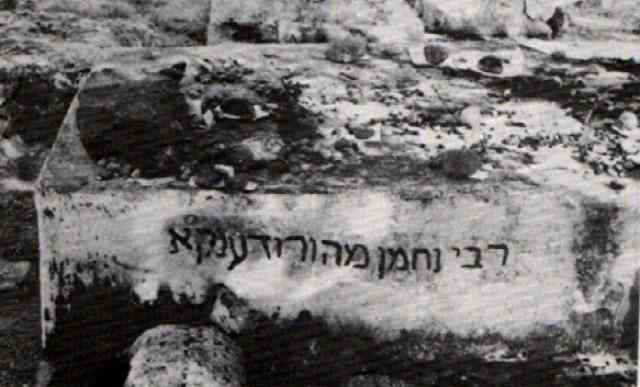
Rav Mordechai Twersky heard this story from his father, who heard it from his father, going back to the courtyard of Rav Mordechai of Chernobyl, the Chernobyler Magid, the son of Reb Menachem Nachum of Chernobyl, the Meor Einayim.

There was a blind man who was always seen standing beside the Chernobyler Magid during Havdalah. People thought this was a strange sight so someone asked the man what his story was.

He told over that when he was younger, he was a Chossid of the Chozeh of Lublin. Every Shabbos the Chozeh went into his room for a period of time after Shabbos mincha, but before going down to join the rest of the Chassidim for Shalosh Sheudos. This man was very curious to know what the Chozeh was doing during this time. So one Shabbos, he hid in the closet in the Chozeh's room before mincha was over to see what the Chozeh was doing.

When the Chozeh entered the room, it was completely dark already and the man couldn't see anything. So he left the closet and walked up to where the Chozeh was sitting. The Chozeh had a sefer open and seemed to be learning it, although there was virtually no light in the room. The man approached closer and looked at the open sefer that the Chozeh was holding. He saw that there was light coming out of the sefer.

In disbelief, he ran out of the room, but it was still dark outside the room also. He felt his way down to Shalosh Sheudos, but there was no light there either. Even after Shabbos, no one seemed to have any candles lit. He eventually realized that he couldn't see any light because he was blind! The next morning, he went to the Chozeh to ask him for help. He explained what he had done and asked the Rebbe to forgive him. But the Rebbe told him that if someone looks at another person's "Ohr Pnim," there is nothing he can do to help. He begged that he do something, so the Chozeh told him that perhaps if he went to the Chernobyler Magid, he could help him.

So he traveled to the Chernobyler Magid and told him the story. The Magid told him that one cannot look at the Ohr Pnim of a Tzadik like the Chozeh without consequences. But he said, "It is said that if one gazes at the light of the havdalah candle, that it restores 1/500th of his eyesight."

Therefore, the man would stand with the Magid every Motzoi Shabbos as he made havdalah, and would look at the candle. It is said that by the end of his life, the man could see enough to make out shapes.

This is a very interesting ma'aseh, but if anyone has an insight into the take-away point, I'd like to hear your thoughts!

-Dixie Yid

(Picture of Rav Mordechai Twersky of Flatbush courtesy of Wikipedia)

Click here to get Dixie Yid in your e-mail Inbox.

Wednesday, January 30, 2008

Yiras Hashem as the Way of Acquiring Wisdom - Meor Einayim - Bilvavi


Shmos 20:1 - וַיְדַבֵּר אֱלֹהִים אֵת כָּל-הַדְּבָרִים הָאֵלֶּה לֵאמֹר. - "And Elokim spoke these words, saying..."

Reb Nachum Chernobyler, on this pasuk, asks why Hashem chose to use the name "Elokim" to introduce the Aseres Hadibros, the ten commandments? The name Elokim indicates Hashem's trait of strict justice. Why does He use that name specificly right now?

He answers by saying a yesod that Yiras Hashem is the vessel required to acquire the Torah. And that Torah is enclothed and wrapped in Yiras Hashem. Therefore, in order to allow the Jewish people to have a vessel in which to receive the Torah, he first had to inspire them with fear of Hashem, Yirah. That is why he introduced the Aseres Hadibros with the name "Elokim," to instill the trait of Yirah necessary to be the vessel within which the Jewish people could receive the Torah.

The fact that Yirah is the Kli, the vessel, for Torah , and must preceed it, is seen from the pasuk in Tehillim 111:10, "רֵאשִׁית חָכְמָה יִרְאַת ה." "The beginning of wisdom [Torah] is Yiras Hashem." Also, it says in Pirkei Avos 3:11, "כל שיראת חטאו קודמת לחכמתו, חכמתו מתקיימת; וכל שחכמתו קודמת ליראת חטאו, אין חכמתו מתקיימת." "Anyone who has fear of sin that preceeds his wisdom, his wisdom will endure. And anyone whos wisdom preceeds his fear of sin, his wisdom will not endure." This, again, is because Yirah is the vessel within which Chochma, Torah, can exist. Without it, there is nothing to hold the wisdom, and it will necessarily dissipate.

He uses this yesod to explain several things. He says that this was how Avraham knew the whole Torah, even though Hashem had never revealed it to him. Since Avraham had Yiras Hashem ("עַתָּה יָדַעְתִּי כִּי-יְרֵא אֱלֹהִים אַתָּה," "Now I know that you are one who fears Elokim." - Breishis 22:12), Chochmas Hatorah automaticly came bundled up with it, since Yirah is the garmet for the Torah.

Also, he uses this yesod to explain why Hashem gave over all of the words of the Aseres Hadibros with one utterance, simultaneously. It seems difficult to understand how Hashem could have expected the Jewish people to understand this message, when the ear cannot hear words unless they are spoken one by one! He answers that by speaking the the whole Torah in one utterance, it also instilled fear in the people, and again, with this fear came bundled the understanding of the Torah. It was not communicated in the words, but rather in the Yiras Hashem of the moment.

In our generation, we don't like to think too much about Yiras Hashem. It's an unpleasant subject. But the most practical advice I've seen that is still geared towards our current generation is in the sefer Bilvavi MIshkan Evneh. Both in volume 1 and 2, he has sections with practical, step-by-step advice on how we can attain the different levels of Yirah. He breaks Yirah down into its 5 component parts and explains how to attain each level, one by one. It is highly recommended, and almost the only thing you'll find out there with practical advice on how to do this and why it's important, even in our generation!

-Dixie Yid

(Picture courtesy of templeinstitute.org)

Click here to get Dixie Yid in your e-mail Inbox.

Thursday, January 24, 2008

Why Serving Hashem is Not Like Fulfilling Other Ta'avos/Desires


I opened up the Meor Einayim on Parshas Yisro and right at the beginning of the parsha (SLAM!) he hits me with a powerful yesod that goes to the essence of the difficulty in keeping up my resolve in avodas Hashem.

He asked what the big secret of "Na'aseh v'nishma," "We will do and we will hear," is, such that the Midrash says about it, "The angels asked, 'who revealed this secret, which is used by ministering angels?'"

He said that the way Hashem made the world is that first we must do tircha (toil) and avoda (work) in avodas Hashem. The next step after that is the pleasure of the Divine light from that avodas Hashem. He says that if we felt the true ta'anug from avodas Hashem while we were doing those mitzovs and abstaining from those aveiros, then we would serve Hashem to fulfill a ta'ava, a desire, just like we try to fulfill any other ta'ava.

However, after one does the avodas Hashem for a while, he does receve the ta'anug, the pleasure, from that avodas Hashem even in this life. That is what is called, "Olam Haboh," the "Coming World." It is called that because it refers to our worldy pleasure from serving Hashem. That pleasure is continually "coming" to us after a period of serving Hashem without that feeling of pleasure. In contrast, "Asid Lavoh," the "Future world" refers to the pleasures of the next world, as distinguished from the Divine pleasure that we can feel in this world.

This seems to me to be the hardest part of keeping up my resolve in growing in avodas Hashem. There seems to be such a lag time between the investment and the results! And I feel from reading this piece in the Meor Einayim that just when I usually give up is the moment right before I'm about to scale the crest of that mountain.

We have to be mechazeik ourselves not to give up during the "dry period" before the Divine pleasure from our avodas Hashem kicks in. But rather, we must know that it is coming, and that the fact that the gratification is not instant is what makes avodas Hashem into actual service of Hashem, rather than merely a way of serving ourselves.

-Dixie Yid

(Picture courtesy of loc.gov)

Click here to get Dixie Yid in your e-mail Inbox.

Tuesday, January 15, 2008

My Question to the Sudilkover Rebbe r.e. Meor Einayim & Gerim


When I spoke with the Sudilkover Rebbe, thanks to A Simple Jew, last week, we talked about my desire to better understand the Meor Einayim's statement that the Ohr ShebaTorah is not accessible to Gerim, who are not [biological] children of the Avos.

One of the things he said was that the explanation is that an eved of the King, no matter how intimate his relationship is with the King, will never have the same closeness that the child of the King has. Therefore, there is an aspect of the illumination within the Torah that is accessible to literal children of Avraham, Yitzchak and Yaakov (b'ni bechori Yisroel).

He also said that Gerim all called "Tachas Mikanfei Hashechina," "under the wings of the Divine Presence." However, children of Avraham, Yitzchak and Yaakov are "l'ma'aleh mi'kanfei Hashechina," above the wings of the Shechina." Although both are one with the Shechina, they are that way at different "levels" within the Shechina, and therefore the "Ezrach B'Yisroel" has access to some higher aspects that the Ger does not have access to.

Some of these explanations may not sit well with people who seek more apologetic explanations for concepts which are difficult for modern minds to understand. However, I much prefer understandings which are true to the sources, are are not apologetic approaches to understanding difficult topics.

All of that being said, he said that with Ratzon, desire, a Ger can break through that boundary and access the same intimacy with Hashem through the Torah that any other Jew can. (As Rabbi Golshevsky alluded to HERE on the same question)

He shared a teaching from the Baal Shem Tov (which I also saw in Tzidukus Hatzadik) that the nisayon of Elisha ben Avuya (A.K.A. "Acher") was not to listen to the heavenly voice when it said, "Shuvu banim shovavim, chutz me'Acher," "Return all wayward children, except for "Acher." Even though Elisha ben Avuya heard a heavenly voice explicitly tell him that he was not welcome back, Hashem's will was that he say, like the man from the airport that the Sudilkover talked about, "What you mean I shouldn't come back!? I am a Jew and I'm returning to You, Hashem! I don't care what You say!"

This is what Hashem wanted from him, for him not to listen to Hashem's message that he wasn't welcome. That was his nisayon and that was why Hashem sent him that message, davka so that he should not listen to the message.

This is also the message from Likutei Moharan 48, where Rebbe Nachman says that when you feel that in Shamayim, they are pushing you away and don't want to let you into the gates of holiness, the ikar is not to be discouraged and not to be afraid. Rather, Hashem is sending that message to you to get you to push harder to be closer to Hashem.

This is also like (l'havdil) what Randy Pausch (not Pauche) said over and over again in his "Last Lecture." "Brick walls are not there to stop you. They are they to make you prove how much you want it."

May we all merit to break through the barriers Hashem has placed before us to make us prove that we really want to get closer to Him!

-Dixie Yid

(Picture courtesy of londondiscussionforums)

Click here to get Dixie Yid in your e-mail Inbox.

Sunday, January 13, 2008

A New Understanding of the Yedia/Bechira Problem


The Meor Einayim on Parshas Bo gives a totally new (to me at least) understanding of the definition of Bechira, free will, and its relationship to Yediah, knowledge.

As he says throughout the parshios of Yetzias Mityzrayim, Reb Nachum Chernobyler points out that Mitzrayim was an exile of Da'as, knowledge. And again, he defines Da'as as the conscious knowledge and constant awareness of Hashem's presence and giving life to every single molecule of the world around us.

He points out that the general concept of Knowledge is not in conflict with the idea of free will. Rather, it is a necessary pre-requisite to having free will! For if the true nature of reality is hidden from you, how are you to make an educated and informed choice between good and evil?

Daas means truly knowing, on a conscious level, the truth of reality, which is that it is Hashem who gives life to everything at all times. Without this knowledge, choice cannot exist, since one who has information hidden from him, cannot make an informed choice. And by extention, any choice that he would make cannot really be called a choice at all since it is based on an incomplete picture of reality.

This answers the question of how Hashem could take away Paroh's free will." The pasuk says that the makos, the plagues, were there so that "all of Mitzrayim will know that I am Hashem." It is only after knowlege of Hashem is taken out of its exile and Paroh can have "Daas" of Hashem, that he can truly begin to have free choice, since knowledge is the pre-requisite to true choice.

This approach also answers the kasha of the Rambam in Hilchos Teshuva 5:5. But before we can understand how this is so, we must first understand the new understanding (to me) the Meor Einyaim has in the idea of Bechira, as clarified by the Meor Einayim in Parshas Shlach, D"H "V'Im."

The idea of choosing to sin or not to sin is not really the definition of free choice at all. If one had a true understanding in his consciousness of the nature of Hashem in reality, he would never sin. Therefore, the "choice" to sin is not really a choice at all, but rather is merely the product of a lack of the ability to make an informed choice. As it says in Sota 3a, "No one sins unless a spirity of insanity enters him."

Really, the definition of free will (Bechira) is choosing the good from the bad. It means knowing how to take what's in front of you and sepperating the good from the bad, the ochel mitoch hapesoles. When one knows how to take the good and throw away the undesirable aspects of the physical parts of life, that is the true definition of free choice.

And since free choice can only truly exist when it is predicated by Daas, true knowledge and consciousness of reality, there cannot be any contradiction between the two to begin with. Free choice can only exist with knowledge. In other words, the only true definition of free choice is not the choice between good an evil, which is not really an example of choice at all, as explained above, but is, rather, defined as choosing the good from the bad with everything in life. And this kind of choice can only exist when one has adequate conscious knowledge of Hashem's reality.

Knowledge in this discussion does not refer to Hashem's knowledge of our choices to sin or not, which is not really an issue of choice to begin with. It refers, instead, to our knowledge of Hashem in reality, and this type of knowledge is not only not contradictory with the ability to choose the good from the bad, it is a predicate to it.

May we all merit to know Hashem in every thing at every moment, so that we may be zoceh to true free will!

-Dixie Yid

(Picture courtesy of mentalblog)

Click here to get Dixie Yid in your e-mail Inbox.

Monday, January 7, 2008

Koidinover Rebbe - Shabbos Parshas Vaeira - Pictures & Torah


Received by e-mail from a reader:

This past Friday night, Parshas Vaeira, the Koidinover Rebbe from Bnei Brak had a tish at a home in Woodmere, NY. Before the Tish started, the Rebbe had a private session in Meor Einayim with a chevreh of about 10 guys. He went over the first part of Parshas Vaeira, in which Reb Nachum from Tshernobel taught that the avoda of a person in life is to relive Yetzias Mitzrayim. The Egyptian Exile, Galus Mitzrayim, was the exile of Daas, which means that the quality of connecting one's knowledge that G-d gives life and existance to everything absent.

When the Jewish people left Mitzrayim, they left behind that sepparation between the intellectual knowledge that Hashem is the source of life that constants wills all things to exist at all times, and the consciousness of thaat fact in daily life.

He said that when a person really sees how Hashem is the soul and root of every pleasure and desire in the world, he will never again desire anything physical. Why would you want the food, the physical garment of the G-dliness within the food, when you can connect directly to the ultimate pleasure of cleaving to that G-dliness?! Therefore, when one has Daas, a conscious awareness of the fact that Hashem is the constant source and life of all existance, then this awareness will cause you to cease having a desire for anything physical.

Later on, at the Tish, before he handed out the Shabbos fish to everyone there, he asked why we eat fish on Shabbos. Although there are many reasons, he mentioned one which is that fish have the quality of always having their eyes open, which means that they always see the truth, what's really there. They never close their eyes to it, as we often do. Therefore, it means that on Shabbos, we can only see the truth, which is the fact that the neshoma and ruchnius are the ikar and are all that is real, and that all of gashmius, physicality, is a mere illusion, a garment for the spiritual. That is why the Zohar says that Shabbos is "yama d'nishmasa, v'lo yama d'gufa," "the day of the soul, and not the day of the body."

It tied in very nicely with the Meir Einayim, which focuses us in on the fact that Hashem is the "Chai Hachaim," the source of the continued life and existance of the world. The Rebbe said many other things at the Tish, but that was a major theme of the evening. May we all be zoche to appreciate everything for the G-dliness within it that gives it life and not to be focused only on the physical garments which clothe spiritual realities!


-Dixie Yid

Click here to get Dixie Yid in your e-mail Inbox.

Thursday, November 15, 2007

Uplifting Fallen Ahava/Love - Meor Einayim on Toldos


The Meor Einayim, Rav Nachum from Chernobyl, has a beautiful pshat which sheds a light on the deeper meaning of the pasuk at the beginning of Parshas Toldos, "וְאֵלֶּה תּוֹלְדֹת יִצְחָק, בֶּן-אַבְרָהָם: אַבְרָהָם, הוֹלִיד אֶת-יִצְחָק." (Breishis 25:19) He says that the gemara says that whenever the pasuk says "אֵלֶּה," it is separating that pasuk from the ones before, and whenever it says "וְאֵלֶּה," it is embrassing what came before and adding something new (Quoted by Rashi at the beginning of Parshas Mishpatim).

On this, he asks: It should have said "אֵלֶּה!" The psukim before were about the progeny of Yishmael. Rather than embrassing and adding onto that idea by saying "וְאֵלֶּה," the Torah should have said "אֵלֶּה," to separate the Avos from Yishmael!

But he goes on to explain that Yishmael is "Ahava Nafula," "fallen/misdirected love." Avraham was the pinnacle of the mida of Ahava, love, and Chesed, kindness. He had two children. Yitzchak was the good side, and Yishmael was the bad side/misdirected application of Avrhaham's mida of love and chesed. He was the "psoles," undesirable byproduct, of Avraham's trait of lovingkindness.

In what way does Ahava nafula (fallen/misdirected love) manifest its self? The Gemara says that when Hashem offered the Torah to the nation of Yishmael, they asked what was in it. When Hashem told them that it contained the prohibition against adultery (i.e. the general concept of sexual morality), they said that they could just not handle that. This seems strange in our eyes. We see the people of Yishmael as more focused on killing people and covering up their wives to sublimate any sense of sexual immorality. So how can the Gemara say that their whole livlihood is sexual immorality? Well why do they keep all of their Sharia laws and engage in mass-murder in the name of Jihad? It's all so they can indulge in their basest desires with their 72 virgins after 120. Sexual immorality is their desire behind everything. And this type of immorality is the expression of fallen Chesed/Ahava (kindness/love).

This is seen from the fact that the Torah says about one of the kinds of forbidden sexual relationships, "Chesed hu." This demonstrates that sexual immorality is the expresssion of misplaced chesed/love/kindness.

Rashi brings down on the pasuk quoted above that the scoffers of the generation were saying "Me'AviMelech Nisabra Sara," (that Sara was made pregnant by AviMelech during her "stay" with the Plishtim, and therefore, to prove them wrong, Hashem made Yitzchak look just like Avraham.

The Meor Einayim says an amazing thing: The deeper meaning of the Midrash Rashi quoted was to say that the people were saying that it was Hashem (Avi Melech = My Father [the] King) who planted the Ahava Nafula, the misplaced/fallen love, into the human body (Sara = the Guf- Zohar Chadash). Therefore, they said, "What can we do? Hashem placed these all-too-human desires into the human body, and therefore, how can we fight it? There's nothing we can do!"

The Meor Einayim says that in order to counteract that spurious claim of the scoffers, the Midrash means that Hashem made Yitzchak, the real progeny of Sara and Avraham, look just like Avraham. This means that indeed we are infused with combinations of the true Ahava, Ahavas Hashem, and fallen Ahava, the desire for sexual immorality. We are not supposed to just accept and follow the Ahava nafula within us. Rather, Hashem made Yitzchak, the child of Avraham, look just like him to teach that the things that we love should be made to look like their true source above, Ahavas Hashem (like Avraham, in the mashal). We must elevate our natural loves, not only the obviously good kinds, but also the destructive, negative kinds and direct those desires towards Ahavas Hashem, the true object of our love, before the mida was perverted and misdirected to other places.

This is why the pasuk says "וְאֵלֶּה," rather than "אֵלֶּה." We are not supposed to dismiss the progeny of Yishmael, the Ahava nafula. Rather, we are supposed to build upon it and correct it by directing our Ahava toward Hashem, and not let the Ahava Nafula placed within our bodies misdirect the Ahava within us toward bad places.

May Hashem help us embrace the midos and Ahava and Chesed within ourselves and direct them toward their true source, Hashem Himself.

-Dixie Yid

(Picture courtesy of Gordaen's Blog)

Click here to get Dixie Yid in your e-mail Inbox.

Tuesday, November 13, 2007

The Story Behind Why Meor Einayim is My Favorite Sefer


Pleae CLICK OVER to read my response to a Q and A with A Simple Jew. I'm pasting his question here below. My answer goes into what my favorite sefer is and the reason why.

A Simple Jew asks:

More than a year before I returned to my family's shtetl, I called a seforim store in Brooklyn and ordered a copy of the sefer. The sefer sat on my bookshelf untouched for a long period of time until one day I sat down with a local rabbi and we began to learn it a little bit here and a little bit there. Later, at the tzaddik's kever, I left a kvittel requesting assistance learning this sefer.

I tried to learn it by myself when I came home and unfortunately was quickly discouraged. The sefer returned to my shelf once again until one day I decided that I would go through every page. And that is exactly what I did; never letting a day go by without learning from it. Day after day, month after month, year after year, I return to it and bring a copy of it along with me wherever I go.

With the determination of a miner who is convinced that he will discover gold, I seek to deepen my understanding of this sefer. I continually search for locksmiths who can teach me how to unlock this tzaddik's teachings.

Sometimes a locksmith may become discouraged at the daunting task and suggest we work on a lock he has previously picked. However, I have no interest in the locks that he is overly familiar with. They are his locks and not mine.

Do you have a sefer that you consider to be your sefer? If so, which sefer is it and why do feel such a personal attachment to it?

Dixie Yid Answers:

-Dixie Yid

(Picture courtesy of Photo.net)

Click here to get Dixie Yid in your e-mail Inbox.

Monday, October 22, 2007

Great post by Yitz @ Heichal Hanegina on the Meor Einayim's Yartzeit


L'chvod the Yarzeit of R' Nachum Chernobyler, please read THIS GREAT POST by Yitz, from Heichal Hanegina, which includes some really good ma'asim and teachings from this great Tzadik regarding Ahavas Yisroel.

-Dixie Yid

Picture courtesy of Nehora.com)
Click here to get Dixie Yid in your e-mail Inbox.

Monday, August 27, 2007

Great Ma'aseh about R' Nachum Chernobyler


Please read Yitz's post at Heichal Hanegina, which in includes a ma'aseh about the author of one of my favorite sifrei Chassidus, R' Menachen Nachum of Chernobyl.

-Dixie Yid

(Picture is of a field in Chernobyl b'zman hazeh)

Thursday, June 28, 2007

Light of the Torah, Deveikus, and Gerim

(Picture by Rabbi Dovid Sears courtesy of RabbiRiddle.com)
(Based on Meor Einyaim from R' Menachem Nachum from Chernobyl - Parshas Chukas)

Reb Nachum Chernobyler explains the first pasuk in Parshas Chukas (Bamidbar 19:2), " זֹאת חֻקַּת הַתּוֹרָה, אֲשֶׁר-צִוָּה יְהוָה לֵאמֹר: דַּבֵּר אֶל-בְּנֵי יִשְׂרָאֵל, וְיִקְחוּ אֵלֶיךָ פָרָה אֲדֻמָּה תְּמִימָה אֲשֶׁר אֵין-בָּהּ מוּם, אֲשֶׁר לֹא-עָלָה עָלֶיהָ, עֹל." He explains that this pasuk is teaching that a person must attach his life-force to the light within the Torah. Where is this idea hinted at in the pasuk? The revealed Torah, consisting of letters, vocalizations, trop and crowns are the revealed portion of the Torah that we can have some natural human comprehension of. The light within the Torah, however, is one with Hashem and cannot be grasped with the natural human mind.

It is this illumination within the Torah that the Torah refers to as "Para," heifer. Why? Chazal say (in Pesachim 112a), "יותר ממה שהעגל רוצה לינק פרה רוצה להניק ," more than the calf wants to drink, the heifer wants to nurse [the calf]. This means that the desire of a giver to give is even greater than the desire of the receiver to receive. Hashem desires to give of Himself, the greatest good there is. So, the gift of His illumination within the Torah that He so desires to give is called by the name, "Para."

Therefore, the pasuk means, "You should take to yourself the aspect of Torah called Para, the light of Hashem that is within the Torah." It is called "temima," pure, because the light of the Torah, which was hidden away for the Tzaddikim at the beginning of time, is pure and virtually untouched, since the number of Tzadikim who have merited to ascend to that level are few and far between. That light, he says (based on Psichta Eicha Raba 2) has the power to bring a person back over to the good, which is something everyone wants. Therefore, when one learns Torah, he shouldn't just have in mind to learn the revealed meaning of the Torah. He should also daven before he learns that his chiyus (life-essence) be bound with the illumination of the Torah, which is actually the light of Hashem, so that he can thus truly be daveik with Hashem and will be returned to the good.

The Meor Einyaim, in his 4th piece in Parshas Shmos, also teaches about the Ohr within the Torah. He says that one cannot access this illumination within the Torah all at once. It is only revealed to the person little by little over time. However, he says that this deepest level of connection to the Torah, which is beyond its intellectual understanding, is only accessible to Yidden who are literal descendants of Avraham, Yitzchak and Yaakov. However, Geirei Tzedik, converts, are unable to attain that same level. This statement is fully citated in the Zohar.

Now lest anyone reading this think that I or the Meor Einyaim are "anti-convert/Ger," let me assure you that I am not. In fact, I know that this is so because I, myself, am a Ger. I was megayer when I was 18 years old. I am sharing that for the purpose of lending, unnecessarily in my view, ethos to this difficult teaching of the Meor Einayim. At first, it bothered me. Why should I or any other Ger be able to attain any less of a level than any natural born Jew?

However, after thinking about this piece and re-reading it several times over the past couple of months, I've had a couple of thoughts about it. One thought is: Who said that being an actual child of Avraham, Yitzchak and Yaakov has no value at all? If anyone who joins the Jewish people can be the same in every single respect, then what is the value of this special status? It seems that the very existence of that special parental relationship we have with our Avos indicates that it is somehow irreplaceable.

Also, I think the whole question comes from a krum place. We live in a society that is preoccupied with relative status. Who is better? Who is lower? Who is superior? Who is inferior? It was like that when America was a sexist and racist country. But that same relative status mindset informs the opposite extreme of political correctness today. Many Americans are so concerned with egalitarianism and sameness because they are unable to fathom that there can be differences between people (even differences of "higher" and "lower" in various areas of life) that do not imply superiority or inferiority. That is why, in America, "separate but equal" is found inherently unequal. This is not so with the Torah however, There are thousands of gradations of higher and lower kedusha betweem people in all areas of life. Some people have a higher level of access to kedusha in some areas. Others might have access to higher levels in other areas. However, Hashem created everyone for a very specific reason and not everyone has to be destined for the exact same thing. If Gerim had the same tachlis in life as born-Jews, then one or the other of them was created superfluously, which is obviously not the case. At any rate, these are some of my reflections on this initially difficult part of the Meor Einyaim. May we all merit to access the light of Hashem within the Torah, each on our own level!

-Dixie Yid

(Rav Bentzion Twersky, the son of Rav Michel Twersky, goes through this piece in Meor Einayim in a very nice way on two mp3 shiurim available here and here)

Monday, June 11, 2007

Tying One's Self to Hashem - Meor Einayim - B'ha'aloscha


The Meor Einayim explains, in Parshas B'ha'aloscha, the meaning of "שכר מצוה מצוה," "The reward of a mitzva is a mitzva" (Avos 4:2). He says that the point of the mitzvos is to cleave one's self to Hashem through the Mitzva. And that this is the deeper meaning of the Mishna in Avos, "שכר מצוה מצוה." The reward of a mitzva is the "mitzva," from the root word meaning "tzavsa," or "rope." the purpose and deeper meaning of each mitzva is to tie one's self to Hashem through that mitzva.

This is further seen by the fact that the word mitzva also contains Hashem's name. The "vav hei" at the end of the word mitzva, are of course the last two letters of Hashem's four-letter name. But the "mem tzadik" at the beginning are equivalent to the "yud hei" of Hashem's name in the At Bash form of gematria. Why is the "yud hei" of Hashem's name encoded as "mem tzadik" in At Bash, instead of being revealed like the "vav hei?" The Chernobyler explains that each mitzva has two aspects. There's the body, the revealed part of the mitzva. That's the "vav hei" of the word mitzva. And then there's the hidden part of the mitzva, the neshoma of the mitzva, which is hidden. And therefore the letters "yud hei," which represent the neshoma, the life-essence of the mitzva, the hidden part of the mitzva, are hidden as "mem tzadik" in At Bash.

Our avoda when doing any mitzva or learning torah is not only involve ourselves in the body, the physical aspect of the mitzva by physically doing the mitzva. It is also to have kavanah to connect ourselves to the neshoma of the mitzva, its inner essence. And that inner essence of each mitzva is Hashem, Himself. When one does a mitzva, while connecting the body of the mitzva, the physical action, with the neshoma of the mitzva, Hashem, then he makes a unification between the body and the soul, and by extension creates unifications on many levels. However, if one does a mitzva with no intention at all, it is like creating a body without any soul.

That is the meaning, then, of "שכר מצוה מצוה." The reward of a mitzva is the connection with Hashem (Tzavsa), and this is hinted at in the word mitzva in another way because mitzva = Shem Hashem ("yud hei" in At Bash + "vav hei"). So the reward of a mitzva is the connection with the essence of the mitzva, which is Hashem. And there can be no greater reward than that.

-Dixie Yid

Tuesday, May 29, 2007

If You Give Ma'aser, Why Aren't You Rich?


I saw a great posting by Aneinu from DafNotes on The-Frum-Jewish-Community.com on this topic that I've wondered about for a long time. "If you give ma'aser, why aren't you rich?" Enjoy.

Update: Thanks Avrumi for the link to version of this posting actually found at DafNotes.

-Dixie Yid

Friday, April 27, 2007

R' Dovid'l From Tolna & Judicial Economy


Yitz at Heichal Hanegina has a great post here regarding R' Dovid'l from Tolna, son of the Meor Einayim, R' Nachum Chernobyler. You should read the post at that link before you read what I write, as I'm commenting on his post.

This piece has a lot of great stuff, both about the ideal Beis Din, and about the comparisons with the secular legal system. As a law student in the evenings after work, I'm interested in both. So I wanted to add a couple of things, in no particular order.

The dispute in the Tolner Rebbe's story between the Lion and the Wolf is exactly parallel to the first case every law student studies in his 1st year Property course, Pierson v. Post, from 1805 in New York. That was a case of a fox hunter (Post) who was in hot pursuit of a fox and, using his hounds (here, the fox didn't get to be the judge!) almost had it when and a Johnny-come-lately interloper, (Pierson), swoops in and kills the fox before Post can finish it off. Based on this case, the common law became that one acquires the animal when one captures or mortally wounds it, not merely chases it for a long time, so the Lion should have gotten the whole sheep, and shouldn't have had to split it, as the fox ruled. That case predated the Tolna rebbe's story by almost 40 years, but apparently the fox didn't follow the British/American Common law precedent!

Also, regarding the dispute between the Chassid and the Poritz, relating to the enforcement of a verbal contract for the sale of land; The Statute of Frauds was passed in 1677 and says that certain types of contracts have to be in writing to be enforceable in a court of law. One type of contract that must be in writing to be enforceable is that of an interest in land. Here, the Chassid is buying a section of forest for the purpose of lumbering, so it is an interest in land. Therefore, it would be within the Statute of Frauds, and would have to be in writing to be enforcable according to British/American common law. Here, the civil courts in Tolna must have had a similar law because the story said that the Poritz knew he wouldn't be able to enforce the contract in civil court.

With regard to the Rebbe's mashal, which teaches us how the Beis Din is far superior to secular courts partially because the cost of litigation is so much less, and the awards aren't eaten away by those pesky lawyers; There was an interesting article from 2 days ago at Law.com about a little employment law case that got so bitter and drawn out, that at the end one side sued the other for $150,000 in attorney's fees for a simple overtime dispute!

Thank you Yitz for a great post at Heichal Hanegina!

-Dixie Yid