Friday, November 2, 2007
R' Lazer Brody & Chevra Singing Rebbe Nachman's Lecha Dodi
Rabbi Lazer Brody has posted a beautiful 5 minute video of he and some other chevra singing Rebbe Nachman's Niggun to Lecha Dodi. Listening is a great way to bring in Erev Shabbos!
-Dixie Yid
Click here to get Dixie Yid in your e-mail Inbox.


Rav Itchie Mayer Shalosh Sheudos Translations
Here is a sample pdf of one of the English translations from the drashos R' Itchie Mayer Morgenstern gives during Shalosh Sheudos. It is from this past week's parsha, Vayeira. You can download it at this link. Also, you can e-mail the following address to subscribe to receive these drasha translations by e-mail: tc7 at neto.bezeqint.net Enjoy!
-Dixie Yid
Click here to get Dixie Yid in your e-mail Inbox.
Thursday, November 1, 2007
Showing Emotion or Not When Grieving
 Click over to read my responsd to A Simple Jew's question to me about some aveilim who seem to show emotion and others who do not. Here is ASJ's question to me...
A Simple Jew asks:
After returning from a shiva house, you wrote to me that you found it remarkable that the widow had a tremendous sense of composure and did not show any outward signs of sadness.
Firstly, please do not misinterpret my words or think me to be insensitive. I understand that people express grief in different ways. In our era, indeed there have even been great tzaddikim who have grieved privately in the manner you described. Yet, not crying seems completely foreign to me. At the funeral of my grandmother in 1999, I asked Mr. J why it seemed like no one else was crying and I, on the other hand, was bawling my eyes out. Mr. J turned to me and said, "You have to realize, you have a different kind of heart."
The Sudilkover Rebbe, though also seems to share my type of heart. When I spoke to him on the phone as he sat shiva, he told me that he would find himself breaking out crying at times as he thought about his father.To me, crying is giving a true expression to your inner self and not crying is attempting to put on a façade of composure; attempting to fool others into believing that you are really an emotionally strong person. When a person grieves inside but not externally, he is not exemplifying the principle of tocho kebaro; he is lacking the quality of simplicity.
As much as I can respect the fact that others may have a differing viewpoint, I cannot change my own on this topic. So, my friend, could you please share with me your thoughts on what I wrote above?
Dixie Yid Answers...
-Dixie Yid
(Picture of Picasso's "The Tragedy," from his "Blue Period," courtesy of mintaka.sdsu.edu)
Click here to get Dixie Yid in your e-mail Inbox.
Wednesday, October 31, 2007
Audio Shiur - Avos as Key to Connecting to Avinu Shebashamayim

The newest edition of Reb Yerachmiel's Baltimore Community Kollel Rav Pincus Chaburah is out, from this past Sunday. You can access the esnips page with the player that starts automatically RIGHT HERE (warning: there are sometimes innappropriate advertisements there so you might prefer the direct downoad link by CLICKING HERE).
Just in time for the Parshios Ha'Shavuah, Reb Yerachmiel and the Baltimore Community Kollel Rav Pincus (zt"l) Chaburah on Tefillah continue to delve into the first beracha of Shmoneh Esrei: Berchas "Avos". This week's shiur discusses the words "Elokei Avraham, Elokei Yitzchak V'Elokei Yaakov" with the hope that a deeper understanding of the Avos Ha'Kedoshim will further enhance our relationship with Avinu Sh'bashamayim, Hashem.
-Dixie Yid
Click here to get Dixie Yid in your e-mail Inbox.
New Site on Hisbodedus With Guidance, Stories, Shiurim, & Links

Thanks to the folks at Bilvavi.net for the heads-up on this new site on Hisbodedus that has advice, guidance, shiurim, and personal stories relating to the practice of Hisbodedus, and not only based on Rebbe Nachman. It includes material from the author of the Bilvavi Mishkan Evneh seforim as well. Warning: It is an Israeli site and is all Hebrew. Enjoy Hitbodedut.com!
-Dixie Yid
Click here to get Dixie Yid in your e-mail Inbox.
Tuesday, October 30, 2007
Amazingly Creative Akeida Cake at Temunot - Pictures

A Simple Jew pointed out these amazingly creative pictures taken by David at Temunot of a cake made by his children for Parshas Vayeira. Wow. Click on the link to see more pictures.
-Dixie Yid
Click here to get Dixie Yid in your e-mail Inbox.
Vayeira - Lot's Daughters & Kiddushin for Bnei Noach - A Kasha
 In parshas Vayeira, when the men of Sdom were demanding that Lot hand over his three guests so that the people there could forcibly be with them, he refuses and, very troublingly, offers them his two daughters, saying "הִנֵּה-נָא לִי שְׁתֵּי בָנוֹת, אֲשֶׁר לֹא-יָדְעוּ אִישׁ--אוֹצִיאָה-נָּא אֶתְהֶן אֲלֵיכֶם, וַעֲשׂוּ לָהֶן כַּטּוֹב בְּעֵינֵיכֶם." (Bereishis 19:8) Basicly, he tells them that these two daughters have never been with a man and that they can do what they want with them. It is obviously troubling how he could do this, and it is another illustration of why Chazal say that Lot was not saved on his own merit, but rather on the merit of Avrham.
I had a kasha a few psukim later, though where Lot goes to tell everyone in his family that they must flee before Sdom is destroyed. He goes to tell all of his sons-in-law and they all laugh him off. In Bereshis 19:14, it says that he told, "חֲתָנָיו לֹקְחֵי בְנֹתָיו," "his sons-in-law, the betrothers of his daughters." My first question on this was that a few psukim earlier, he had just said that his daughters had never been with a man, but now there are sons-in-law? Was he lying to the Anshei Sdom?
So Rashi answers this on the spot and he says that "חֲתָנָיו" refers to his married daughters living outside the home, and that "לֹקְחֵי בְנֹתָיו" refers to the men who had betrothed his two daughters using the first of the two stages of the marriage process, Kiddushin. They, therefore, were still living at home and had never been with their husbands yet. Therefore, this answers my question that he was truthfully able to say that those two daughters had never been with any man.
However, this made me think of another question. According to Rashi, at least with regard to the laws of marriage, Lot is keeping the laws of the "future" Torah, just as Chazal say Avraham was. But if this is the case, why did he offer his daughters to Anshei Sdom at all, from a halachic perspective? If they were Arusos (betrothed) already, for all intents and purposes, they were married women and it would have been adultery for Anshei Sdom to be with them. So why is that any better than the mishkav zachar that they wanted to do to the three guests? Either way it is a capital transgression of Gilui Arayos for Bnei Noach! What is he gaining by trying to give over his daughters?
However, I was thinking that the Rambam says at the beginning of Hilchos Ishus (1:1) "קודם מתן תורה, היה אדם פוגע אישה בשוק--אם רצה הוא והיא לישא אותה--מכניסה לביתו ובועלה בינו לבין עצמו, ותהיה לו לאישה." "Before the Torah was given [the way a marriage was effectuated was that] a man would meet a woman in the market. If he and she wanted to get married, he would bring her into his home, have relations with her in private, and she would be his wife." Therefore, for the halachos of Bnei Noach, since these two daughters had only been betrothed to their "husbands," and were still living with their father, those daughters were not considered married women at all, and therefore it wouldn't have been the more serious transgression of Gilui Arayos/adultery for those people to be with them, since according to the laws of Bnei Noach, they weren't married at all.
Of course it could also be that Rashi and the Gur Areye on the spot were using the term "arusos," betrothed in a lav davka sort of way. They might have been using it in the way modern Israelis use the term, which just meant "engaged" without any kiddushin or "Harei At Mekudeshes Li." Either way, it is unbelievable that Lot could even think of doing that to his daughters. A friend suggested over Shabbos that since Hachnasos Orchim was the only good mida that Lot picked up from Avraham, he took it to the extreme, with any thought or perspective whatsoever.
This mida is no so unheard of. Sometimes, someone with a Yartzeit pushes another chiyuv out of the way so that he can daven for the amud. Other times, somebody is so focused on davening in their makom kavuah, their usual spot in Shul (One who davens in a set place with have the G-d of Avraham helping him out, after all), that when he comes in to Shul a few minutes late, he will make a guest in Shul who happens to be sitting in "his" seat feel unwelcome. It's not good to be so focused on one particular mitzva, such that it pushes all sense of perspective and balance out of one's brain. This, my friend suggested was Lot's mistake with his daughters. Perhaps the way he treated them is somehow related to the ignoble act they did with him that produced Amon and Moav...
-Dixie Yid
Click here to get Dixie Yid in your e-mail Inbox.
Monday, October 29, 2007
Mussar from "Last Lecture" of a 47 Year Old Terminally Ill Professor
Here's a brief version (10 minutes) of his 1 hour and 45 minute "Last Lecture." Randy Pausch (not Pauche) is/was a Virtual Reality professor at Caregie-Mellon University. He has about three months of good health left, as of now, and not all, but many of the things he says here sound like they come right out of a mussar shmooze or a Chassidishe vort. One of his repeating themes is that "Brick walls are not there to stop you, they are there to make you show how much you want it." This is remeniscent of Likutei Moharan 48 (I think). Also the story from the full lecture about the guy who spilled coke on the back seat of his new convertable so that children would not be embarassed if they accidentaly messed up his car, which he used to illustrate the message of the importance of "people, not things," is a step up from most people's perspective.
-Dixie Yid
Click here to get Dixie Yid in your e-mail Inbox.
Sweet Ma'aseh with Rav Ruderman from Ner Yisroel
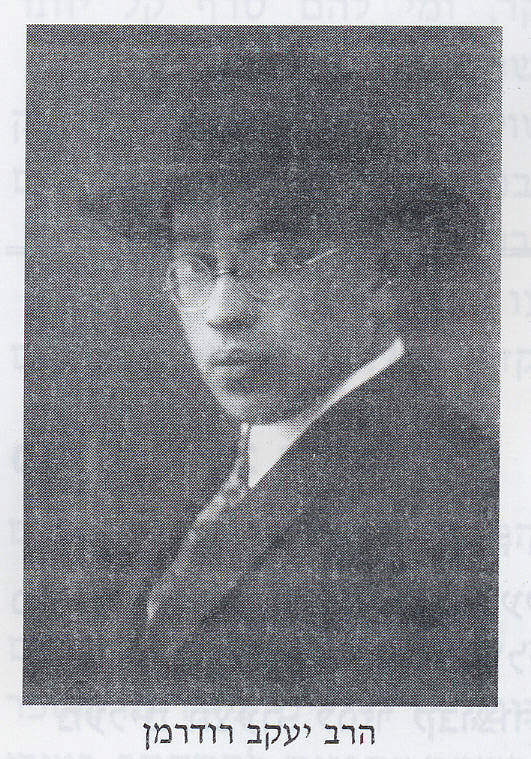
I wanted to share this sweet ma'aseh about R' Yaakov Ruderman, z'tl, the former Rosh Yeshiva of Yeshivas Ner Yisroel in Baltimore. I heard this from a Rav who was a Talmid from the yeshiva in the '80s.
He said that every year, when NCSY's Camp Sports would be at Ner Yisroel for the summer, they made a big deal of the guys having a meeting with the, then, Rosh Yeshiva, Rav Yaakov Ruderman. They built up the experience of meeting a great Rabbi and a Tzadik for a while beforehand.
At the big meeting, one summer, the Rosh Yeshiva asked one of the boys in his best English (as his real language was Yiddish), "Vhat do you tink of deh Yeshiva?" The boy answered, "Oh it's great. It's a great place!" The Rosh Yeshiva then followed up by asking, "And vhat is your favorite part of deh Yeshiva? The boy answered that, "Oh everything is so great here. I don't know how to pick out one favorite thing. The whole essence of the yeshiva is great."
The Rosh Yeshiva shook his head and responded, "Nit! Der essen iz nisht der ikar!" "No! The eating (The Yiddish word for eating is "essen" which sounds like "essence") is not the main thing!"
-Dixie Yid
(Picture of Rav Ruderman as a young bachur courtesy of personal.stevens.edu)
Click here to get Dixie Yid in your e-mail Inbox.
Did Avraham Avinu Tarry in Fulfilling the Command of "Lech Lecha"?

I was trying to find the ma'areh makom, citation, for this vort, but since I haven't been able to as of yet, I want to write it up anyway so I don't forget.
I was talking to a local Rav on Parshas Lech Lecha and he pointed out a suprising pshat. The Chumash says that Avraham was 75 years old when he left Charan. It also says that he was 100 when Sara gave birth to Yitzchak. It also says two different lengths of time for how long the Jewish people were in Mitzrayim, Egypt. In one place, it says they were there for 400 years, and in another place, it says they were there for 430 years. The 400 year count is counting from the birth of Yitzchak. But the 430 year could was counting from the Bris Bein Habesarim, the Covenant Between the Parts, when Hashem made the promise to Avraham about the Gerus, Avdus, and Inui (Exile, Slavery and Torture) that his descendants (starting with Yitzchak) would endure, which was 30 years before Yitzchak's birth, thus being 430 years before the Exodus.
But there's a problem there. That count would mean that the Bris Bein Habesarim was when Avraham was 70, when he was told to leave Charan and go to Eretz K'na'an, the land of Israel. But the Torah says he was 75 when he moved to K'na'an!
To answer this question, the Rosh on a Gemara about Avraham in Shabbos (?) gives a suprising answer. He says that Avraham tarried in fulfilling Hashem's commandment to move to K'na'an when he received the "Lech Lecha" command when he was 70. He made a "pilot trip," so to speak and he experienced the Bris Bein Habesarim at that time. That is when the 430 year date is counting from. However, he returned to Charan and didn't move to K'na'an until 5 years, later, when he was 75. That move is what the Torah was referring to when it says that he moved at age 75.
The Korban Nesanel on the spot affirms this pshat and says it works well with the psukim, the verses. He points out that when Avraham left, it says "וַיֵּלֶךְ אַבְרָם, כַּאֲשֶׁר דִּבֶּר אֵלָיו יְהוָה, וַיֵּלֶךְ אִתּוֹ, לוֹט" (Bereishis 12:4). "And Avraham went, as G-d told him, and Lot went with him." The Koban Nesanel asks why the verse has to say that Avrhahm "went" two times. First is says that Avraham went. And then, it says that he took Lot with him. That could have been consolodated into one statement! However, with the Rosh's chidush that Avraham went twice (once at 70 with the Lech Lecha command and the Bris Bein Habesarim on the pilot trip and once for good at age 75), the verse makes sense. One "going" refers to the first trip at age 70, and when he went with Lot, that refers to the second trip at age 75.
Just as an observation, it seems like I hear more peshatim that take things that we thought were good about one of the Avos, and then it turns out to be something not-so-good, about Avraham than about any other one of the Avos. Usually by the other Avos, we see how things that look outwardly "bad" were really good. However, with Avraham, I have heard many peshatim over the the years that seem to do the opposite. One example was how the Ramban says that one of the 10 tests of Avraham was to stay in Eretz Yisroel once he got there, dispite the famine, and that he failed this test.
One question I have is that the mishna in Avos 5:3 says, " עשרה נסיונות נתנסה אברהם אבינו, ועמד בכולם," that Avraham Avinu was tested 10 times and he passed all of the tests. Obviously, the Rosh, the Korban Nesanel, and the Ramban know the mishna in Avos. So how could they say that Avraham Avinu "failed," to one extent or another, these tests? Perhaps "ועמד בכולם" doesn't necessarily mean that he passed... Any ideas?
-Dixie Yid
(Picture courtesy of Betemunah.org)
Click here to get Dixie Yid in your e-mail Inbox.
Sunday, October 28, 2007
Dixie Yid's New Seder - Tanya B'iyun

As of this morning, I'm starting a new seder once a week. My 6-7 AM Sunday morning slot opened up, so I asked me rebbe what I should learn then. He asked me if I'd ever learned Tanya. I told him that I'd dabbled a little here and a little there, but not to deeply. He said that I should defninitely learn Tanya then. He said that it's the real nuts and bolts, the meat and potatos, so to speak, of Chassidus. And that if I really wanted to get a handle on the basics of Chassidus, that I needed to learn Tanya, b'iyun.
I said that I don't get into English seforim, so that I wouldn't be likely to enjoy "Lessons in Tanya," which I've perused. He suggested Rav Shteinzaltz's peirush on Tanya, Biur Tanya, which you can get from Kehot's webiste.
My friend Izbitza also suggested the book, Flames of Faith, by Rabbi Zev Reichman, giving over Shiurim of Rav Moshe Wolfson. Rabbi Boshnack said that although it's not explicitly written in the book, those shiurim by Rav Wolfson are an explanation of certain aspects of Tanya. So, IY"H, we'll have some good learning!
-Dixie Yid
Click here to get Dixie Yid in your e-mail Inbox.
-Dixie Yid
Click here to get Dixie Yid in your e-mail Inbox.
Thursday, October 25, 2007
The South, and the Jewish People Have Lost a Great Tzadeikes

The Jewish people has lost a great Tzadeikes, Rebbetzin Risia Posner. You can read a lot about and get chizuk from her in this fine article from Chabad.org.
Update: Click here to see pictures from her levaya, which, unbeleviably, was a double levaya with her brother, who was niftar 4 hours before her. Not only was the levaya a joint levaya, but they were literally buried side by side in the ground. I'm not sure what that means, but it is the first time I have ever heard of something like that happening. Thanks to A Simple Jew for alerting me to that link.
-Dixie Yid
Click here to get Dixie Yid in your e-mail Inbox.
Perspective & Story on Laziness Within Industriousness
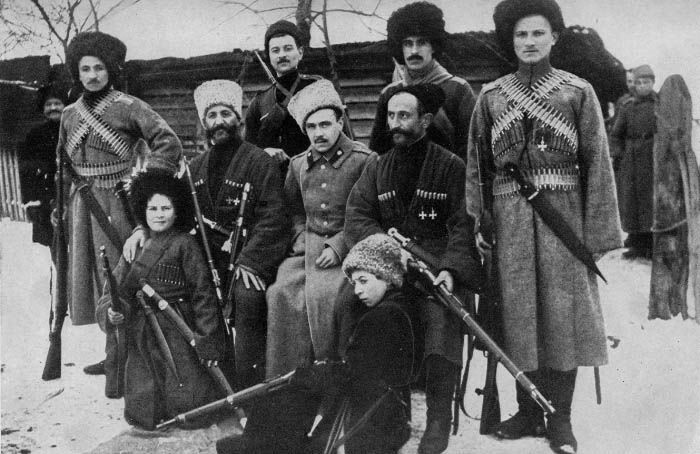
The Cossack's were known as the paradigmatic "industrious types." They did everything with speed and alacrity. When something needed to get done, they did it fast and well, and no job was too difficult. One rebbe (Request: If anyone out there who this ma'aseh is about, please let me know!) pointed out to his Chassidim that looking up to this mida of industriousness in them is wrongheaded.
He said that when these men retire and receive their pensions from the Tzar, they spent the rest of their days relaxing, drinking tea and vodka beside an oven, to stay warm. And that the entire time they were working so hard, they were really just thinking that they were doing it because one day, they would be able to sit and relax beside that oven until they went into the grave.
There are two types of industrious/hard-working types. One is the type which works hard because they care about what they are actually doing and accomplishing with the work as an end unto its self. But then there are those, like the Cossacks, whose hard work is really just an expression of their laziness.
Some people work hard in college, medical school or law school, in in their business, and then later in their jobs, with only their next vacation or their retirement in mind. This type of hard work is not, then, to be labeled "industrious," or "hard working," but rather "laziness!"
I am very busy, to say the least. I'm up (usually) by 4 AM for a day filled with learning, davening, a full time job, and law school. People who don't walk in my shoes think that I'm a very hard-working, industrious person. However, I know that, לֵב--יוֹדֵעַ" מָרַּת נַפְשׁוֹ" (Mishlei 14:10). I know that I cannot absolve myself of my own penchant for laziness.
I like to think of that ma'aseh when putting hard work in perspective and remembering what it's all for.
-Dixie Yid
(Picture of Cossacks courtesy of AlexanderPalace.org)
Click here to get Dixie Yid in your e-mail Inbox.
Wednesday, October 24, 2007
Avraham Avinu - Doubt and the Creation of the World

In Parshas Lech Lecha, in Bilvavi Mishkan Evneh al HaTorah, Rav Shwartz writes an interesting thing. He says that when it says, at the beginning of the parsha, "וַיֹּאמֶר יְהוָה אֶל-אַבְרָם." It uses the lashon "וַיֹּאמֶר" because it is a reference to the asara ma'amaros she'nivrah bahem haolam." This is a reference to the fact that Hashem created the whole world for the sake of Avraham and the Emunah that he would bring to the world.
But he says a startling thing. He points out that the word "Ma'amar," im mispar hakolel, equals the gematria of both "Amalek," and "safek." Of course I knew of the equivalency of those two words, but not with their connection between "Ma'amar" and Avraham and Brias Ha'olam. To explain this startling fact, he points out that Avraham is the only one of the Avos who started off his life of Emunah with safek about the existence of Hashem. He was brought up in the idolatrous house of Terach, his father. And he wrestled for years, using Chakira, logic and philosophy, to come to the conclusion that Hashem existed and that He is One. But since he started off with a state of safek, and Avraham's state of perfect Emunah in Hashem after a process of safek was the desired goal behind Hashem's creation of the universe, that is why he planted this reference to Avraham in His creation of the world through the word "Ma'amar," as used in parshas Lech Lecha. The Meor Einayim on the parsha also points out how Avraham was found in the creation of the universe in the famous gemara that says that the pasuk in Bereishis 2:4 states, "אֵלֶּה תוֹלְדוֹת הַשָּׁמַיִם וְהָאָרֶץ, בְּהִבָּרְאָם," which says not to read the pasuk as "בְּהִבָּרְאָם," but rather, "בְּאָבָּרְהִם."
Separate from what the Bilvavi says about this, I was also thinking that the fact that Hashem created Safek in the process of the Asara ma'amaros she'nivrah bahem ha'olam, works well with what we know about that process of creation. Until Hashem created the universe, there existed absolute, unadulterated clarity about Hashem's presence and existence. However, once He started creating more of our "reality," His Presence became more and more concealed behind the veil of our metziyus hamedumeh. With each ma'amar that Hashem used to create the world, He was metzamtzim (concealed) Himself more and more.
Therefore, it can be said that Safek in Emunah arose because of and through Hashem's creation of the world. Concordantly, it can be understood why each "ma'amar" Hashem used to create the world is equivalent in gematria to the word "safek," doubt.
Hashem built Avraham into the creation of the universe because it is Avraham's type of Emunah, an absolute Emunah that follows doubt and uncertainty, which we most need in our world. Hashem intentionally concealed his existence behind the veil of "reality," in order that we should have an opening for doubt/safek regarding His presence, from which we must work very hard at concretizing our awareness and recognition of His presence.
May you and I merit to break through the false picture of doubt in Emunah that exists because of the seemingly real world before our eyes!
"[T]he world... has been pulled over your eyes to blind you from the truth." (Morpheus - Don't tell anyone that I quoted this...)
-Dixie Yid
Click here to get Dixie Yid in your e-mail Inbox.
Tuesday, October 23, 2007
Birkas Avos Audio Shiur - Part II - Reb Yerachmiel - Deveikus Bombshell

CLICK HERE to download the wav file of the audio of Sunday night's shiur by Reb Yerachmiel, from the Baltimore Community Kollel Rav Pincus Chaburah, which represents Part II of what will, be'ezras Hashem, be a multi-part-series on the first bracha of Shemoneh Esrei- "Avos" (just in time for the corresponding parshios ha'shavuah). As has been his theme in recent months, the thrust of this week's shiur was not simply to explain and understand the words we say, but on internalizing the equally important and ever-more elusive, additional requirement of Shemoneh Esrei: awareness that we are standing before the Divine Presence of Hashem. Warning: Contains a discussion of the (soon-to-be-famous) "Biggest Chiddush That No One Knows".
-Dixie Yid
(Picture courtesy of Borshevsky.com)
Click here to get Dixie Yid in your e-mail Inbox.
Subscribe to:
Posts (Atom)