See below for two videos by the Temple Insititute depicting children ready and willing to recognize that the time has come to actually rebuild the Beis Hamikdash. Because actually doing so would start a war, what is the take-away point of the videos? It could just be to awaken a tshuka, longing, to rebuild it, even if we cannot physically do so now. Also, even if it awakens a desire that can't yet come to fruition until Moshiach comes, there is something to be said for at least wanting to do so anyway out of a feeling of "ahava mekalkeles es hashura," loosly translated as "love is not bound by logic." Any other thoughts?
Click here to get Dixie Yid in your e-mail Inbox or here to "follow" me on Twitter.
Showing posts with label Beis Hamikdash. Show all posts
Showing posts with label Beis Hamikdash. Show all posts
Thursday, July 11, 2013


Sunday, March 24, 2013
Guest Post - Technology in the Third Beis Hamikdash
I have had conversations with people of the years about how technology would be incorporated into the third Beis Hamikdash when it will be built. But my friend wrote up a "handbook" for those offering korbanos in the third Beis Hamikdash, imagining in detail what it would be like, and incorporating many halachos in the essay as well. So enjoy the below guest post and IY"H, may we be zoche to see how technology will be incorporated soon in our days!
Click here to get Dixie Yid in your e-mail Inbox.
Bais Hamikdash Tech Update
Due to
several documented mix ups with korbanos, the Mikdash Committee has instituted
new technology and procedures.
First, all
animals to be sold for sacrifices on the Temple Mount area have already had
magnetic bar codes firmly affixed to their hooves. Birds have a smaller tag
attached to the right foot. Anyone bringing in their own animals for korbanos
will have similar bar codes affixed in the examination area. There will be no
additional charge for this service.
All of the
Klei Shares have embedded tags as well.
Next, korbanos
need to be registered on the system with full owner information and korban
designation before offering. This can be done online, by cellphone app, or on
one of the dedicated terminals installed on the base of the temple mount. Any
changes in owner information (particularly for korban pesach group status)
needs to be completed before shechita. No exceptions.
Owner
information will be checked with Department of Health records in real time. A
chatas whose owner has died will not be offered.
Temurah
registrations, while discouraged, will still be accepted by the system.
All Kohanim
On Duty have been assigned small portable scanners. Before shechita, the KOD
must scan the animal as well as the Kli Shares to be receiving the blood. If
the animal is in the wrong location (i.e. slaughter in the north is required),
the system is programmed to alert the KOD with both audio and visual alerts.
Several
help stations have been strategically placed throughout the Azarah. If the KOD
has forgotten which avodah he needs to perform or where, he can just scan the
kli and a full diagram will come up.
For
semicha, the owner(s) will receive a text message when their animal is ready to
go. They will then enter the azarah and proceed directly to the automated hoist
number of their korban, perform the semicha, and leave. More viewing of the
avodas can be done by the AzarahCam at any time.
Due to
concerns about tahara and chometz, we will no longer allow people to bring flour,
oil, wine, etc. from home to be offered (with the exception of the kohen
gadol). Therefore, we have purchased all the supplies needed for menachos and
sell them using our system.
The system
will go like this. The person purchasing a mincha will enter their information
and the korban needed, whether it is challos or wafers, deep fried or shallow
fried, kohen owned, etc. A ticket will be generated and sent to the bakery to
fill the order. For a minchas nesachim, the ticket will not be generated until
the blood of the associated korban is sprinkled. The bakery employee will place
the finished mincha in the window facing the kodesh in an ordinary
container. The kohen will take the
mincha, scan it for the owner info, and place it in a kli shares while verbally
consecrating it for its owner. He will then proceed to perform the proper avodah
of the mincha. The system will assist in reminding the kohen of the proper
procedure, whether it needs waving, hagasha, kemitza, etc. with audible alerts.
Any questions on identifying a particular mincha can be easily resolved with a
quick scan of the kli.
A korban
Todah will be prevented from being slaughtered until all the loaves have been
baked.
Non Jews
are not required to pay for minchas nesachim.
Salt will
be added to all offerings at no charge.
The system
will also arrange the proper order of offerings. This has previously been a
very difficult principle to achieve by hand. For example, chatas blood comes
before olah blood, but olah limbs are offered before chatas sacrificial parts.
The queuing will be done automatically and signal the nearest KOD to perform
the next avodah. Audio and visual alerts will warn any KOD about to perform an
avodah out of order.
Additional
tags will be affixed to the cut up parts of the korban in the flaying area,
near the sinks. Absolutely NO meat is to be placed in the Mikdash Refrigerators
without proper tags.
The Mikdash
Refrigerator doors have sensors as well.
Notifications will be sent out for any meat that is nossar, which will now
be easy to locate.
Tracking
the hides are important for determining ownership. Depending on circumstances,
the hide may belong to the mikdash, the kohanim, or the donor. We will auction
off each hide and track the sale price to the owners. At the end of each day,
all of the kohanim that swiped in (even those with a mum that performed
non-avodah labor, but not Mikdash employees) will be automatically credited
their share by direct deposit.
Cooking
pots have been tagged as well. Pots have to be koshered after use with
korbanos, within the time frame allowed for eating the korban, unless the pot
is used for another korban, which resets the clock again. This system will
track each pot and signal those needing koshering.
The
mizbeach has been outfitted with special metal-free sensors. As the kli filled
with blood approaches for sprinkling, the KOD will be gently prompted as to
which corners to approach and the proper order, and whether sprinkling needs to
be done above or below the red line. Similarly, birds post melikah will be
sensed if the sprinkling is about to be performed in the wrong place.
After the
afternoon Tamid has been offered, the system will go into lockdown mode, and no
further sacrifices may be brought until the next morning. Any blood waiting to
be sprinkled is to be placed in one of the oscillators until the morning. The
next shift of kohanim will be able to identify the blood through the tag on the
kli.
The Ulam
has sensors installed at the doorway to prevent any korbanei chutz from entering
lifnim accidentally.
Sensors and
alarms have been set up around all the exits. If a korban that is not allowed
to leave the area approaches the exit, an alarm will sound. Similarly, the
system will guard against theft of Mikdash property.
Outside in
the Ezras Nashim, large screen displays have been installed with real time
information on offering status. Text or email alerts to the owners are
available at no extra charge.
The Mikdash Bank
Previously,
there were 13 ‘horns’ that held coins used for purchasing sacrifices for when
the altar was unoccupied. The Kohen entering the room where they were stored
had to enter there barefoot in clothing without a hem or pockets etc. -a
difficult procedure. We have eliminated this, and set up a Mikdash Bank, with
multiple accounts. Balance and activity information is openly available online.
All donors will receive a receipt number that can be tracked, with their name
listed if they desire. Any withdrawals will list the kohen signing off on it,
as well as the tag number of the animal purchased. The main branch of the bank
is located near the base of the Temple Mount, eliminating the need for private
money changers.
Click here to get Dixie Yid in your e-mail Inbox.
Friday, March 12, 2010
Rav Itchie Mayer Morgenstern on Parshas Vayakhel-Pikudei - Heb. & English pdf
 Here is Reb Itchie Mayer Morgenstern's Torah on Parshas Vayakhel-Pikudei, with English excerpt and full text in both English and Hebrew in pdf form. You can send an e-mail to this address to subscribe to receive Rav Morgenstern's Torah in your e-mail box every week.
CLICK HERE for Toras Chochom on Vayakhel-Pikudei"אֵלֶּה פְקוּדֵי הַמִּשְׁכָּן מִשְׁכַּן הָעֵדֻת, אֲשֶׁר פֻּקַּד עַל-פִּי מֹשֶׁה: עֲבֹדַת הַלְוִיִּם בְּיַד אִיתָמָר בֶּן-אַהֲרֹן הַכֹּהֵן... וַיְהִי מְאַת כִּכַּר הַכֶּסֶף לָצֶקֶת אֵת אַדְנֵי הַקֹּדֶשׁ וְאֵת אַדְנֵי הַפָּרֹכֶת: מְאַת אֲדָנִים לִמְאַת הַכִּכָּר, כִּכָּר לָאָדֶן."
“These are the accounts of the Mishkan, even the Mishkan of the testimony, as they were rendered according to the commandment of Moshe, through the service of the Leviim, by the hand of Itamar, the son of Aharon HaKohen... And the hundred talents of silver were for casting the sockets of the Mishkan, and the sockets of the veil: a hundred sockets for the hundred talents, a talent for a socket.”[1]
Rashi explains: “‘The sockets of the sanctuary’—[the sockets] of the forty-eight boards of the Mishkan, which had ninety-six sockets, together with the four sockets of the paroches makes a total of one hundred. The Torah says that all of the other sockets were of copper.”
Upholding the Mishkan
The main support of the Mishkan was from the placement of the boards within their sockets, which were donated by the Jewish people through the fixed rate of the half-shekel regardless of the wealth of the individual donor. It is this that the verse describes when it lists the measure of the hundred talents of silver, one talent for each socket. These were the sockets that upheld the boards which formed the structure of the Mishkan itself.
Reb Nosson of Breslov explains why it was necessary that the silver of the sockets come equally from every Jew: “They were commanded to each bring a half-shekel to teach us that no Jew is complete on his own; he has to join together with his fellow. The main rectification is achieved when everyone is brought together in love and unity, when each one is just a half until he is united with his friend, and that friend with yet another, until all of the varieties of opinions and personhoods become one within the absolute and simple unity of Hashem Himself. This process is most precious before Hashem. This is why, ‘The wealthy shall not add and the poor shall not give less’—so that there should be no division or difference among them.
It is necessary so that, ‘Each man’s wealth will atone for his soul, and the poor will not hear rebuke’[2]—so that the wealthy will not lord it over the poor and they will all achieve the rectification of tzedakah, which is to support the Torah in mutual love and respect. The main objective is to be united and subsumed within Hashem’s oneness, and this is only possible when a person is humble and self-effacing, when he nullifies his ego before his fellow Jews, when he, ‘Does not regard the wealthy above the poor.’[3] The giving of a uniform half-shekel demonstrates that all are equal before Hashem and everyone has a part to play in the establishment of the Mishkan, and through this Hashem’s absolute unity is revealed in the midst of variety and multiplicity. This is also why all the other offerings for the Mishkan were given in accordance with the person’s means, as Rashi explains at the beginning of Parshas Terumah. The unique nature of the half-shekel offering was to highlight to the wealthy that there is nothing to be prideful in their resources, because Hashem could just as easily build the Mishkan through the offerings of the poor, and He has the power to enrich the poor and impoverish the wealthy in any case. Although He does choose to give the merit of charity to those whom He has blessed with abundance, nevertheless the actual framework of the Mishkan is provided by each person equally. And the wealthy have no cause for pride, ‘For all is from You, and from Your hand do we give to You.’[4] The main act of tzedakah is in supporting Torah scholars who give birth to halachos, because this is a manifestation of the Mishkan built by Moshe Rabbeinu in every generation. And the main way in which we accomplish this is by revealing Hashem’s absolute oneness from among a multiplicity of actions.”[5]
This means that the basis of the integrity of the structure of the Mishkan derives from a relationship of equality between Torah scholars and those who support them, that they should be in a state of complete unity of the soul—that the silver sockets and the boards they support should be all of a piece. It is only when the supporters are unified with the talmidei chachamim and do not feel above them and the scholars do not feel superior in their scholarship that they are truly bound together and equal. Then the holiness of the boards also rests upon the sockets and the structure can stand securely, and the light of the yichud can shine brightly.
[1] Shemos 38:21,27
[2] Mishlei 13:8
[3] Iyov 34:19
[4] Divrei HaYamim I:29:14
[5] Likutei Halachos, Hilchos Apotropos #1
CLICK HERE for Toras Chochom on Vayakhel-Pikudei in English
Click here to get Dixie Yid in your e-mail Inbox or here to subscribe in Google Reader.
Tuesday, October 20, 2009
Marcheshvan, Shema Koleinu & Retzay - Audio Shiur - Video Now Available!!!
 Below is the link to Reb Yerachmiel’s latest shiur which opens with a yesod from Rav Pincus zt”l on the topic of Marcheshvan. Reb Yerachmiel then transitions to his usual topic, the in-depth study of the Shemoneh Esrei. Specifically, Reb Yerachmiel concluded the bracha of “Shema Koleinu” with two tremendous points to ponder, and introduced berchas “Retzay” with a number of bomb-kashas, one of which was answered by the Baltimore Community Kollel’s own Rosh Kollel, Rav Nesanel Kostelitz, who attended the shiur.
Please CLICK HERE to get the shiur by either left clicking to listen right away or right clicking and selecting "Save Target As" to download the shiur.
You can watch a video of this shiur on TorahAnytime.com by clicking HERE!
And you can see all newly added shiurim by Reb Yerachmiel on TorahAnytime.com by clicking on his page HERE.
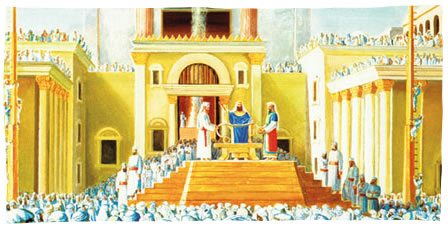
Picture courtesy of chabad.org. Click here to get Dixie Yid in your e-mail Inbox or here to subscribe in Google Reader.
Subscribe to:
Posts (Atom)